


The United States and Iran exchanged another wave of military strikes on Thursday, marking a second straight day of escalating hostilities centred on the strategic Strait of Hormuz.
The narrow waterway, through which a significant share of the world’s oil supply passes, has become the latest flashpoint in the Middle East conflict.
Tehran insists it has the right to control movement through the strait, despite international calls for unrestricted navigation.
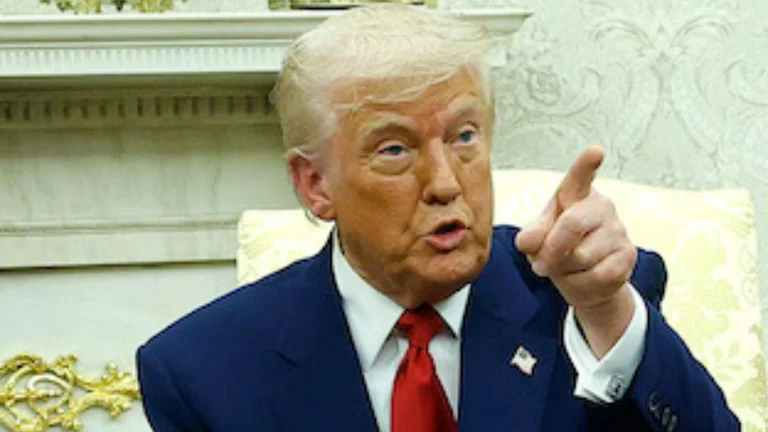
The renewed fighting came a day after US President Donald Trump declared the ceasefire with Iran “over,” although he said diplomatic talks could still continue and suggested any further military action would be brief.

According to the United States Central Command, American forces targeted around 90 military sites across Iran, including missile and drone storage facilities as well as logistics bases along the country’s southern coastline.
The military said the operation was aimed at reducing Iran’s ability to threaten commercial shipping in the Strait of Hormuz.
Iran responded within hours. The Islamic Revolutionary Guard Corps said it launched attacks on key US military installations in Kuwait and Bahrain, including bases at Arifjan, Ali Al Salem, Juffair and Sheikh Isa.
Explosions were reported in Bahrain’s capital, Manama, while Kuwaiti authorities said their air defence systems intercepted missiles and drones.
Inside Iran, state media reported US strikes on a railway bridge in the country’s northeast and a military base in Bushehr, home to Iran’s only civilian nuclear power plant. Residents also reported explosions in Bandar Abbas, Konarak and Chabahar, with parts of Chabahar experiencing power outages.
Trump defended the latest operation, saying it was carried out in response to recent Iranian attacks on commercial vessels.
“This is in retribution for yesterday’s bombing of ships by Iran,” he wrote on Truth Social, warning that any further attacks would trigger an even stronger response.
Later, speaking aboard Air Force One, Trump revealed that Iranian officials had reached out to Washington seeking renewed negotiations.
However, he questioned the value of further talks, describing Iran’s leadership as “sort of crazy.”
Iran’s chief negotiator, Mohammad Bagher Ghalibaf, insisted the Strait of Hormuz would only reopen under terms set by Tehran.
“The United States still has not learned that bullying and breaking its promises no longer come without consequences,” he said, warning that any further US attack would be met with retaliation.
Since fighting erupted in February following joint US-Israeli strikes, Iran has maintained that vessels passing through the Strait of Hormuz must comply with new regulations, including payment of transit fees. Tehran has also warned it could target ships that ignore its directives.
The latest escalation comes just hours before the funeral of Iran’s former Supreme Leader, Ali Khamenei, who was killed at the start of the conflict.
Meanwhile, António Guterres urged all sides to exercise maximum restraint, while Pakistan renewed calls for dialogue. Iran also confirmed that Foreign Minister Abbas Araghchi held talks with Qatar’s prime minister on efforts to ease regional tensions through diplomacy.
A US military official said Iran’s latest attacks caused no American casualties and only limited damage to military facilities. However, uncertainty over the conflict continues to disrupt global shipping, with the International Maritime Organization estimating that nearly 6,000 seafarers remain stranded in the region.




