


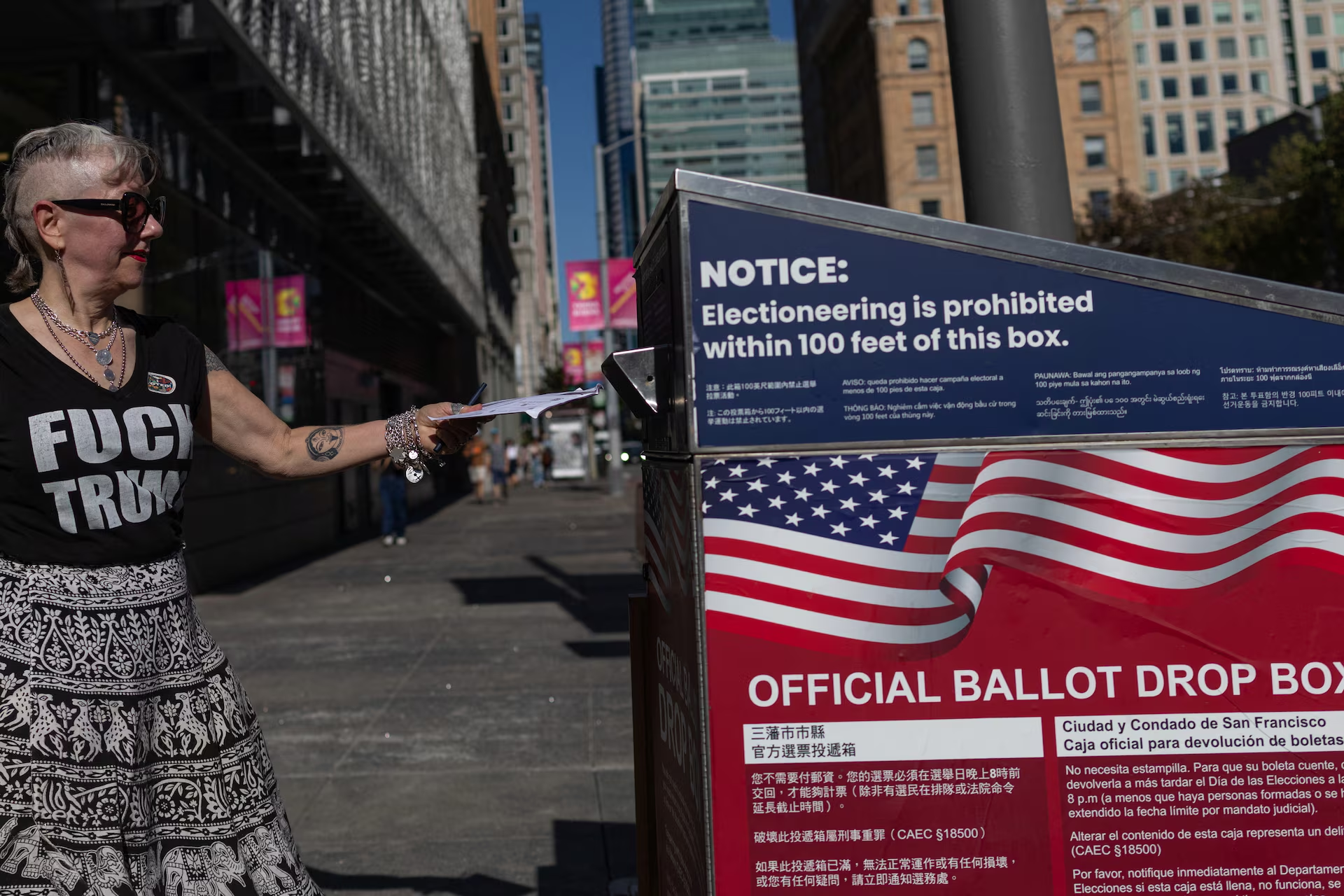
Americans are heading to the polls on Tuesday, November 3, in midterm elections that will determine which party controls Congress for the final two years of President Donald Trump’s current term.
The elections are expected to serve as the first nationwide assessment of Trump’s presidency, with voters deciding whether to give Democrats control of one or both chambers of Congress or retain the Republican majority.
The outcome could affect Trump’s ability to implement his policies and shape political debates within both parties ahead of the 2028 presidential election.
Here are six major issues to watch as voting takes place.

1. The races that will determine control of Congress
Democrats need a net gain of four seats in both the House of Representatives and the Senate to overturn the Republicans’ narrow majorities.
The party is widely expected to make gains in the House, while the Senate contest remains closely fought.
The outcome will determine how much room Trump has to advance his legislative agenda. If Democrats take control of either chamber, they could launch investigations into the administration’s handling of immigration enforcement, the Iran war and ethical concerns involving the President and his officials.
Early results from competitive House districts in Florida and Virginia could offer an indication of the scale of Democratic gains.
The Senate contest is expected to hinge on six to eight key races, including those in Ohio, Iowa, Alaska and Texas. Kansas has also become competitive despite Trump’s 16-point victory in the state in 2024.
2. Election-day challenges and vote counting
Election officials are preparing for possible disputes over voter eligibility, ballot counting and certification, particularly in closely contested races.
Long queues, voting machine problems and challenges by partisan poll watchers could also lead to litigation and delays.
The Justice Department plans to deploy about 1,000 election monitors across the country, roughly three times the number used during the previous midterm elections.
Some local officials have expressed concerns that the deployment could intimidate voters, although the department has dismissed those fears.
The administration has also faced legal challenges over its attempts to influence how states handle disputed voter registrations and election results.
In October, the Justice Department sued Alaska over the certification of its Senate election, arguing that voters could be confused by the presence of two Republican candidates with similar names.
Several states are also expected to take longer to complete their vote counts, particularly in close contests.
3. How Trump responds to the results
Trump’s reaction to the election results could become a major issue, especially if Republicans lose control of either chamber of Congress.
The President has repeatedly questioned the integrity of US elections and continued to make false claims that he won the 2020 presidential election.
After that election, Trump declared victory before counting was completed and continued to challenge the results, helping fuel the events that led to the January 6, 2021, attack on the US Capitol.
Ahead of this year’s midterms, his administration has sought voter data from states and launched investigations into alleged non-citizen voting.
Election studies and experts have found little evidence of widespread non-citizen voting.
The administration’s legal action against California over ballots from more than 20,000 registered voters suspected of being non-citizens has also faced court setbacks.
4. Voter turnout
Turnout among the major parties’ core supporters will be crucial to the outcome.
Opinion polls cited by Reuters showed Democrats were more enthusiastic about voting than Republicans ahead of Election Day.
However, Democratic strategists are concerned that younger, Black and Hispanic voters could turn out in lower numbers than they did during the 2024 presidential election.
These groups have expressed dissatisfaction with both major parties, particularly over the cost of living.
If Democratic support among these voters does not translate into actual turnout, the party could perform below expectations.
Although early voting data in states that register voters by party showed stronger Democratic participation, Republicans argued that many of their supporters traditionally prefer voting on Election Day.
5. What the results could mean for the 2028 presidential race
The midterm results could influence the direction of both parties as they prepare for the next presidential election in 2028.
Democrats remain divided over whether to adopt a more populist economic message or pursue a centrist approach aimed at attracting moderate and swing voters.
Strong performances by candidates from either wing of the party could strengthen their arguments over the party’s future direction.
The outcome could also shape the field of potential contenders for the Democratic presidential nomination.
For Republicans, the results could influence debates over Trump’s policies and the direction of the party after his current term.
6. Whether Republican campaign spending pays off
Republicans entered the election with a significant financial advantage, spending hundreds of millions of dollars more than Democrats through party committees and outside political groups.
The money was used largely to fund campaign advertisements attacking Democratic candidates.
Trump also spent more than $277 million, mainly through his MAGA Inc. super PAC, on television and direct-mail campaigns to support Republican candidates.
Tesla chief executive Elon Musk reportedly spent about $366 million during the midterm election cycle, including $276 million since July, to support Republican candidates.
A key question is whether the Republican spending advantage will influence closely contested races or whether concerns about high prices and the US-led war with Iran will have a greater impact on voters.
The results will offer both parties an indication of the issues and campaign strategies that resonate with voters ahead of the 2028 presidential election.




