
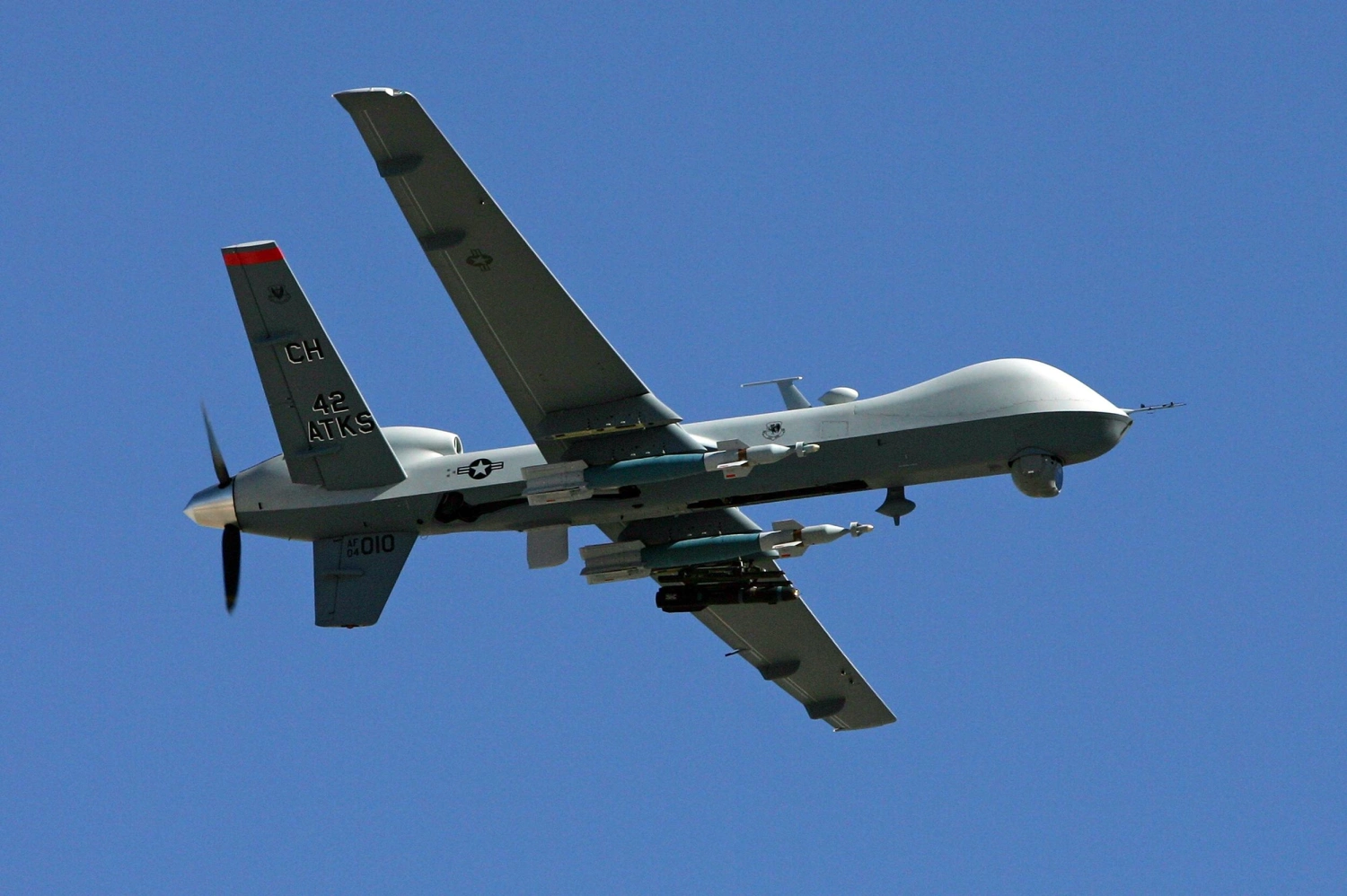
In what is shaping up to be one of the most consequential developments in Nigeria’s evolving security cooperation with the United States, Washington has formally requested permission to establish a drone refuelling station on Nigerian soil as part of a broader bid to deepen military collaboration and intelligence operations in West Africa. The proposal, still in advanced discussions, has surfaced amid expanding U.S.–Nigeria counterterrorism efforts, raising complex questions about national sovereignty, regional stability, and the scale of foreign military presence in Africa’s most populous nation.
According to widely circulated reports and multiple political sources, the United States is seeking Abuja’s consent to host a specialized drone support facility that would serve as a logistical hub for Unmanned Aerial Vehicles (UAVs) operating from Accra, Ghana, and extending their surveillance and strike capabilities deeper into Nigerian airspace and beyond. The refuelling station — described by U.S. military planners as a “force multiplier” — would provide critical fuel and maintenance support for long-endurance drones, enabling more persistent aerial operations against militant threats that have battered large swaths of northern and central Nigeria.
Details regarding the formal agreement have not been publicly released, but the notion of an expanded U.S. footprint comes at a time when bilateral security cooperation between the two countries is visibly intensifying. In late 2025 and early 2026, the United States Africa Command (AFRICOM) delivered military supplies to Nigerian forces and deployed a small team of U.S. military personnel to assist with intelligence and counterterrorism operations, marking the first official acknowledgement of U.S. troops operating within Nigeria since the controversial Christmas Day airstrike against Islamic State West Africa Province (ISWAP) militants in Sokoto State.
Strategic Context: Why Nigeria?
Nigeria’s security landscape has deteriorated over the past decade as multiple non-state armed groups have exploited governance gaps, porous borders, and sprawling rural terrains. Boko Haram and its splinter faction, ISWAP, continue to wage a protracted insurgency in the northeast, while banditry, kidnappings, and communal violence have surged in northwest and central states. These overlapping crises have stretched the capacity of Nigeria’s security forces and created fertile ground for regional instability — a situation that has attracted heightened U.S. interest.
The U.S. military’s interest in a refuelling hub is rooted in the structural limitations of its current regional infrastructure. At present, much of Washington’s aerial surveillance over West Africa — including intelligence, surveillance, and reconnaissance (ISR) flights — is supported from bases in Ghana and other partner territories, necessitating long transits and constrained loiter times. By establishing a refuelling node in Nigeria, U.S. drones could operate with greater reach and persistence, improving responsiveness and tactical flexibility in tracking militant movements and supporting Nigerian operations.

While the proposal stops short of a full-scale foreign base, its implications are significant: it would represent one of the most visible U.S. military logistics footprints in Sub-Saharan Africa outside of established facilities such as Niger’s Air Base 201, which has supported American drone missions elsewhere in the region.
Diplomatic Negotiations and Local Sensitivities
Discussions about the refuelling station are reported to be advanced, with negotiations involving senior military and diplomatic officials from both capitals. Nigerian authorities are understood to have been weighing the security benefits of the arrangement against concerns about autonomy, public perception, and regional diplomacy.
Although Nigeria and the U.S. have maintained a long history of defence cooperation — including training exchanges, equipment deliveries, and joint operations — the notion of hosting a foreign logistical hub has ignited debate among policymakers, security analysts, and civil society. Supporters argue that expanded cooperation could enhance Nigeria’s intelligence apparatus, accelerate the degradation of extremist networks, and reinforce swift responses to transnational threats. Indeed, recent joint operations have included mapping terrorist enclaves and coordinating intelligence collection between Nigerian forces and U.S. partners.
Critics, however, caution that any foreign refuelling or logistic station on Nigerian territory could blur lines of command and risk perceptions that national defence policy is being directed externally. Concerns about sovereignty, oversight, and strategic autonomy have been voiced in parliamentary hearings and by national security scholars who argue that Nigeria must safeguard its decision-making prerogatives even as it cooperates internationally.
Local and Regional Reactions
In Nigeria’s political and public spheres, reactions have been mixed. Some military officials see the deal as a pragmatic response to escalating threats, while others warn against becoming overly dependent on foreign capabilities. Among local commentators and civil society groups, there is a degree of scepticism about the long-term strategic costs of embedding foreign military infrastructure in a country already grappling with internal security challenges.
Outside Nigeria, regional powers such as Ghana and Niger have quietly monitored the talks, aware that enhanced U.S. aerial refuelling capabilities in Nigeria could alter the geopolitical balance in West Africa, where multiple nations are confronting shared security dilemmas and competing foreign influences.
Broader U.S. Strategic Objectives
The push for a drone refuelling facility in Nigeria aligns with broader U.S. strategic interests in West Africa and the Sahel. U.S. policy has increasingly emphasised partnerships that enhance partner nation capabilities while countering the influence of extremist organisations that could project instability beyond Africa’s borders. This approach is part of a layered security architecture that sees intelligence sharing, shared reconnaissance, and logistical cooperation as vital components of collective security.
Moreover, the U.S. deployment of a small military team to Nigeria and deliveries of equipment such as ISR platforms reflect Washington’s willingness to transform cooperation from advisory roles to more direct operational support — a shift critics and proponents alike acknowledge as emblematic of an evolving security partnership.
Moving Forward: Negotiations and Implications
As Nigeria evaluates the request, its leadership must balance immediate tactical advantages with long-term strategic interests. If approved, the drone refuelling station could significantly enhance U.S.–Nigeria operational synergy, enabling faster aerial responses and deeper intelligence penetration against sophisticated militant networks. However, the arrangement also carries potential diplomatic and domestic repercussions, underscoring the complexity of modern security cooperation in an era of asymmetric threats.
For now, negotiations remain ongoing, and both capitals appear committed to framing the agreement in a way that addresses Nigerian sensitivities while advancing shared aims against terrorism and regional instability.