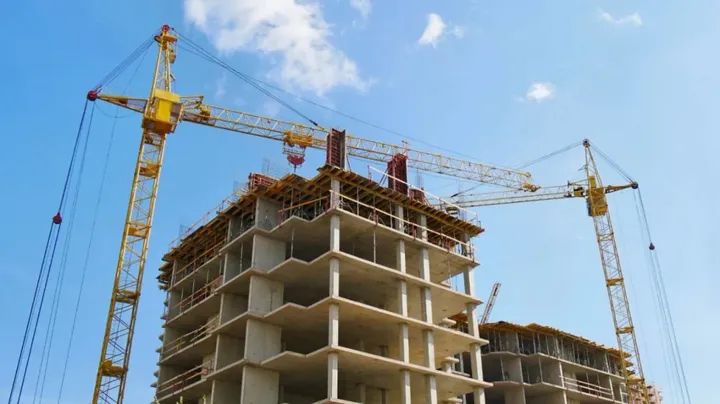
LAGOS, NIGERIA — African technology entrepreneurs have been urged to pay greater attention to the construction industry, with experts identifying the sector as one of the continent’s most promising but underexplored opportunities for technological innovation and investment.
The call comes as construction, a global industry valued at approximately $13 trillion in 2023, continues to struggle with fragmented operations, manual processes, weak coordination and slow productivity growth. Projections indicate that global construction output could rise to $22 trillion by 2040, creating significant opportunities for technology companies capable of improving how projects are designed, financed, managed and delivered.
In an article published by Vanguard on November 22, 2026, construction and project management professional Jimoh Razaq argued that Africa’s technology ecosystem has concentrated too much entrepreneurial energy and investment on familiar sectors such as financial technology, e-commerce, mobility, telecommunications and entertainment.
While those industries have produced successful African startups and attracted international investment, Razaq believes construction offers another opportunity capable of supporting large-scale businesses and addressing some of the continent’s most pressing development challenges.
He noted that construction is central to the delivery of homes, roads, hospitals, schools, factories, power infrastructure and modern cities. Despite its importance, many activities across the sector still depend on disconnected systems, informal transactions, paper documentation and manual coordination.
The result is a business environment where project information is scattered across spreadsheets, emails, messaging applications and physical documents, making it difficult for developers, contractors, consultants, suppliers, artisans and investors to work efficiently.
A $13 trillion industry struggling with productivity
The scale of the opportunity is reflected in construction’s enormous contribution to the global economy. However, its productivity performance has remained comparatively weak.
Research by McKinsey found that construction productivity grew by approximately 0.4 per cent annually between 2000 and 2022, compared with around two per cent for the broader economy. The slow growth highlights how little the industry’s traditional operating model has changed despite advances in technology across other sectors.
For African economies, the consequences are particularly significant. Delayed projects, unreliable cost estimates, inefficient procurement and weak coordination can increase construction expenses and slow the delivery of essential infrastructure.
The Organisation for Economic Co-operation and Development’s Africa’s Development Dynamics 2025 report estimates that the continent requires approximately $155 billion in annual infrastructure investment to support its development ambitions.
However, increasing financial commitments alone may not solve the problem. Improving the way projects are planned, financed, procured and executed will also be essential.
Where African technology companies can make a difference
Razaq identified several areas where technology entrepreneurs could develop practical solutions.
One is digital construction cost estimation. Developers frequently struggle to predict project expenses because prices of cement, steel, roofing materials, labour and transportation change across locations and over time.
Digital platforms using reliable market data could help developers generate more realistic budgets, compare suppliers, monitor price movements and identify potential cost overruns before they become major problems.
Another opportunity lies in construction procurement. A digital marketplace connecting developers and contractors with verified manufacturers, distributors and building-material suppliers could improve price transparency, simplify purchasing and reduce delays caused by fragmented supply chains.
Technology could also improve access to skilled labour. Platforms that connect property developers and contractors with verified masons, electricians, plumbers, welders, carpenters and other artisans could make recruitment more transparent and reliable.
Such systems could include professional profiles, skills verification, work histories, ratings and secure payment arrangements, while creating opportunities for training and certification.
Property development presents another significant opportunity. Digital platforms could help prospective buyers verify developers, monitor construction progress, track instalment payments and access project documentation.
These tools could improve transparency in off-plan property transactions, where buyers sometimes commit substantial funds without adequate information about construction progress or the reliability of developers.
Artificial intelligence could reshape project delivery
Artificial intelligence, data analytics, building information modelling and automation could also transform construction operations.
AI-powered systems could support project scheduling, identify potential delays, analyse procurement patterns and help managers make better decisions using real-time information.
Building Information Modelling, commonly known as BIM, allows professionals to create digital representations of buildings and infrastructure projects, improving collaboration between architects, engineers, contractors and other stakeholders.
The 2024 African BIM Report, which examined adoption across 32 African countries, identified opportunities associated with digital construction technologies while highlighting barriers such as inadequate infrastructure, skills shortages and resistance to change.
These findings suggest that technology adoption will require more than developing software. Startups must understand how construction professionals work and design products that address practical problems without creating additional complexity.
Why Africa needs homegrown solutions
The opportunities are substantial, but technology companies must build products around African market realities rather than simply importing systems designed for more developed economies.
Construction businesses across the continent operate under different regulatory environments, payment arrangements, supply-chain conditions and levels of digital literacy. Internet access may also be unreliable in some locations, while many small contractors and artisans operate informally.
Successful platforms will therefore need to be affordable, mobile-friendly, accessible and capable of serving both established construction companies and smaller operators.
Razaq also emphasised the importance of collaboration between technology founders and construction professionals. Software developers must understand the industry’s workflows, contractual relationships and operational challenges, while construction professionals need to embrace data, automation and digital systems.
Investors, meanwhile, must recognise that construction technology businesses may require longer adoption periods because of the industry’s traditional practices and fragmented customer base. McKinsey’s research on construction technology startups has similarly identified customer fragmentation, relatively low technology spending and resistance to new working methods as challenges to scaling businesses in the sector. <Cite refs={[“turn917417search3″,”turn917417search18”]}/>
Government and investors have a role to play
Public institutions could accelerate the transformation by digitising land records, improving access to property information, streamlining building approvals and strengthening digital standards for public procurement.
Financial institutions and institutional investors could support emerging companies through patient capital, industry partnerships and opportunities to test technology on actual construction projects.
Razaq also highlighted Ladaar, a construction technology ecosystem being developed to connect construction finance, professional services, procurement, project intelligence and workflow automation.
The wider opportunity, however, extends beyond any single platform or company. It involves building digital infrastructure capable of connecting the different participants and processes responsible for delivering Africa’s built environment.
Ultimately, the next generation of major African technology companies may emerge not only from helping people transfer money, order products or book transportation, but also from solving the practical challenges involved in building homes, roads, hospitals and cities.
For African founders willing to understand the industry and develop solutions that deliver measurable improvements, construction could become one of the continent’s most important technology and investment frontiers.