


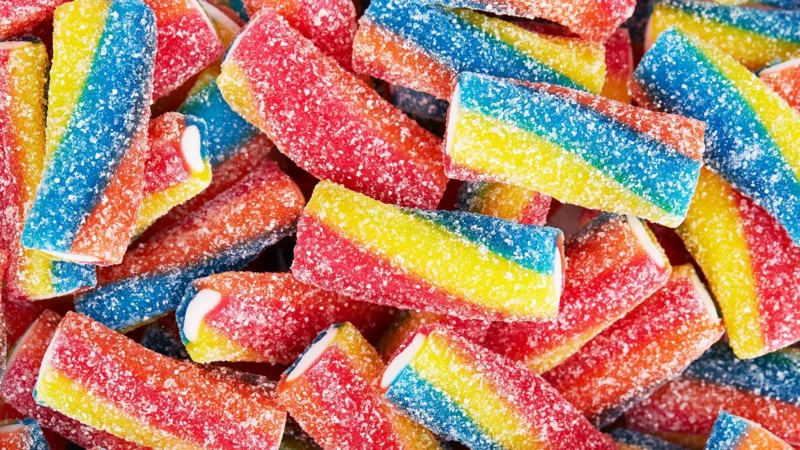
New York City is witnessing an unexpected retail boom as candy stores begin appearing in neighborhoods across the city, offering everything from imported Scandinavian sweets and nostalgic American chocolates to colourful pick-and-mix selections designed to attract a new generation of consumers.
The expansion is taking place at a time when retailers across the United States are confronting economic uncertainty, weaker consumer confidence and persistent pressure on household budgets, making the resilience of the candy business particularly striking.
At first glance, the growth of candy stores may seem surprising.
When people are worried about inflation and the rising cost of everyday necessities, luxury purchases are often among the first things to be postponed. Yet candy appears to be benefiting from precisely that environment.

Instead of spending heavily on expensive restaurants, holidays, electronics or other discretionary purchases, consumers can still afford a small treat that provides an immediate sense of enjoyment without requiring a major financial commitment.
That dynamic is helping to turn candy into a form of affordable indulgence across New York City.
Mitchell Cohen, the third-generation owner of Economy Candy on Manhattan’s Lower East Side, has seen this pattern before.
His family business dates back to 1937, when his grandfather originally operated a hat and shoe repair shop and sold candy from a cart outside as an additional source of income.
When customers could no longer afford repairs during the economic difficulties of the period, candy became the stronger business opportunity. Nearly nine decades later, the store remains a New York institution.
The story offers an important lesson about the economics of sweets.
Candy is relatively inexpensive, has a long shelf life and does not require refrigeration in most cases. These characteristics make it considerably easier to stock and sell than many other food products. For retailers, that can translate into lower levels of waste and simpler operations.
For consumers, it means they can purchase a small pleasure without committing a significant portion of their income.
The phenomenon also reflects what economists often describe as the “lipstick effect”, in which consumers facing financial uncertainty continue to purchase inexpensive luxuries even while cutting back on larger expenditures.
The idea is simple: people may postpone a major purchase, but they may still spend a few dollars on something that makes them feel good.
Candy stores are increasingly building their businesses around this psychology.
Rather than operating solely as traditional sweet shops, many new stores are creating experiences around the products they sell. Bright interiors, unusual packaging, imported flavours and pick-and-mix displays encourage customers to browse, photograph their purchases and share them online.
Social media has become particularly important to the growth of imported confectionery.
Swedish candy, for example, has experienced a surge in popularity online, helping brands built around Scandinavian sweets attract consumers who may previously have had little exposure to them. New York has become an important market for this trend.
BonBon, a candy company founded in 2018 by Swedish expatriates, has expanded to five locations across Manhattan and Brooklyn, alongside a Hamptons location. The company has also looked beyond New York, with another location planned in Greenwich, Connecticut.
Its strategy demonstrates how candy businesses are adapting to the city’s challenging retail environment.
Instead of competing for expensive locations on major commercial avenues, BonBon deliberately targets smaller spaces on side streets.
Lower rents allow the company to control costs while giving each shop a more intimate atmosphere. The stores are designed around quirky details and distinctive branding, turning the purchase of candy into an experience rather than a simple transaction.
That approach is also visible in other parts of the city. Candor Candy’s opened in Brooklyn’s Fort Greene neighborhood, while Swedish candy chain Candy King opened its first American location in Manhattan.
New York City’s tourism authorities have also highlighted new Swedish candy concepts, including Vännest in the West Village, where customers can mix and match imported sweets such as Bubs and other Scandinavian favourites. (New York City Tourism + Conventions)
The appeal is not limited to candy alone. Some independent operators are adding complementary products to increase their revenue and make their stores more useful to neighborhood customers.
Candor Candy’s, for example, also sells pantry products such as granola, rice, soft drinks and beef jerky sourced from independent producers.
Another factor supporting the trend is the availability of vacant storefronts.
New York continues to struggle with pockets of commercial vacancy years after the pandemic, particularly in parts of Downtown Manhattan, Northern Brooklyn and Western Queens.
The city’s comptroller has noted that vacancies remain highly localized, creating opportunities for smaller businesses to take over spaces that may have previously been too expensive or difficult to access. (NYC Comptroller’s Office)
For candy entrepreneurs, these smaller spaces can be particularly attractive because the business does not require the extensive kitchens, refrigeration systems or staffing levels associated with restaurants.
A compact store can hold a surprisingly large range of products while allowing customers to serve themselves in pick-and-mix formats.
But the candy boom does not mean the industry is immune to economic pressures.
Retailers are facing higher wholesale prices, particularly for imported confectionery. International supply chains, transportation expenses and tariffs can raise the cost of products before they even reach American shelves.
Some candy businesses have therefore had to absorb part of these increases rather than passing the entire burden to customers.
That challenge is significant because affordability is one of candy’s biggest advantages.
If prices rise too sharply, the very consumers who are keeping the sector alive may begin to reconsider their purchases. Yet for now, the industry’s relatively low price points continue to provide an advantage.
The emergence of candy stores also reflects a broader transformation in New York’s retail culture.
Consumers are increasingly looking for businesses that provide something worth experiencing and sharing, rather than simply selling a product. Candy fits neatly into that model because it is colourful, nostalgic, highly visual and easy to photograph.
This trend has even extended beyond ordinary retail stores.
In Times Square, a new candy-themed immersive attraction has transformed multiple floors of One Times Square into an interactive, candy-inspired experience where visitors explore themed environments and collect sweets along the way. (Time Out Worldwide)
For New York entrepreneurs, the message is increasingly clear: consumers may be cutting back, but they have not stopped seeking moments of pleasure. Candy offers one of the cheapest ways to provide that escape.
For shoppers, a small bag of sweets can represent something more than food. It can be nostalgia, entertainment, a social-media moment or simply an affordable reward after a difficult day.
That combination is giving candy an unusual level of resilience at a time when many other retail categories are struggling.
DDM News understands that the growth of candy stores across New York is therefore not simply about Americans developing a bigger appetite for sweets.
It is a reflection of how consumer behaviour changes during periods of economic uncertainty.
Businesses are finding opportunities in smaller spaces, consumers are choosing affordable indulgences, and social media is turning unfamiliar products into highly desirable trends.
As New York continues to navigate high living costs and a rapidly changing retail landscape, the candy store is emerging as an unlikely success story.
From longstanding neighbourhood institutions to fashionable Swedish confectionery brands and immersive candy attractions, the sector is proving that even in difficult economic times, people remain willing to spend a little money on something that makes them happy.
The lesson for retailers may be surprisingly simple.
Consumers may not always be able to afford more, but they will continue looking for ways to enjoy what they can afford.
In New York City, that increasingly means candy.




