


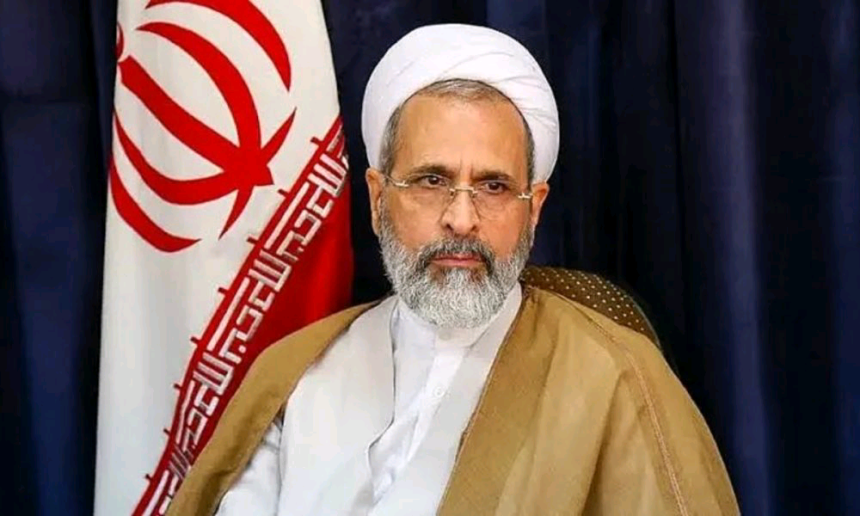
Iran has appointed Ayatollah Arafi as its interim Supreme Leader following the death of Supreme Leader Ali Khamenei in a joint US–Israeli airstrike on Saturday, February 28, 2026.
The announcement comes as the country begins formal preparations for a leadership transition amid rising regional tensions.
Ayatollah Arafi will temporarily assume the responsibilities of the Supreme Leader while the Assembly of Experts, the constitutional body tasked with appointing and supervising Iran’s highest authority, convenes to select a permanent successor.
In accordance with Iran’s legal provisions for succession, Arafi will serve on an interim three-member leadership council, alongside President Masoud Pezeshkian and Chief Justice Gholamhossein Mohseni-Ejei.

The council is mandated to oversee the functions of the Supreme Leader during the transitional period, ensuring continuity of governance and religious authority.
Arafi, 67, is a senior cleric with decades of experience within Iran’s political and religious establishment.
He has previously served on the influential Guardian Council and was confirmed as a member of the interim body by the Expediency Discernment Council.
He studied in the holy city of Qom, Iran’s foremost seminary center, under prominent scholars and has attained the rank of mujtahid, granting him the authority to issue independent Islamic legal rulings.
Officials said that further details on the succession process are expected as the Assembly of Experts convenes to determine Iran’s next Supreme Leader.
The transitional appointment comes amid a period of heightened instability following Khamenei’s death, with Iran responding to the US–Israeli military operation with retaliatory strikes across the region.
The interim council is tasked with maintaining stability and guiding Iran through what is expected to be a delicate and closely watched leadership transition, as the country navigates both domestic challenges and international pressures in the wake of the strike that killed Khamenei.




