


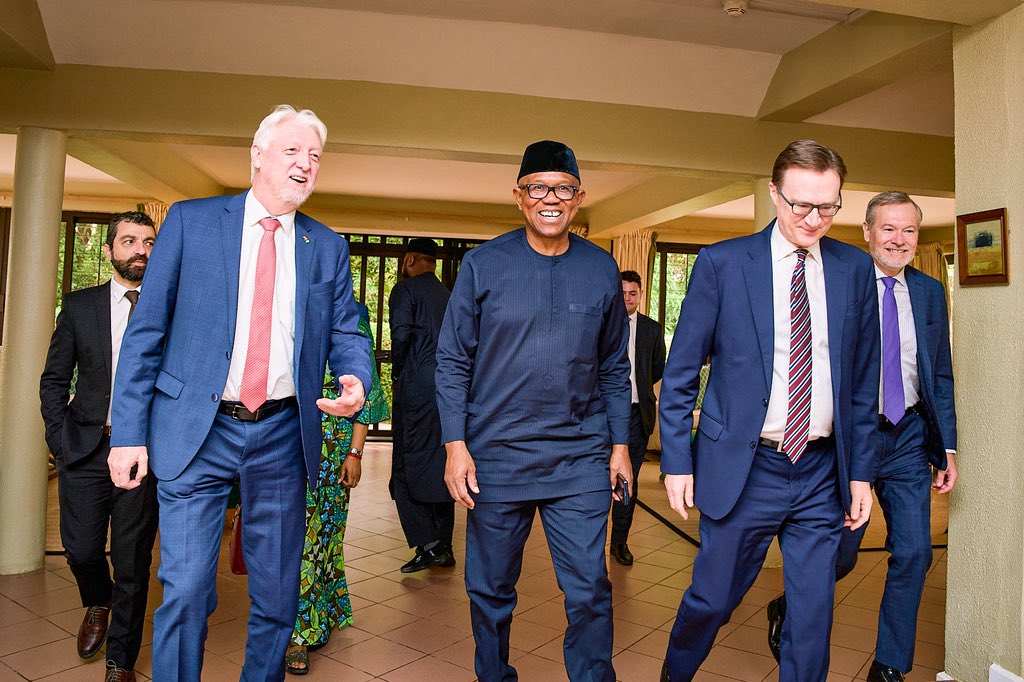
In a move that underscores his growing engagement on both the domestic and international political stage, former Anambra State governor and prominent opposition figure Peter Obi recently hosted members of the diplomatic community in what observers describe as a strategic and symbolic meeting that reflects Nigeria’s evolving political dynamics ahead of the 2027 general elections, as representatives from key global partners, including the United Kingdom, Germany, Canada, and France, paid him a visit in Abuja for high-level discussions centered on governance, democracy, and the future of Nigeria’s political landscape.
The meeting, which took place amid heightened political activities surrounding the African Democratic Congress (ADC) convention, brought together diplomats led by the British High Commissioner alongside officials from the German, Canadian, and French embassies, signaling a growing international interest in Nigeria’s opposition politics and the role figures like Obi may play in shaping the country’s future direction. Although details of the closed-door engagement were not fully disclosed, sources familiar with the meeting suggest that discussions revolved around democratic consolidation, institutional independence, economic reforms, and the importance of credible elections as Nigeria prepares for another critical electoral cycle.
The presence of these diplomatic representatives is widely interpreted as part of ongoing efforts by the international community to engage with key political actors across party lines, particularly those seen as influential voices in promoting transparency, accountability, and reform-oriented governance. For Peter Obi, whose political message has consistently centered on prudence, economic restructuring, and institutional strengthening, the meeting offered an opportunity to further articulate his vision for Nigeria while reinforcing his relevance on the global stage.

DDM News gathered that the interaction also comes at a time when concerns about the state of Nigeria’s democracy have been raised by several stakeholders, including Obi himself, who has repeatedly warned about what he describes as the weakening of opposition parties and the erosion of democratic institutions. In recent statements, he has accused the government of actions that allegedly hinder political pluralism, including difficulties faced by opposition parties in organizing events and accessing public spaces, an issue that played out in the lead-up to the ADC convention in Abuja.
Observers note that the diplomatic engagement may serve multiple purposes, including strengthening communication channels between Nigeria’s political actors and the international community, as well as providing foreign missions with firsthand insights into the country’s internal political climate. Such meetings are often part of broader diplomatic practices aimed at fostering stability, supporting democratic processes, and ensuring that key stakeholders remain informed about developments that could impact governance and policy direction.
The meeting also comes against the backdrop of increased political consultations among opposition leaders, as figures like Peter Obi continue to participate in strategic discussions aimed at building alliances and consolidating efforts ahead of future elections. Reports indicate that Obi has been actively involved in high-level engagements with other political leaders, including meetings held on the sidelines of the ADC convention to coordinate strategies and strengthen opposition cohesion.
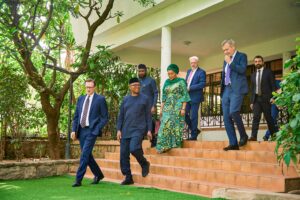
Photos from the diplomatic visit, which have since circulated widely, show a cordial and engaging atmosphere, with participants exchanging views in what appeared to be a constructive dialogue. The visual imagery of the meeting has further amplified public interest, as Nigerians on social media and beyond analyze its implications, with many interpreting it as a sign of Obi’s continued political relevance and international recognition.
DDM News understands that such interactions between political leaders and foreign diplomats are not unusual, particularly in democratic systems where embassies maintain open channels of communication with a wide range of stakeholders, including government officials, opposition figures, civil society organizations, and business leaders. However, the timing and context of this particular meeting have added to its significance, given the current political climate and the ongoing repositioning within Nigeria’s opposition space.
For many analysts, the engagement highlights the increasing intersection between domestic politics and international diplomacy, where political actors are not only required to address internal challenges but also to present credible and coherent visions to the global community. In this regard, Obi’s meeting with diplomats may be seen as part of a broader effort to position himself and his political platform as viable alternatives capable of attracting both local support and international confidence.
As Nigeria moves closer to the 2027 elections, such developments are expected to become more frequent, with both ruling and opposition figures intensifying their engagements at home and abroad. The role of the international community, while often understated, remains significant in shaping perceptions, encouraging democratic norms, and supporting processes that promote stability and good governance.
In the final analysis, the meeting between Peter Obi and members of the diplomatic community represents more than a routine courtesy visit; it is a reflection of the shifting dynamics within Nigeria’s political landscape and the growing importance of global engagement in local politics. As conversations around leadership, reform, and the future of the country continue to evolve, moments like this serve as key indicators of how political actors are positioning themselves in the lead-up to what promises to be a highly consequential electoral contest.




