


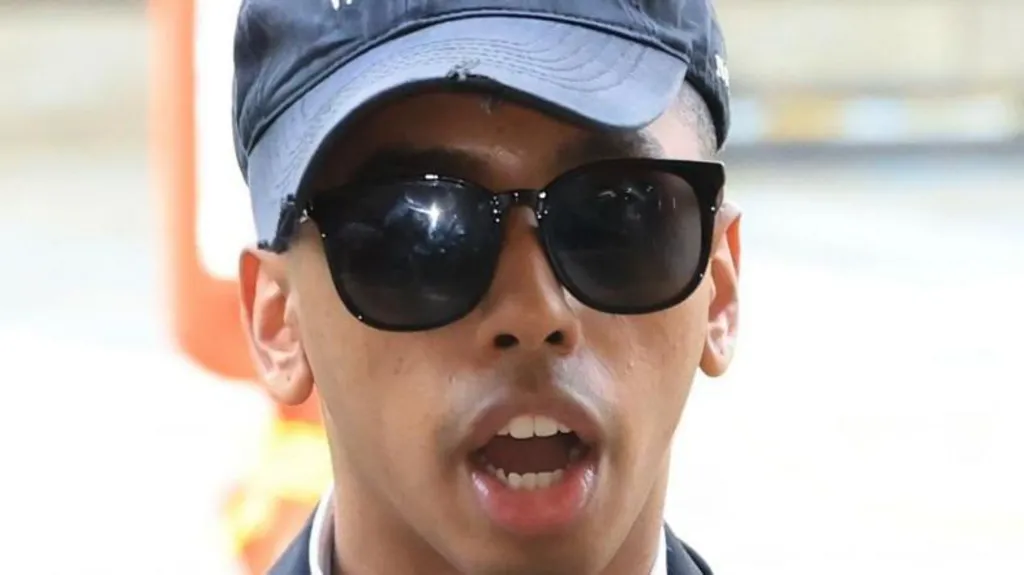
An American YouTuber known for controversial livestreams has been sentenced to six months in prison in South Korea after a series of disruptive and offensive public stunts.
The 25-year-old content creator, whose real name is Ismael Ramsey Khalid is known online as Johnny Somali, was convicted by a court in Seoul on multiple charges, including public nuisance and the distribution of sexually explicit deepfake material.
The case stems from an incident in November 2024, when Khalid filmed himself kissing and performing inappropriate acts on a statue commemorating victims of wartime sexual slavery during World War II.
The video sparked widespread outrage across South Korea, where such memorials carry deep historical and emotional significance.

Authorities moved quickly, charging him and restricting him from leaving the country while investigations were ongoing.
In its ruling, the court said Khalid had repeatedly engaged in offensive behaviour toward the public in pursuit of online attention and profit.
Judges, however, handed down a lighter sentence than the three years sought by prosecutors, noting that the incidents did not result in severe harm to specific victims.
Beyond his prison term, Khalid will also face restrictions after his release, including a ban on working with organisations that serve minors and vulnerable groups.
Khalid has built a reputation for provocative content, which has seen him banned from several streaming platforms.
His behaviour abroad has also drawn criticism.
He has been accused of harassing people during visits to Japan and Israel, and at times appeared to provoke confrontations for online views.
During his time in South Korea, several videos circulated online showing locals confronting him, with some incidents escalating into physical altercations.
The statue at the centre of the controversy represents so-called “comfort women” an estimated 200,000 women, many of them Korean, who were forced into sexual slavery by Japanese forces during the war.
The issue remains a sensitive and unresolved part of East Asian history, often straining relations between South Korea and Japan.
Khalid had earlier issued an apology, claiming he did not understand the significance of the statue.
However, many in South Korea dismissed the apology as insincere.
The case has once again highlighted the risks and consequences of using shock tactics for online fame especially when they intersect with deeply sensitive historical issues.




