


(DDM) – The Federal Government has unveiled plans to actively engage Nigerian healthcare professionals abroad in a sweeping strategy aimed at reversing the country’s worsening specialist care shortages and transforming decades of brain drain into what officials describe as “brain gain.”
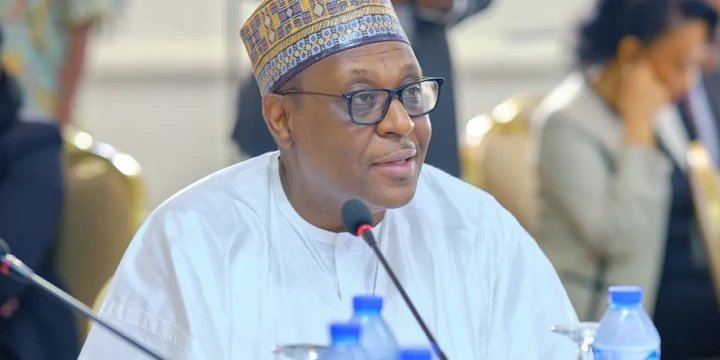
The initiative was announced by the Minister of State for Health and Social Welfare, Adekunle Salako, during a Medical Council Health Roundtable Conference in Abuja.
Salako said the government intends to tap into the expertise, investments and global networks of Nigerian doctors, nurses and other health professionals practicing overseas.
He explained that the diaspora engagement plan forms part of a broader effort to strengthen Nigeria’s fragile health system and rebuild confidence in local specialist services.

Nigeria has for years grappled with the mass migration of healthcare workers to countries such as the United Kingdom, the United States and Canada.
Push factors have included low wages, limited infrastructure, industrial disputes and insecurity.
The country’s doctor-to-population ratio currently stands at approximately one doctor to 5,000 people.
This falls significantly below the recommendation of the World Health Organization, which advises a ratio of one doctor to 600 people.
The situation is similar for nurses, with Nigeria’s ratio estimated at one nurse to 2,000 citizens, compared with the global benchmark of one to 300.
Beyond shortages, distribution remains uneven.
About 75 percent of health workers are concentrated in urban areas that serve roughly 45 percent of the population.
Rural communities continue to experience severe gaps in access to skilled medical care.
Salako described the health workforce as a strategic national asset that requires deliberate investment and long-term planning.
He said more than 37,000 health workers have been recruited between 2023 and 2025, with over 75 percent serving in clinical capacities.
The government has also introduced rural retention incentives aimed at correcting workforce imbalances across regions.
Migration remains a pressing concern.
To address this, authorities have developed a health workforce migration policy designed to improve retention while fostering structured collaboration with diaspora professionals.
The policy seeks to encourage knowledge exchange, short-term specialist missions and remote support arrangements.
Several manpower optimisation initiatives are already underway.
They include the establishment of a Health Workforce Registry, expanded training quotas for healthcare institutions and on-the-job training programmes covering more than 70,000 health workers.
Additional measures involve deploying community health extension workers and expanding laboratory staffing in more than 130 facilities nationwide.
A National Rapid Response Team for disease surveillance has also been constituted to strengthen outbreak preparedness.
Funding constraints and coordination gaps continue to challenge the system.
Salako acknowledged persistent industrial actions, top-heavy staffing structures and fragmentation within health governance frameworks.
He also outlined plans to develop a climate-resilient health system powered by renewable and alternative energy sources such as solar, gas and hydrogen.
Carbon credit financing, he said, could help fund infrastructure upgrades.
Reflecting on global trends, the minister noted that the COVID-19 pandemic exposed structural weaknesses in health systems worldwide.
He cited reductions in development assistance from major donors, including the United States, the United Kingdom and Germany, as further evidence of shifting global health financing realities.
Nigeria’s reform blueprint envisions universal access to quality care without financial hardship.
Over 500 high-impact health infrastructure projects have reportedly been completed nationwide, with many others ongoing.
The Power for Health Initiative has been introduced to ensure reliable electricity supply in medical facilities.
Primary healthcare remains central to the reform agenda.
Working alongside the National Primary Health Care Development Agency and the World Bank, governance structures have been strengthened in 31 states and more than 400 local government areas.
Primary healthcare centres are undergoing renovations, equipment upgrades and personnel expansion.
Quality performance scores in these facilities have reportedly improved from 42 percent to 67 percent.
Utilisation has also surged dramatically, rising from 15.1 million visits in 2024 to 170.8 million visits in 2025.
Health financing reforms are being pursued through increased budget allocations and guaranteed release of the Basic Health Care Provision Fund.
Mandatory health insurance enrolment and expanded benefit packages are also under consideration.
Digital transformation is another cornerstone.
Plans include strengthening the National Health Data Repository and expanding telemedicine infrastructure to bridge access gaps.
Nigeria has also advanced research governance through the work of its National Health Research Ethics Committee.
The launch of the country’s first electronic research ethics platform, supported by the U.S. Centers for Disease Control and Prevention, marks a step toward improved transparency and data sovereignty.
For Africa’s most populous nation, the stakes are high.
Whether diaspora engagement can truly convert brain drain into sustainable brain gain may ultimately define the future of specialist healthcare in Nigeria.




