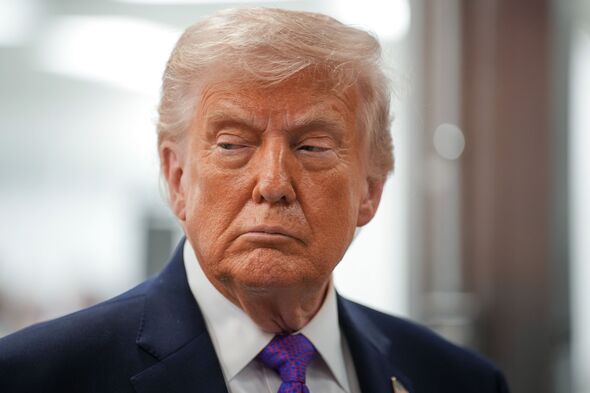
United States President Donald Trump on Monday said Washington and Tehran have reached “major points of agreement” in ongoing discussions, raising hopes that a diplomatic resolution to the intensifying Middle East conflict could be within reach.
Speaking to reporters, Trump described the latest engagements as “very, very strong,” suggesting that both sides were nearing consensus on key issues.
“We have points, major points of agreement… almost all points of agreement,” he said.
Trump disclosed that his Middle East envoy Steve Witkoff and senior adviser Jared Kushner held talks with Iranian representatives on Sunday, with negotiations expected to continue.
He expressed optimism that a deal could be reached within a five-day window, which he earlier announced while postponing potential military action.
“We’re giving it five days… I think it could end up being a very good deal for everybody,” Trump added.
However, the U.S. president declined to reveal the specific Iranian officials involved, noting only that discussions were not being held with Iran’s supreme leadership.
Despite Trump’s claims, Iranian officials have denied that any talks are taking place. The country’s Fars News Agency, citing a source, stated that there are no direct or indirect communications with the United States.
The conflicting accounts have cast doubt on the true state of diplomacy, leaving observers uncertain whether negotiations are substantive or part of broader strategic messaging.
Earlier in the day, Trump announced a pause on planned U.S. strikes targeting Iran’s power plants and energy infrastructure an escalation that had been tied to Tehran reopening the Strait of Hormuz.
The strategic waterway, which carries roughly one-fifth of global oil shipments, has been effectively restricted amid ongoing hostilities.
Iran had warned that any U.S. attack on its energy infrastructure would trigger retaliation against Israeli power facilities and installations linked to American forces in the Gulf.
Global markets responded positively to signs of de-escalation:
- Oil prices dropped sharply
- The U.S. dollar weakened against major currencies
- Stock markets rallied
- Government bond yields declined
The war, which began on February 28 following U.S. and Israeli strikes on Iranian targets, has already killed more than 2,000 people and displaced millions across the region.
It has also:
* Driven up global fuel prices
* Heightened inflation concerns
* Disrupted supply chains
* Strained geopolitical alliances
Trump said the Strait of Hormuz could be reopened “very soon” if talks succeed, even suggesting it might be jointly controlled though he offered no specifics.
While the five-day pause provides a narrow window for diplomacy, the situation remains volatile, with mixed signals from both sides and continued military tensions.
For now, the world watches closely as fragile hopes for peace compete with the risk of further escalation.