


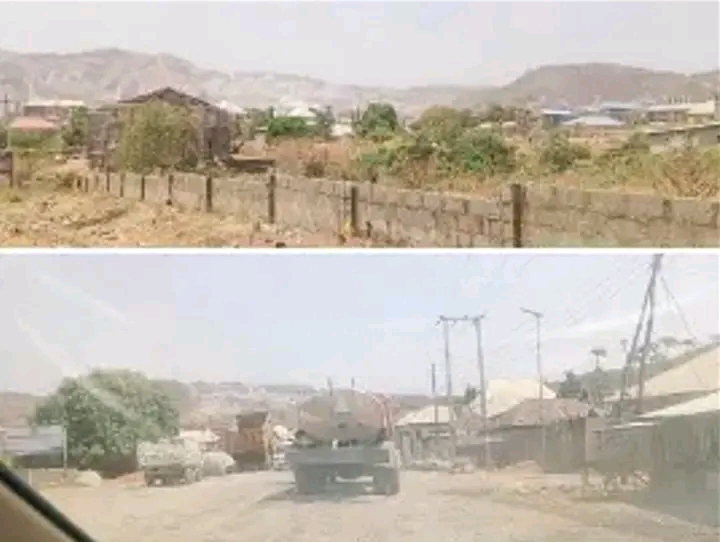
(DDM) – Residents of several communities in Abuja have raised alarm over worsening pollution linked to quarry operations, warning that their health and livelihoods are under serious threat.
For years, affected communities have endured the impact of continuous blasting, dust emissions, and environmental degradation caused by quarry companies operating in the area.
Locals say the activities have led to severe air pollution, making it difficult for residents to breathe and increasing cases of respiratory illnesses.
They also report that constant vibrations from blasting have weakened buildings, raising fears of structural collapse in some homes.

Community members describe a situation where daily life has become increasingly unsafe due to environmental hazards.
According to residents, farmlands and water sources have also been affected, reducing agricultural productivity and access to clean water.
They allege that despite repeated complaints, little has been done to regulate the activities of the quarry operators.
Many residents say they feel powerless to challenge the companies, citing lack of resources and institutional support.
The quarry firms, they claim, continue to carry out large-scale extraction activities with minimal regard for environmental and public health concerns.
Observers note that quarrying, while economically beneficial, often comes with significant environmental consequences if not properly regulated.
Experts warn that prolonged exposure to quarry dust can lead to chronic health conditions, including lung diseases.
The situation in these Abuja communities reflects broader concerns about environmental governance and enforcement of safety standards.
Residents are now calling on government authorities to intervene urgently and enforce stricter regulations on quarry operations.
They are demanding environmental impact assessments, monitoring, and accountability from companies involved.
Community leaders say urgent action is needed to prevent further deterioration of living conditions in the affected areas.
They also stress the need for compensation and support for families whose livelihoods have been disrupted.
The crisis highlights the tension between economic activities and environmental sustainability in rapidly developing urban areas.
As the situation persists, affected residents continue to appeal for immediate government intervention to safeguard their health and future.




