


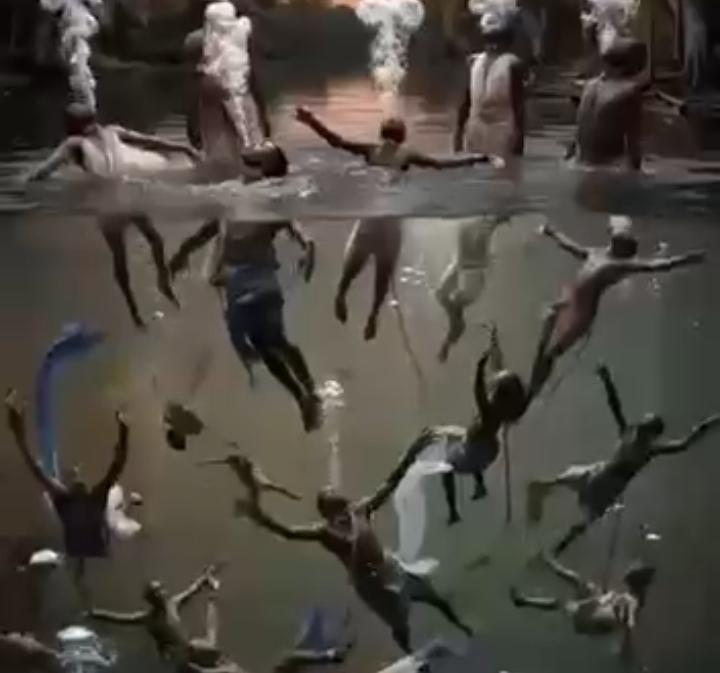
LAGOS, NIGERIA — A resurfaced historical video has sparked intense reactions as it revisits the harsh realities of slavery practices in Igbo land during the 1800s, offering renewed insight into a deeply complex and often misunderstood past.
The footage began circulating widely across social media platforms, and researchers later reviewed it during an informal historical discussion session held in Lagos at a private media archive center.
The video depicts scenes and narratives describing how slavery operated within parts of Igbo society before and during early colonial contact, challenging modern assumptions that slavery existed only through transatlantic systems controlled by Europeans.
Historical accounts confirm that forms of servitude existed within many African societies, including Igbo communities, where individuals became slaves through war capture, debt bondage, or punishment for crimes.

These systems, while different from chattel slavery in the Americas, still imposed harsh restrictions on personal freedom and social mobility.
Experts explain that in Igbo land, slaves—often referred to as “ohu”—were typically integrated into households, where they performed labor for their owners.
Some eventually gained limited rights, including the possibility of assimilation into the family lineage, though many remained permanently marginalized.
The video also highlights the role of internal conflicts and inter-community wars, which fueled the capture and sale of individuals.
As the transatlantic slave trade expanded in the 18th and 19th centuries, some captives were sold to European traders along coastal regions, linking local systems to global slave markets.
Cultural historians emphasize that Igbo society was not uniform, and practices varied widely across different communities.
While some areas practiced rigid systems of servitude, others maintained more flexible social structures that allowed gradual integration of slaves.
The footage further reveals the psychological and social consequences of slavery, including stigma that extended across generations.
Descendants of slaves in certain communities still face discrimination today, despite modern legal frameworks promoting equality.
Scholars argue that understanding this history remains essential for addressing lingering social divisions and promoting reconciliation.
They stress that acknowledging internal systems of slavery does not diminish the atrocities of the transatlantic trade but instead provides a fuller picture of historical realities.
The discussion surrounding the video reflects a growing movement among young Nigerians seeking to critically examine their history without romanticizing the past.
Social commentators note that such conversations are necessary for building a more informed and unified society.
As the video continues to circulate, it is likely to drive further academic inquiry and public debate, encouraging deeper exploration into pre-colonial African societies and their evolving social systems.




