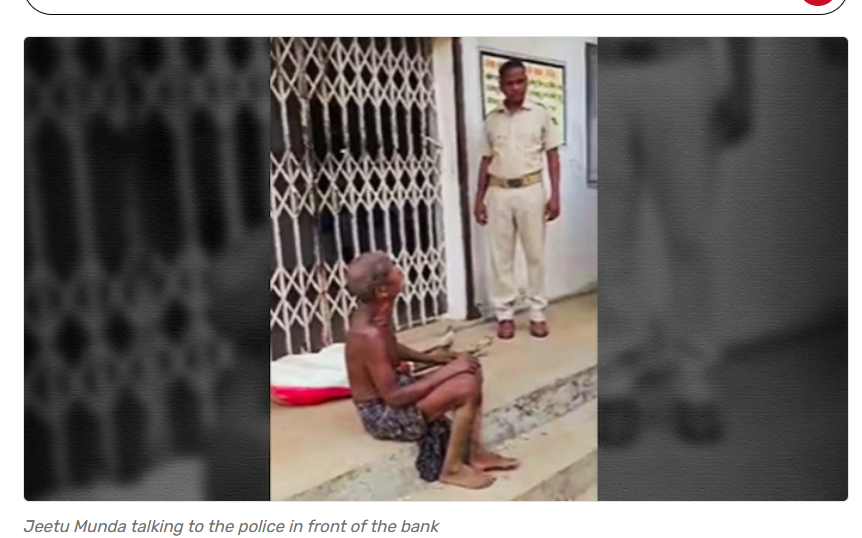
A shocking and deeply troubling incident has emerged from Odisha, where a tribal man reportedly brought the skeletal remains of his late sister to a bank in an attempt to access funds from her account.
The man, identified as Jeetu Munda, is said to be the only surviving family member and rightful claimant to his sister’s money. However, due to strict banking procedures requiring the account holder’s physical presence or proper documentation, he faced repeated difficulties trying to withdraw the funds.
In a desperate move that has since drawn national attention, Munda arrived at the bank carrying what was described as his sister’s skeleton, hoping it would serve as proof of her identity and his claim. The disturbing scene reportedly left bank staff and customers in shock, highlighting both the man’s desperation and the systemic challenges faced by individuals in rural and tribal communities.
Reports indicate that Munda had struggled for a long time to navigate the bureaucratic requirements needed to access the money. Lacking formal education and proper legal guidance, he was unable to provide the necessary documents such as a death certificate or succession papers, which are typically required in such cases.

Following the incident, local authorities stepped in and directed the bank to assist him in resolving the issue within the legal framework. Officials have now been tasked with ensuring that due process is followed while also helping Munda access the funds he is entitled to.
The situation has sparked widespread debate about financial inclusion, particularly in underserved communities where access to documentation and legal processes can be limited. Many have called for more flexible and humane systems that take into account the realities faced by people in remote areas.
Beyond the shock value of the incident, it underscores a larger issue how rigid administrative systems can sometimes fail the very people they are meant to serve, pushing individuals into extreme actions out of frustration and necessity.