


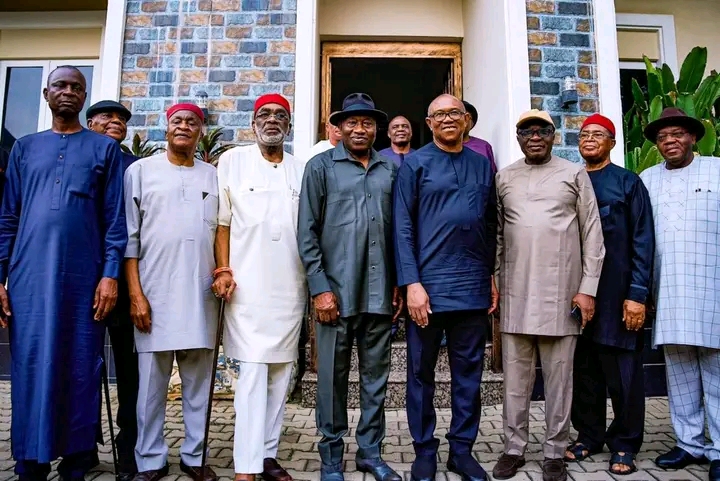
ABUJA, NIGERIA — Peter Obi has continued his nationwide political consultations with a high-profile visit to former President Goodluck Jonathan, as discussions intensify around the 2027 general elections and the future direction of Nigeria.
The former Labour Party presidential candidate disclosed that the meeting formed part of broader engagements with South-East leaders and other national stakeholders aimed at reviewing the country’s political and socio-economic direction.
Obi described the discussions as frank and reflective, focusing on the urgent need to reposition Nigeria toward unity, security, stability, productivity, and inclusive governance at a time of rising national challenges.
He noted that the country is currently facing economic hardship, insecurity concerns, and deepening social divisions, stressing that these issues require collective reflection and leadership engagement across political and regional lines.

According to him, Nigeria must embrace leadership that prioritises competence, character, capacity, and compassion over personal ambition or political self-interest.
He emphasised that governance should shift from a consumption-driven model to a production-driven economy, where human and natural resources are effectively harnessed for national development and shared prosperity.
Obi further stated that the 2027 elections should not be treated as a routine political process, but as a critical turning point that could reshape the nation’s trajectory.
He argued that the upcoming election presents an opportunity to address structural challenges affecting education, entrepreneurship, and security across the country.
In his message, he highlighted the struggles of Nigerian children who lack access to quality education, small business owners facing economic constraints, and citizens seeking improved safety and governance systems.
Obi maintained that national renewal would require sincere dialogue among leaders, unity of purpose, and a strong commitment to making difficult but necessary decisions in the interest of the people.
He added that sustained consultation with political and community leaders remains essential in building consensus around solutions to Nigeria’s long-standing challenges.
The meeting with Jonathan is seen as part of a wider pattern of political engagement involving key national figures ahead of the next electoral cycle.
Jonathan, who led Nigeria from 2010 to 2015, has remained an influential voice in regional and continental peace and democratic discussions since leaving office.
Obi concluded that Nigeria still has the potential to recover and progress if leaders and citizens commit to responsible governance and national unity.
He reaffirmed his belief that with collective effort and purposeful leadership, the country can chart a new path toward stability and development, stating that a better Nigeria remains achievable.




