



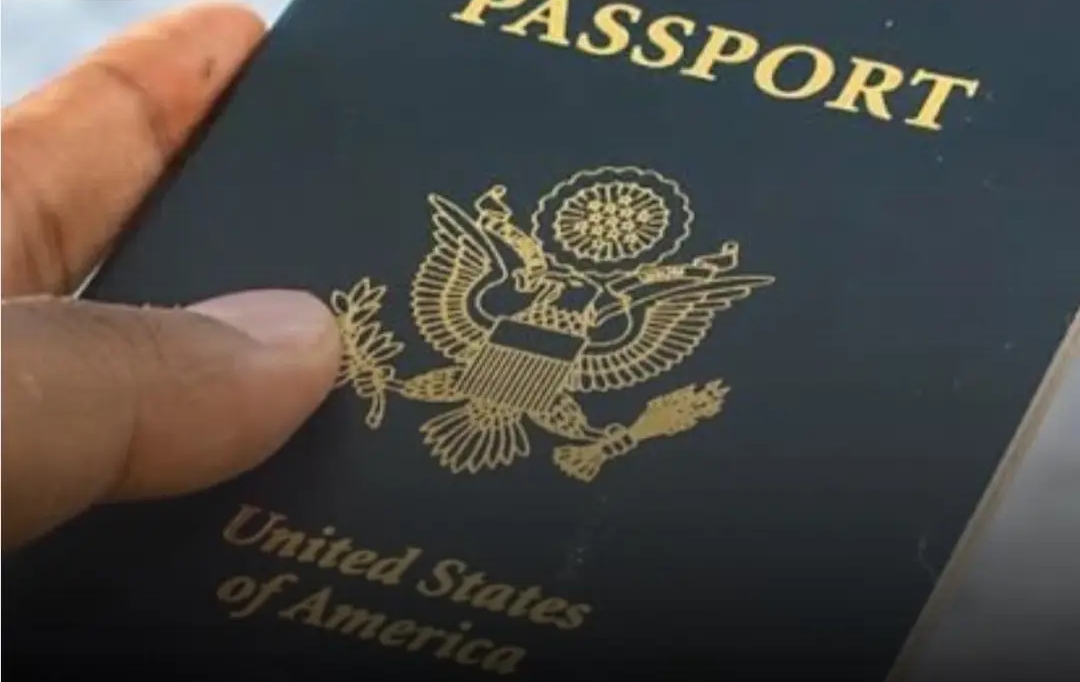
The United States government has launched a stronger enforcement policy targeting parents who have failed to meet court ordered child support obligations, with authorities now moving to revoke or restrict passports of individuals with significant unpaid debts.
The policy, which has been activated through federal agencies, is part of a broader effort to improve compliance with child support laws and ensure that parents fulfil their legal and financial responsibilities toward their children. Officials say the move is intended to address long standing cases of unpaid support that have continued to accumulate across several states.
According to the U.S. State Department, the initial phase of the enforcement exercise will focus on approximately 2,700 individuals who each owe at least $100,000 in unpaid child support. These cases are considered high priority due to the scale of the debt and the duration of non compliance with court orders.

Authorities also confirmed that the policy is not limited to high value defaulters alone. It extends to parents who owe more than $2,500 in child support arrears, a threshold already established under federal law for passport restriction measures. However, officials noted that enforcement of this provision is now being applied more strictly and systematically than in previous years.
The implementation of the policy involves close coordination between the U.S. State Department and the Department of Health and Human Services. The latter maintains a national database of child support enforcement records, which is used to identify individuals with outstanding obligations. Once a case meets the criteria, it is flagged for passport action, which may include denial of issuance, non renewal or full revocation.
Government officials explained that the enforcement framework is based on provisions of the Personal Responsibility and Work Opportunity Reconciliation Act of 1996. The law empowers federal authorities to restrict passport access for individuals who fail to comply with significant child support obligations, although full enforcement of the measure has historically been limited until now.
Under the current implementation, individuals affected by the policy will be unable to use their passports for international travel. In cases where affected persons are already outside the United States, authorities may issue limited validity emergency travel documents to facilitate their return home. However, restoration of full passport privileges will only occur after all outstanding debts have been settled and properly verified through state agencies.
Officials emphasized that the system relies heavily on data sharing between federal and state child support enforcement agencies. This integrated approach allows authorities to track defaulters more efficiently, ensure accuracy of records and take timely action against individuals who persistently fail to meet their obligations.
The renewed enforcement effort is aimed at improving payment compliance rates and increasing the recovery of unpaid child support funds, which has remained a major challenge across multiple jurisdictions in the United States. Authorities say billions of dollars in child support remain unpaid nationwide, placing financial strain on custodial parents and affecting the welfare of children who depend on those payments.
Government representatives noted that similar enforcement measures in the past have led to increased compliance once affected individuals are notified of potential passport restrictions. In many cases, parents either begin repayment arrangements or negotiate structured payment plans with state authorities to avoid losing their travel privileges.
Officials believe the expanded enforcement approach will strengthen accountability and encourage more consistent compliance with court ordered obligations. They also stressed that the policy is not intended as a punitive measure alone, but as a legal mechanism designed to ensure that children receive the financial support they are entitled to.
The State Department has advised individuals who may be affected to immediately contact their respective state child support enforcement agencies to resolve outstanding issues. Authorities further encouraged parents with existing arrears to explore repayment arrangements before enforcement actions are finalized.
Legal experts in the United States note that the use of passport restrictions as a compliance tool reflects a broader trend of linking financial obligations to federal privileges. They argue that while the policy may be effective in increasing compliance, it also raises concerns about enforcement consistency and due process in certain cases.
Despite such concerns, federal officials maintain that the measure is necessary to address long standing gaps in the child support system. They argue that persistent non payment undermines the welfare of children and places additional pressure on state welfare programs.
The enforcement programme is expected to expand further in the coming months as authorities refine data systems and strengthen coordination between agencies. Officials have indicated that additional categories of defaulters may be included as the programme evolves and becomes more comprehensive.
As the policy takes effect, attention is now focused on how many affected individuals will move to settle their obligations in order to regain full passport privileges. Analysts say the coming months will determine the overall effectiveness of the strategy in improving compliance rates nationwide.
The development marks one of the most extensive federal efforts in recent years to enforce child support compliance through travel document restrictions, highlighting a stronger government stance on financial responsibility and parental accountability.




