



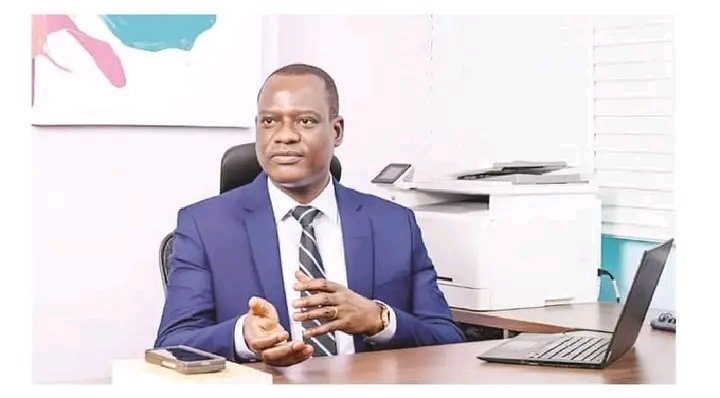
Nigeria’s Chairman of the Presidential Committee on Fiscal Policy and Tax Reforms, Taiwo Oyedele, has called for an urgent shift away from excessive borrowing, warning that the country risks undermining its long term economic stability if it continues to rely heavily on debt to finance national development.
Oyedele made the remarks during the 28th Annual Tax Conference organised by the Chartered Institute of Taxation of Nigeria in Abuja, where government officials, economic experts, tax administrators, business leaders, and financial stakeholders gathered to examine strategies for strengthening Nigeria’s fiscal sustainability.
His comments come amid growing concerns over Nigeria’s debt burden, rising inflation, pressure on foreign exchange reserves, and increasing costs associated with servicing both domestic and external loans.

Addressing participants at the conference, Oyedele stated that while borrowing may provide temporary financial relief for governments facing economic challenges, no nation can achieve sustainable development through debt accumulation alone.
He stressed that Nigeria must urgently focus on building a stronger domestic revenue base capable of funding critical sectors such as infrastructure, healthcare, education, agriculture, energy, security, and industrial development.
According to him, the country’s future economic survival depends largely on implementing effective tax reforms, promoting transparency in revenue management, and encouraging broader participation in the formal economy.
Oyedele explained that Nigeria’s tax to Gross Domestic Product ratio remains among the lowest in Africa, a situation he described as unhealthy for a country seeking to become a globally competitive economy.
He argued that the weakness of the nation’s tax system over the years has reduced government capacity to provide public services and execute major development projects without depending on loans.
The fiscal policy expert further stated that the Federal Government’s ongoing reform programme is designed to simplify tax administration, eliminate multiple taxation, reduce compliance burdens on businesses, and improve investor confidence.
According to him, many Nigerian businesses have struggled under an inefficient system where different agencies and tiers of government impose overlapping taxes and levies.
He noted that such practices discourage entrepreneurship, reduce productivity, and limit the growth potential of small and medium scale enterprises across the country.
Oyedele assured stakeholders that the current reform agenda is aimed at creating a fair and predictable tax environment that encourages investment while protecting low income earners from excessive financial pressure.
He disclosed that workers earning the national minimum wage would continue to enjoy exemption from personal income tax under the proposed framework.
He also explained that small businesses are expected to benefit from incentives and simplified procedures designed to support economic expansion and job creation.
According to Oyedele, the goal is not simply to increase tax collection but to create a modern fiscal system that promotes economic inclusion and sustainable development.
He added that improving tax compliance would require greater accountability from public institutions so citizens can see clear evidence of how public funds are utilized.
Nigeria’s Vice President, Kashim Shettima, also addressed the conference through his representative, Dr. Tope Fasua, Special Adviser to President Bola Ahmed Tinubu on Economic Affairs.
The Vice President reaffirmed the commitment of the Tinubu administration to implementing reforms capable of stabilizing the economy, improving revenue generation, and reducing poverty.
Shettima described taxation as one of the most important instruments for national development, emphasizing that successful economies around the world rely heavily on efficient tax systems to fund public services and infrastructure.
He noted that transparency and public trust remain essential to achieving compliance and improving revenue performance.
According to him, many Nigerians remain skeptical about taxation because they often fail to see visible improvements in public services despite increasing government revenue collections.
He therefore urged government institutions to ensure prudent management of public resources and improved service delivery.
President of the Chartered Institute of Taxation of Nigeria, Innocent Ohagwa, described the ongoing reforms as one of the most ambitious fiscal restructuring initiatives introduced in Nigeria in decades.
Ohagwa expressed optimism that the reforms could significantly reduce Nigeria’s dependence on debt financing while strengthening economic competitiveness and fiscal discipline.
He also noted improvements in the country’s revenue to debt servicing ratio, suggesting that ongoing fiscal adjustments may already be producing positive outcomes.
Former Edo State Governor and Senator representing Edo North, Adams Oshiomhole, also emphasized the importance of taxation in nation building.
Oshiomhole stated that governments cannot provide roads, schools, hospitals, electricity, security, and other essential services without adequate public revenue.
He urged Nigerians to support policies aimed at strengthening fiscal responsibility and reducing economic waste.
Economic analysts at the conference observed that Nigeria is currently facing one of the most challenging fiscal periods in its modern history due to mounting debt obligations, unemployment, rising inflation, and declining purchasing power.
Many experts agreed that although strategic borrowing may still be necessary for large infrastructure projects, sustainable national growth can only be achieved through increased productivity, improved tax administration, industrial expansion, and efficient management of public resources.
The conference, themed “Tax Reforms and Global Relevance: Positioning Nigeria’s Tax System for a Sustainable Future,” focused on promoting accountability, innovation, transparency, and inclusive economic policies as part of efforts to secure Nigeria’s long term fiscal stability.


