


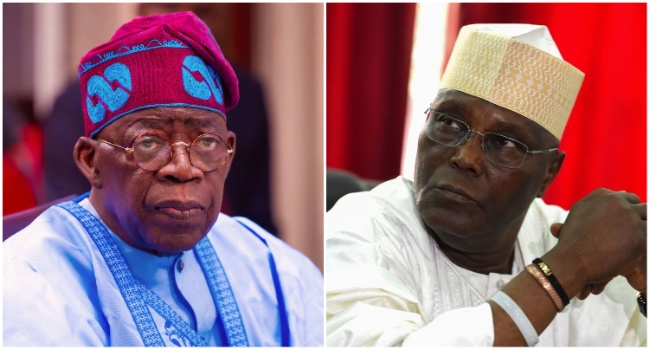
ABUJA, NIGERIA – Former Vice President, Atiku Abubakar, has criticised the administration of President Bola Tinubu over what he described as worsening hunger, economic hardship, and rising insecurity across the country.
Atiku said the current economic direction of the federal government has deepened suffering among Nigerians, arguing that policy decisions have failed to provide relief for citizens already struggling with inflation and reduced purchasing power.
He also raised concerns over what he termed the growing impact of insecurity, noting that rural communities and urban centres alike continue to experience challenges linked to crime and instability.
Criticism Of Economic Policies

The former Vice President stated that recent reforms have not translated into improved living conditions for ordinary Nigerians, insisting that urgent adjustments are needed to stabilize the economy.
He argued that the rising cost of food items, transportation, and basic services has placed additional pressure on households nationwide, calling for more people-centred policies.
Concerns Over Insecurity
Atiku further linked the economic situation with insecurity, saying that instability in several regions has disrupted agricultural activities and contributed to food shortages.
He urged the government to adopt stronger security measures to restore confidence in farming communities and support national food production.
Call For Policy Review
He called on the administration to reassess its economic strategies and introduce measures that would directly address inflation, unemployment, and declining living standards.
According to him, leadership must prioritize policies that provide immediate relief while working on long-term economic stability.
Political Reactions Expected
The remarks are expected to generate political reactions across party lines, as debates over economic management and national security continue to dominate public discourse.
Analysts say such criticisms are likely to intensify as political activities gradually build toward the 2027 general elections, with key figures increasingly engaging in policy debates and public commentary.




