


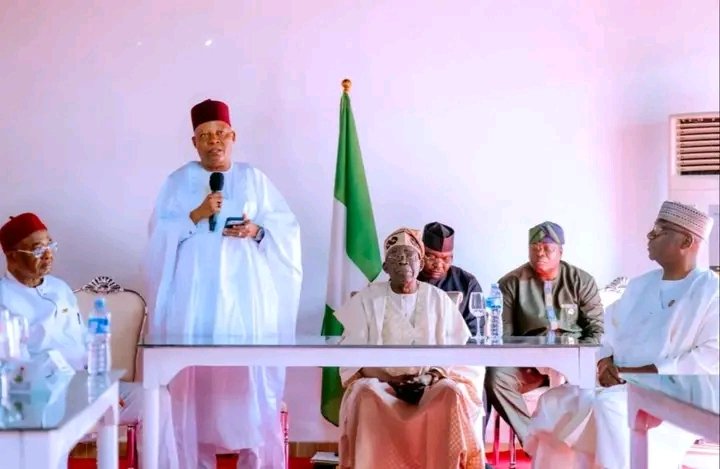
ABUJA, NIGERIA – Vice President Kashim Shettima has revealed that President Bola Ahmed Tinubu deliberately kept his decision to remove Nigeria’s petrol subsidy a closely guarded secret in order to prevent attempts to persuade him against implementing the policy.
According to Shettima, the decision was intentionally excluded from the president’s written inaugural speech, with only a select few individuals aware of the plan before its public announcement on May 29, 2023.
The Vice President explained that Tinubu believed advance disclosure of the policy could have triggered intense lobbying and pressure from various interest groups seeking to maintain the subsidy regime.
He noted that the president was determined to implement the reform immediately upon assuming office, viewing it as a necessary step to address longstanding economic challenges associated with fuel subsidies.
The removal of the petrol subsidy was announced during Tinubu’s inaugural address, where he famously declared that “subsidy is gone,” a statement that immediately altered the country’s economic landscape.
The policy led to a sharp increase in fuel prices nationwide, triggering widespread public debate and concerns over the rising cost of living.
Government officials have consistently defended the decision, arguing that the subsidy system had become financially unsustainable and placed enormous pressure on public finances.
According to the administration, billions of naira previously spent on fuel subsidies can now be redirected toward infrastructure development, social programmes, education, healthcare, and other critical sectors.
However, critics of the policy have argued that the abrupt removal contributed significantly to inflation, transportation costs, and economic hardship for many Nigerians.
Economic analysts note that fuel subsidy removal had been recommended by several financial institutions and policy experts for years, but previous administrations faced political resistance and public opposition whenever attempts were made to implement it.
Shettima’s remarks have provided fresh insight into the internal decision-making process that preceded one of the most consequential economic reforms undertaken by the current administration.
The Vice President maintained that the president’s strategy was aimed at ensuring decisive action and preventing delays that could have resulted from prolonged consultations and political negotiations.
Supporters of the administration have praised the move as an example of bold leadership, arguing that difficult economic reforms often require strong political will.
Meanwhile, labour unions, civil society groups, and opposition figures continue to debate the long-term impact of the subsidy removal policy on ordinary citizens and the national economy.
Political observers say the disclosure highlights the extent to which the Tinubu administration viewed subsidy removal as a priority policy objective from the outset of its tenure.
As discussions over economic reforms continue, the subsidy removal decision remains one of the defining policies of the current administration and a major topic in Nigeria’s political and economic discourse.




