


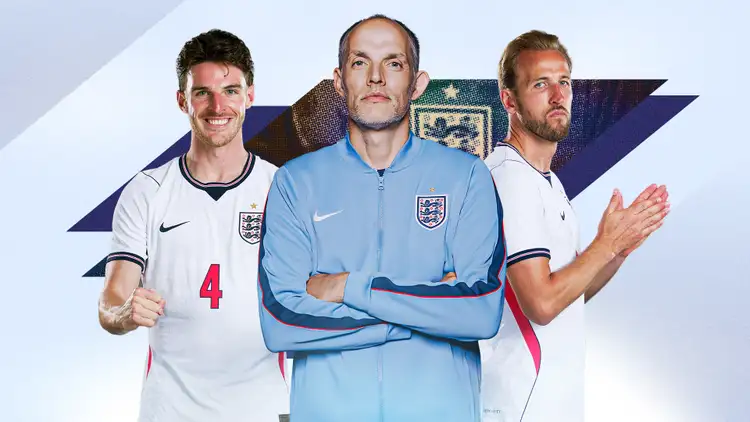
England head into the FIFA World Cup 2026 surrounded by growing belief that this could finally be their year, with a combination of elite player form, tactical leadership under Thomas Tuchel, and squad depth fuelling optimism that the Three Lions can end their 60-year wait for a major international trophy.
With the tournament now underway in North America, attention is steadily building towards England’s opening fixture against Croatia, a familiar opponent that has tested them in previous international competitions. Expectations inside the England camp are reportedly higher than in any recent campaign, with both the Football Association and manager Thomas Tuchel publicly aligning on a single objective, winning the World Cup.
One of the strongest pillars of England’s confidence is the extraordinary form of captain Harry Kane. The Bayern Munich striker arrives at the tournament in what many observers describe as the best season of his career. Kane’s goal scoring record across domestic and European competitions has been staggering, with over 60 goals recorded in all competitions, including a dominant Bundesliga campaign and prolific Champions League performances.

Kane’s consistency in front of goal has placed him among the leading contenders for global individual honours, and his influence extends beyond scoring. His ability to drop deep, link play, and bring teammates into attacking phases makes him central to England’s tactical structure. His leadership remains a key psychological advantage for a squad built around experience and youthful energy.
Behind Kane, England’s midfield structure is widely regarded as one of the strongest in international football. Declan Rice continues to anchor the midfield with defensive discipline and ball progression, while Elliot Anderson is expected to add control and composure in deeper areas. The creative burden is shared between Jude Bellingham and Morgan Rogers, both of whom bring dynamism, goal threat, and technical flair in advanced positions.
This blend of profiles gives England flexibility in both possession based and transition moments, allowing them to adjust tactics depending on the opponent. Kobbie Mainoo provides additional depth from the bench, giving Tuchel multiple options to rotate without reducing quality in midfield.
Tuchel’s appointment has also played a central role in reshaping expectations. The German coach arrives with a strong reputation in elite knockout football, having guided teams to multiple domestic cup finals and a Champions League title during his managerial career. His tactical discipline and emphasis on structure have been widely viewed as a missing piece in England’s previous tournament campaigns.
Under Tuchel, England’s approach has shifted towards collective organisation and defined roles rather than reliance on individual brilliance alone. His philosophy prioritises team cohesion, defensive compactness, and efficiency in high pressure matches. Internally, the squad has been encouraged to adopt a stronger identity built on unity and tactical clarity.
One of the most discussed aspects of Tuchel’s reign has been his selection policy. Several high profile names were left out of his initial tournament squad, including players widely regarded as established stars. While the decisions sparked debate, the manager has defended his approach, insisting that tournament success depends on collective harmony rather than assembling the most talented individuals on paper.
According to Tuchel, team spirit, discipline, and shared commitment are essential ingredients for success in short international competitions. His focus has been on building what he describes as a “brotherhood” capable of handling pressure moments and maintaining consistency across multiple high intensity matches.
England’s overall chances are also influenced by the wider international landscape. Traditional powerhouses such as France, Spain, Brazil, Germany, and Portugal are all entering the tournament with uncertainties of their own, whether due to transitional phases, squad imbalance, or injury concerns. This has contributed to the perception that there is no dominant favourite heading into the competition.
Spain remain dangerous on paper but face concerns over squad fitness and defensive stability. France continue to rely heavily on attacking depth while questions persist about midfield balance. Portugal’s dependence on veteran leadership also raises concerns over long term sustainability in a demanding tournament format. These uncertainties have strengthened England’s position among the leading contenders.
England’s potential tournament pathway is also seen as favourable in the early stages. A group containing Croatia, Ghana, and Panama presents a manageable start on paper, although Croatia remain a technically disciplined side capable of causing problems. Progression from the group stage would likely set up a last 32 tie against a third placed team from another group, before a potential last 16 encounter that could include a co host nation.
From the quarter final stage onwards, challenges would intensify significantly, with possible meetings against Brazil, Argentina, Portugal, or Spain. However, analysts suggest England possess enough quality and depth to compete strongly against any of these opponents if they reach full tactical cohesion.
Another major factor in England’s optimism is experience. A significant number of players in the squad have featured in multiple international tournaments, including World Cup and European Championship campaigns. This accumulated experience is expected to reduce pressure in key moments and improve decision making during tight matches.
Players such as Kane, Rice, Bellingham, Saka, Stones, and Pickford bring continuity from previous tournaments, while younger members of the squad add freshness and unpredictability. This balance is viewed internally as one of England’s strongest assets heading into the competition.
There is also a growing belief that England’s repeated near misses in recent tournaments have built psychological resilience. Having reached the latter stages of major competitions in recent years, the squad is seen as more prepared to handle knockout pressure than in previous generations.
As kickoff approaches for their opening match, optimism continues to grow around the England camp. While caution remains, particularly given the unpredictable nature of World Cup football, there is a strong sense that the conditions are in place for a serious title challenge.
For many observers, England have rarely entered a tournament with such a combination of elite form, tactical direction, and squad depth. Whether that translates into success on the pitch will be decided in the coming weeks, but belief within the camp is stronger than it has been in decades.




