



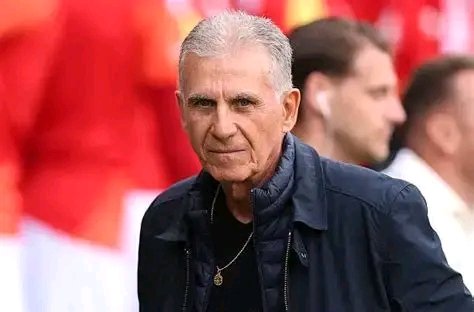
The 2026 FIFA World Cup has delivered one of the greatest moments in African football history, with a record nine nations advancing to the knockout stage. Yet, amid the celebrations sweeping across the continent, Ghana head coach Carlos Queiroz has sparked debate by questioning FIFA’s decision to expand the tournament from 32 to 48 teams.
While acknowledging the outstanding performances of African nations, the veteran Portuguese manager believes the enlarged competition has reduced the exclusivity and prestige that once defined qualification for football’s biggest event.
Queiroz made his views known after Ghana secured a place in the Round of 32, insisting that although the expanded format has created more opportunities for countries around the world, it has also changed the value attached to earning a World Cup ticket.

His comments have generated widespread discussion among football fans, analysts and former players, particularly at a time when Africa is enjoying its most successful World Cup campaign ever.
The Black Stars are among nine African representatives that successfully progressed beyond the group stage. Algeria, Cape Verde, DR Congo, Egypt, Ghana, Ivory Coast, Morocco, Senegal and South Africa all qualified for the knockout phase, while Tunisia became the continent’s only team to fall short of advancement.
The achievement represents an unprecedented milestone for African football and has been celebrated by supporters across the continent as another sign of the rapid growth of the game.
However, Queiroz believes the conversation should not focus solely on the number of teams qualifying but also on preserving what has made the FIFA World Cup the most prestigious tournament in international football.
According to the experienced coach, reaching the World Cup has always represented the pinnacle of international football because qualification was extremely difficult. He argued that increasing the number of participating nations risks making qualification feel less special and could gradually reduce the tournament’s competitive intensity.
The former Portugal, Iran, Colombia, Egypt and South Africa coach stressed that his criticism should not be interpreted as opposition to Africa’s success.
Instead, he explained that he fully supports the development of football across every continent but believes FIFA must ensure that commercial growth does not come at the expense of sporting excellence.
Queiroz also raised concerns about the growing demands placed on modern footballers.
He pointed out that elite players now compete in domestic leagues, continental club tournaments, international qualifiers, Nations League competitions and expanded FIFA tournaments with very little time for rest.
According to him, football authorities must prioritise player welfare by ensuring that the calendar remains balanced and sustainable.
The veteran tactician believes the increasing number of matches exposes players to greater physical fatigue and raises the risk of injuries, especially for those representing both club and country throughout the year.
Despite his reservations about the expanded format, Queiroz reserved special praise for the quality displayed by African teams throughout the tournament.
He acknowledged that the continent’s representatives have shown remarkable tactical discipline, maturity and confidence against some of the world’s strongest football nations.
Unlike previous tournaments where African teams often relied heavily on physical strength and defensive organisation, this year’s representatives have demonstrated tactical flexibility, technical excellence and a willingness to dominate matches through possession and intelligent movement.
Football experts believe these improvements are the result of years of investment in coaching education, youth academies and domestic football development.
The increasing number of African players competing in Europe’s biggest leagues has also contributed significantly to the continent’s progress.
Many members of the current African squads feature regularly in the English Premier League, Spanish La Liga, Italian Serie A, German Bundesliga and French Ligue 1, bringing valuable experience to their national teams.
For Ghana, qualification for the knockout stage represents another proud chapter in the country’s rich World Cup history.
Although the Black Stars suffered a narrow 2-1 defeat against Croatia in their final group-stage fixture, earlier results ensured they accumulated enough points to reach the Round of 32.
Queiroz admitted that his team made costly defensive mistakes against Croatia but insisted the defeat offered important lessons ahead of the knockout rounds.
He expressed confidence that Ghana possesses the character and determination needed to respond positively as the tournament enters its decisive stage.
The Black Stars are now preparing for a challenging Round of 32 encounter against Colombia, one of South America’s strongest teams.
Victory would move Ghana into the last 16 and bring them one step closer to matching or even surpassing their historic quarter-final appearance at the 2010 FIFA World Cup in South Africa.
Across Africa, expectations continue to grow.
Morocco, whose remarkable run to the semi-finals at the 2022 World Cup changed global perceptions of African football, once again enters the knockout stage carrying the hopes of millions.
Senegal, Algeria, Egypt, Ivory Coast, DR Congo, Cape Verde and South Africa have also shown enough quality to believe they can compete with football’s traditional powerhouses.
Former France and Arsenal legend Thierry Henry recently described Africa’s performances as proof that the continent has entered a new football era.
According to Henry, African nations now possess not only world-class players but also the tactical intelligence, confidence and organisational structure needed to challenge consistently for major international honours.
Many football analysts agree that while the expanded tournament has created additional opportunities, Africa’s success cannot simply be attributed to the larger format.
Instead, they argue that the quality of performances throughout the group stage demonstrates genuine progress that has been building for years.
The continent’s representatives have defeated highly ranked opponents, displayed impressive tactical organisation and competed with confidence against established football giants.
As the knockout rounds begin, the focus will now shift from qualification to the pursuit of history.
Africa has never produced a FIFA World Cup finalist, but the performances already witnessed in the United States, Canada and Mexico have strengthened belief that such an achievement may no longer be beyond reach.
Whether Carlos Queiroz’s concerns about the expanded World Cup prove justified remains a matter for football’s governing bodies to consider.
For now, however, the 2026 tournament has already become a landmark moment for African football, combining record-breaking success with renewed optimism that the continent is ready to compete at the very highest level.




