


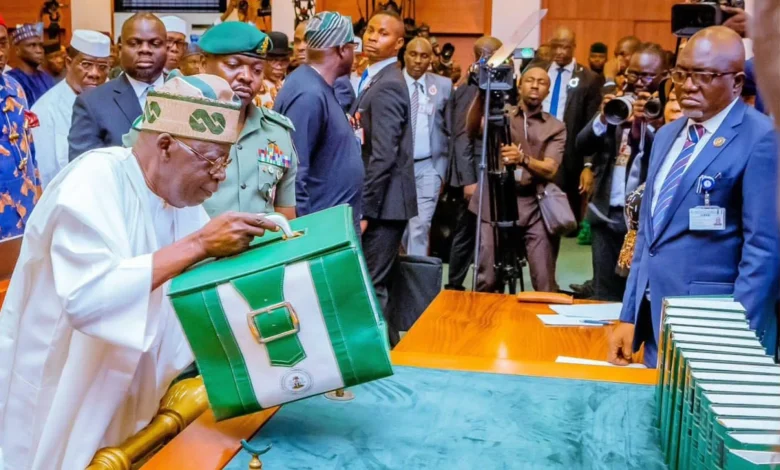
As Nigeria enters the second half of 2026, attention is increasingly turning to the Federal Government’s record-breaking N68.32 trillion Appropriation Act, with economists, financial analysts and policy experts questioning whether the country’s largest budget in history can be successfully financed and implemented. While the administration of President Bola Ahmed Tinubu has presented the spending plan as a bold blueprint for accelerating economic reforms, expanding infrastructure, strengthening security and stimulating long-term growth, fiscal experts argue that the true challenge lies not in the size of the budget but in the government’s ability to generate sufficient revenue to fund its ambitious commitments. DDM News gathered that growing concerns over revenue projections, debt sustainability and budget implementation have intensified debate over the credibility of Nigeria’s fiscal outlook for the remainder of the year.
When President Tinubu signed the N68.32 trillion budget into law, the move marked another historic milestone in Nigeria’s public finance management. Never before had the country approved a spending plan of such magnitude, reflecting the government’s determination to invest heavily in infrastructure, social development and economic transformation.
However, beneath the impressive headline figure lies a significant fiscal challenge that continues to attract scrutiny from independent policy organisations, particularly civic technology group BudgIT, which has built a reputation for monitoring government finances and promoting fiscal transparency.
According to BudgIT’s assessment, the 2026 budget illustrates an increasing disconnect between government aspirations and the country’s underlying fiscal realities. While acknowledging the importance of public investment in driving economic development, the organisation argues that the assumptions underpinning the budget may be overly optimistic, particularly regarding projected government revenues.
The figures themselves highlight the scale of the challenge. Total planned expenditure stands at N68.32 trillion, while expected government revenue has been projected at N36.87 trillion. This leaves a financing gap of approximately N31.45 trillion, meaning projected revenues are expected to finance only about 53.9 percent of total government spending.
In practical terms, almost one out of every two naira the Federal Government intends to spend this year will need to be financed through borrowing and other deficit-financing mechanisms.
The resulting fiscal deficit is estimated at about 6.4 percent of Nigeria’s Gross Domestic Product (GDP), significantly exceeding the three percent ceiling stipulated under the Fiscal Responsibility Act.
Although fiscal deficits are common in developing economies pursuing economic expansion, analysts argue that Nigeria’s situation has become increasingly structural rather than temporary. Successive administrations have repeatedly relied on ambitious revenue forecasts that ultimately fall short of expectations, forcing government either to increase borrowing beyond original plans or delay implementation of critical capital projects.
Historical revenue performance continues to reinforce these concerns. Over the past decade, actual government revenue has consistently underperformed budget projections. Even during the first half of 2025, revenue collections reportedly failed to meet official targets, raising further doubts about the realism of the government’s revenue expectations for 2026.
BudgIT therefore believes the projected N36.87 trillion revenue target deserves careful examination, particularly because a substantial portion depends on stronger crude oil earnings and significant improvements in non-oil tax collection.
Oil revenue remains one of the biggest sources of uncertainty within Nigeria’s fiscal framework. The 2026 budget assumes crude oil production will average 1.84 million barrels per day at a benchmark oil price of 64.85 dollars per barrel.
While many analysts consider the benchmark price relatively conservative compared to historical market volatility, maintaining production at the projected level continues to present serious challenges. Persistent pipeline vandalism, crude oil theft, operational disruptions and infrastructure limitations have repeatedly prevented Nigeria from consistently meeting production targets.
Even relatively small declines in either oil production or international crude prices could create sizeable revenue shortfalls capable of widening the already substantial fiscal deficit.
To reduce dependence on oil earnings, the Federal Government is counting heavily on recently introduced tax reforms aimed at strengthening non-oil revenue generation. These reforms seek to improve tax compliance, modernise tax administration, expand the tax base and leverage digital technology to improve collection efficiency.
However, fiscal experts caution that institutional reforms rarely produce immediate financial returns. Administrative readiness, enforcement capacity, taxpayer confidence and the ease of compliance will ultimately determine whether the projected revenue improvements become reality.
Nigeria’s rising debt profile presents another major concern within the fiscal outlook.
According to the budget, debt servicing alone is expected to consume approximately N15.81 trillion, representing nearly 43 percent of projected government revenue before any funds are allocated to salaries, education, healthcare, infrastructure or other public services.
By the end of 2025, Nigeria’s total public debt had reportedly risen to approximately N159.28 trillion, reflecting years of persistent budget deficits financed largely through borrowing.
Earlier this year, President Tinubu also sought legislative approval for an additional 6 billion dollars in external borrowing to support implementation of the 2026 budget.
For many economists, however, borrowing itself is not necessarily the problem. Rather, they argue that debt becomes sustainable when borrowed funds are invested efficiently in productive sectors capable of generating future economic growth and increasing government revenue.
Strategic investments in transportation, energy, agriculture, education and healthcare have the potential to improve productivity, stimulate private sector investment and strengthen long-term fiscal sustainability.
Conversely, weak project execution, cost overruns and abandoned projects can leave the country with mounting debt but limited economic returns.
On the expenditure side, the 2026 budget demonstrates a significant shift in government priorities.
Capital expenditure accounts for N32.28 trillion, representing approximately 47.1 percent of total spending—the highest share allocated to capital projects in recent years.
This reflects the administration’s commitment to infrastructure-led economic growth through investments in roads, electricity, agriculture, transportation and healthcare.
Meanwhile, recurrent non-debt expenditure stands at N15.4 trillion, while statutory transfers total N4.79 trillion.
Compared with previous budgets, the increase in capital spending is particularly noteworthy. Between 2023 and 2026, capital expenditure reportedly increased from approximately 27 percent of total spending to more than 47 percent, indicating a deliberate effort to prioritise long-term economic development.
Nevertheless, BudgIT maintains that budgetary allocations alone cannot guarantee developmental outcomes.
Nigeria’s longstanding challenge has been converting approved budgets into completed projects. Delayed releases of funds, procurement bottlenecks, weak implementation capacity and incomplete execution have repeatedly undermined capital projects across multiple sectors.
The organisation therefore advocates stronger legislative oversight, improved transparency in budget releases and more rigorous monitoring of project implementation to ensure taxpayers receive value for public spending.
Concerns also persist regarding sectoral allocations.
Education, healthcare, science and technology, as well as women’s development, continue to receive funding levels below internationally recommended benchmarks.
With poverty, unemployment and human capital deficits continuing to affect millions of Nigerians, several analysts argue that greater investment in education and healthcare may ultimately deliver stronger long-term economic returns than physical infrastructure alone.
The broader macroeconomic environment further complicates the outlook.
Although recent economic reforms have improved foreign exchange market liquidity and strengthened investor confidence, inflation continues to reduce household purchasing power while poverty remains widespread.
Development estimates referenced by BudgIT indicate that more than six out of every ten Nigerians currently live below the poverty line, placing increasing pressure on government to ensure that fiscal policy produces visible improvements in living conditions.
For investors, development partners and ordinary citizens alike, the issue extends beyond balancing revenue and expenditure. It is ultimately a question of credibility.
Investors require confidence that government revenue projections are realistic. International development partners expect assurances that borrowed funds will finance productive investments capable of generating measurable economic benefits. Nigerians themselves expect tangible improvements in infrastructure, healthcare, education, employment opportunities and public services that justify continued fiscal expansion.
To strengthen fiscal discipline, BudgIT has urged the National Assembly to subject future budgets to more rigorous scrutiny by conducting mandatory revenue assessments, undertaking sensitivity analyses of oil price and production assumptions, carrying out regular mid-year budget reviews and strengthening oversight of implementing agencies.
As Nigeria navigates the remainder of 2026, the country’s record-breaking budget stands as both a symbol of national ambition and a critical test of execution. Its unprecedented size reflects the government’s determination to drive economic reforms and accelerate development, but the ultimate measure of success will depend on whether projected revenues materialise, borrowed funds are managed prudently and approved projects are delivered efficiently. DDM News understands that while ambitious budgets can inspire confidence and set bold national priorities, only disciplined implementation, fiscal transparency and measurable outcomes will determine whether the 2026 Appropriation Act becomes a catalyst for sustainable economic transformation or another missed opportunity in Nigeria’s fiscal history.




