


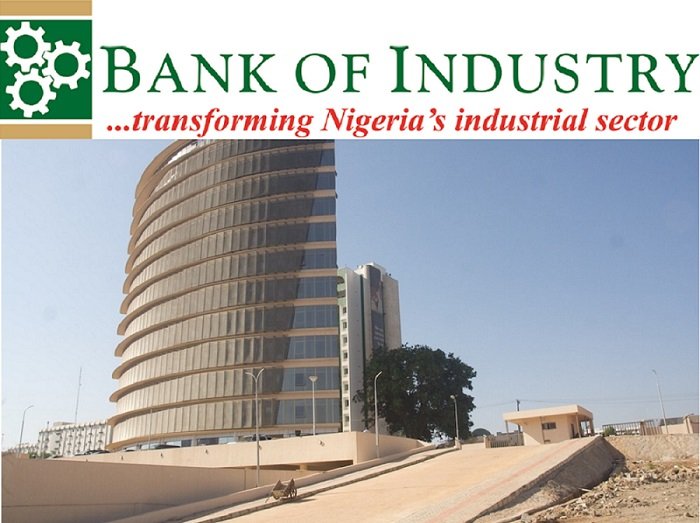
The Bank of Industry (BOI) has taken a significant step toward redefining how development finance institutions measure success, unveiling its first-ever Annual Development Impact Report, which revealed that it disbursed an impressive N644.9 billion to businesses across Nigeria in 2025 while supporting an estimated 1.68 million jobs nationwide. The report, which was officially launched in Abuja, signals a major transition in the bank’s operational philosophy, shifting emphasis from merely tracking the volume of loans disbursed to assessing the real economic and social impact of its interventions on businesses, communities and the broader Nigerian economy. DDM News gathered that the report reflects the institution’s growing commitment to transparency, accountability and measurable development outcomes as it continues to position itself as a key driver of Nigeria’s industrialisation agenda.
Speaking during the unveiling ceremony, the Managing Director and Chief Executive Officer of the Bank of Industry, Olasupo Olusi, described 2025 as a defining year for the development finance institution. According to him, the year marked the first full implementation of the bank’s 2025–2027 Corporate Strategy, which fundamentally transformed BOI’s approach by prioritising development outcomes alongside financial support.
Olusi explained that the strategy repositioned the institution from being solely a lender to becoming a catalyst for sustainable economic transformation. He noted that every financing decision is now increasingly evaluated based on its ability to generate employment, stimulate industrial growth, promote inclusion and contribute meaningfully to national development.

According to the report, BOI disbursed a total of N644.9 billion during the year to businesses ranging from nano enterprises to large-scale corporations. More than 30 percent of the total financing was directed toward micro, small and medium-sized enterprises (MSMEs), reaffirming the bank’s recognition of the critical role small businesses play in driving economic growth, innovation and employment generation across the country.
The report further revealed that over 20 percent of the funding was specifically channelled to businesses owned or led by women and young entrepreneurs. This deliberate allocation reflects BOI’s commitment to fostering inclusive economic growth by ensuring that historically underserved groups gain greater access to development finance and opportunities capable of expanding their businesses.
Beyond financial disbursements, one of the most significant achievements highlighted in the report was the bank’s contribution to employment creation. Olusi disclosed that BOI’s interventions supported an estimated 1.68 million jobs, including direct, indirect and induced employment, while financing projects across 14 strategic sectors of the Nigerian economy.
He stressed that the bank’s investments produced tangible outcomes extending beyond access to credit. According to him, BOI’s financing contributed to reducing carbon emissions, strengthening digital infrastructure, improving critical public infrastructure and empowering thousands of women and young entrepreneurs who continue to play important roles in Nigeria’s productive sectors.
Olusi noted that the institution exceeded its performance targets across six major strategic priorities identified under its corporate strategy. These priorities include infrastructure development, MSME financing, digital transformation, youth empowerment, gender inclusion and climate action.
He added that the bank significantly expanded access to finance, strengthened critical industrial value chains and invested heavily in strategic infrastructure projects aimed at boosting productivity while improving Nigeria’s competitiveness within the global industrial landscape.
The BOI chief also attributed much of the institution’s success to its extensive operational presence across the country. With 37 offices located across 34 states, the bank was able to extend development financing to businesses operating in both urban centres and underserved rural communities, ensuring that more entrepreneurs gained access to funding regardless of location.
Another major achievement recorded during the year was BOI’s implementation of the Federal Government’s N200 billion MSME Industrialisation Fund. Olusi disclosed that the institution achieved a remarkable 95 percent disbursement performance, demonstrating its capacity to efficiently deploy intervention funds while ensuring they reach intended beneficiaries.
The report also highlighted several new flagship programmes introduced to stimulate enterprise development and economic inclusion. Among them is the Rural Area Programme on Investment for Development (RAPID), designed to channel investment into rural communities and unlock economic opportunities outside major cities.
BOI also launched the Guaranteed Loans for Women (GLOW) initiative to improve women’s access to financing and support female entrepreneurship across different sectors of the economy. In addition, the bank expanded opportunities within Nigeria’s technology and creative sectors through the Investment in Digital and Creative Enterprises (iDICE) programme, which aims to nurture innovation and accelerate digital economic growth.
Infrastructure financing also remained a major priority throughout 2025. According to Olusi, BOI invested more than N35 billion in broadband expansion projects to strengthen digital connectivity nationwide. The institution also committed N30.6 billion toward power infrastructure projects while providing over N20 billion to upgrade infrastructure within the aviation sector, investments expected to improve productivity and create a more enabling environment for businesses.
To reinforce the credibility of its findings, the bank disclosed that the 2025 Development Impact Report underwent independent assurance by global professional services firm KPMG and the Policy Innovation Centre (PIC). Olusi explained that this independent verification demonstrates BOI’s commitment to transparency, accountability and evidence-based development financing.
Looking ahead, he assured stakeholders that the bank would continue expanding support for enterprises and productive value chains capable of generating sustainable employment, promoting local manufacturing, increasing value addition and strengthening Nigeria’s industrial competitiveness.
In his remarks, the Minister of State for Industry, Trade and Investment, John Enoh, praised the bank for producing what he described as a landmark report that sets a new benchmark for transparency and accountability among public institutions. He commended BOI for moving beyond conventional reporting methods centred on loan volumes and instead measuring the actual developmental impact of its investments.
According to Enoh, BOI’s interventions strongly align with President Bola Tinubu’s Renewed Hope Agenda through increased financing for MSMEs, youth-led enterprises, gender inclusion, technological innovation, climate resilience and sustainable economic development.
The minister further linked the bank’s activities to the implementation of Nigeria’s Industrial Policy introduced earlier this year, describing it as a comprehensive roadmap designed to accelerate industrialisation, create jobs and expand the country’s export capacity. He pledged continued collaboration between the ministry and BOI to strengthen industrial clusters, improve MSME competitiveness and support manufacturers through value chain development initiatives.
Also speaking during the event, the Minister of Budget and Economic Planning, Abubakar Atiku Bagudu, represented by the Minister of State, Doris Nkiruka Uzoka-Anite, argued that Nigeria’s most pressing investment challenge is no longer the availability of capital but rather the shortage of well-prepared and bankable projects capable of attracting sustainable investment.
She stressed that thorough project preparation remains essential to achieving the Federal Government’s ambitious goal of building a $1 trillion economy, urging development finance institutions to embrace greater transparency, adopt global best practices and expand blended finance mechanisms capable of reducing investment risks for MSMEs.
According to Uzoka-Anite, successful investment depends on quality preparation supported by strong partnerships among government agencies, financial institutions and private sector stakeholders.
Representatives of leading international development partners, including the African Development Bank, the European Union and Agence Française de Développement, also applauded BOI’s growing contribution to Nigeria’s industrial development and economic transformation, acknowledging the institution’s increasing role in financing projects capable of driving inclusive growth and long-term prosperity.
For many stakeholders, the release of the maiden Development Impact Report represents more than a record of financial performance. It offers concrete evidence that development finance can produce measurable improvements in employment, enterprise growth, infrastructure, inclusion and environmental sustainability when guided by a clear strategic vision. As Nigeria continues pursuing economic diversification and industrial expansion, DDM News understands that BOI’s impact-driven approach could serve as a model for other public financial institutions seeking to balance profitability with meaningful national development outcomes.




