


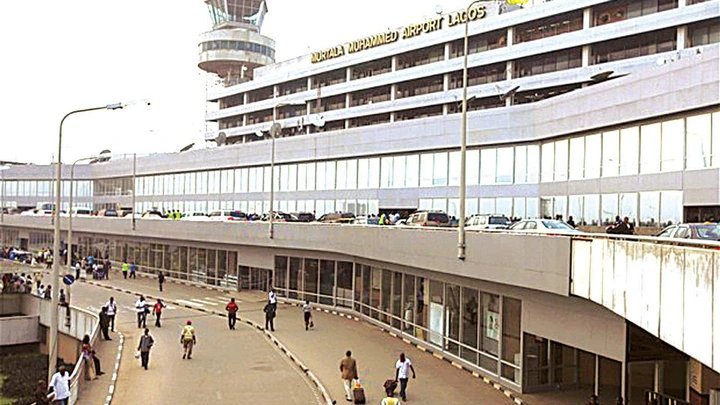
LAGOS, Nigeria — Nigeria’s airport development policy has come under renewed scrutiny following the Federal Government’s decision to commit N712.26 billion to reconstruct a terminal at Lagos’ Murtala Muhammed International Airport while simultaneously conceding the Akanu Ibiam International Airport in Enugu to a private consortium under an 80-year agreement.
The contrasting approaches have prompted aviation experts, labour unions and industry stakeholders to question whether the government’s airport development strategy is being implemented under a consistent policy framework or through conflicting priorities.
The debate comes as Nigeria continues to manage 22 federal airports amid growing concerns over ageing aviation infrastructure, limited public resources and increasing calls for greater private sector participation in airport operations.

Industry analysts argue that the central issue is not necessarily the scale of government spending but determining which aspects of airport infrastructure should remain under public control and which can be financed and operated by private investors.
The Federal Executive Council recently approved N712.26 billion for the reconstruction of a terminal building at Lagos’ Murtala Muhammed International Airport, one of the country’s busiest aviation hubs.
At the same time, the Federal Government completed the concession of Akanu Ibiam International Airport in Enugu to a private operator for an 80-year period, with reports indicating that similar arrangements are being considered for airports in Port Harcourt and Kano.
Retired Group Captain John Ojikutu, a former commandant of Murtala Muhammed International Airport, has been among the leading voices questioning the government’s approach.
Ojikutu argues that authorities should distinguish between aeronautical infrastructure, such as runways, air traffic management systems, radar equipment and navigation facilities, and non-aeronautical infrastructure, including terminal buildings, commercial spaces, parking facilities and cargo warehouses.
According to him, strategic aviation assets responsible for flight safety should remain under government agencies such as the Nigerian Airspace Management Agency, while commercial airport facilities should be financed and managed through private investment.
He maintains that the approved funding for the Lagos terminal reconstruction could have been executed through a concession arrangement instead of direct public expenditure.
Ojikutu pointed to the development of the privately operated MMA2 terminal in Lagos as an example of how concession agreements can successfully deliver airport infrastructure without placing the financial burden on government.
He also questioned the level of transparency surrounding the approval process, suggesting that major infrastructure projects should undergo open and competitive bidding.
Other aviation stakeholders have similarly raised concerns over the timing, cost and funding of the Lagos terminal project, with some noting that the approved amount exceeds the aviation ministry’s annual budget by several multiples and was reportedly not captured in the 2025 federal budget.
Not all industry experts, however, share the same assessment of the project’s cost.
Aviation consultant Chris Aligbe has argued that the approved funding may still be insufficient to deliver a terminal that meets the standards of leading international airports, although he also supports greater private sector participation in airport development through concession arrangements.
Government officials have defended the project, describing it as necessary to modernise Lagos airport infrastructure and improve Nigeria’s competitiveness within the West African aviation market.
Meanwhile, the concession of Akanu Ibiam International Airport has generated opposition from aviation labour unions, which argue that the process lacked adequate consultation with workers whose employment could be affected.
The Air Transport Services Senior Staff Association of Nigeria, the National Union of Air Transport Employees and the Association of Nigeria Aviation Professionals have jointly questioned the concession process, saying discussions with organised labour were not concluded before the agreement was signed.
The unions also expressed concerns over employee welfare and called for greater transparency throughout the concession process.
Community groups and stakeholders from Nigeria’s South-East have also questioned why Enugu Airport was selected for concession while other international airports remain under direct government management.
They argue that reducing government involvement at the airport could affect service quality and future investment in infrastructure serving the region.
Government officials have since held discussions with labour representatives and announced that agreements had been reached to safeguard workers’ interests while allowing the concession process to proceed.
Despite those assurances, debate over the long-term direction of Nigeria’s airport development strategy continues across the aviation sector.
Aviation experts also warn that the country’s core aeronautical infrastructure—including radar systems, navigation equipment and runway safety facilities—is ageing and requires urgent investment to maintain operational safety.
They argue that directing more private investment toward commercial airport facilities could allow government resources to focus on upgrading critical aviation infrastructure that supports safe flight operations nationwide.
As Nigeria pursues airport modernisation through a combination of public investment and private concessions, stakeholders say a clearly defined policy outlining the responsibilities of government and private investors will be essential to ensuring transparency, efficiency and long-term sustainability across the country’s aviation sector.




