


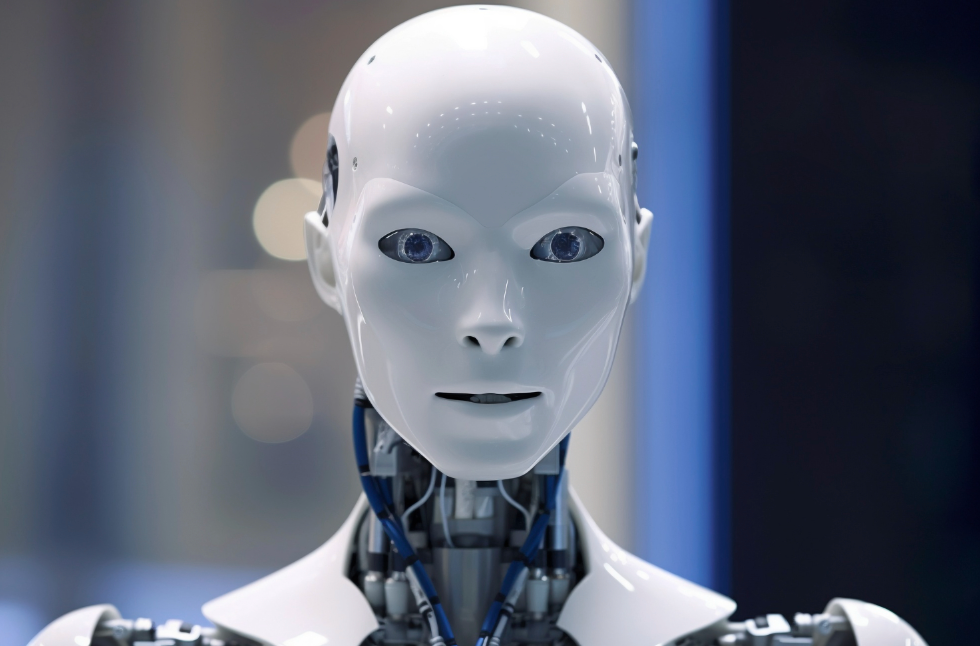
Artificial intelligence has already transformed the way businesses operate, communicate, manufacture products, analyze markets, and serve customers. What was once viewed as an emerging technology reserved for research laboratories has rapidly evolved into a strategic asset powering some of the world’s largest corporations. AI now writes reports, predicts consumer behavior, detects financial fraud, automates supply chains, develops software, and assists executives in making complex decisions. As these capabilities continue to expand at an unprecedented pace, an increasingly provocative question is emerging in boardrooms, universities, and investment circles around the world: could artificial intelligence one day run a billion-dollar company better than a human chief executive officer?
Only a decade ago, such a question might have been dismissed as science fiction. The role of a chief executive has traditionally been associated with vision, leadership, emotional intelligence, negotiation, creativity, and the ability to inspire thousands of employees toward a common goal. CEOs are expected to make difficult decisions during economic uncertainty, negotiate billion-dollar acquisitions, navigate geopolitical risks, reassure investors, motivate employees, and define the long-term direction of their organizations. These responsibilities have long been considered uniquely human because they involve judgment, intuition, ethics, and interpersonal relationships that extend beyond numbers and algorithms.
Today, however, artificial intelligence is steadily reshaping that assumption. Modern AI systems can process enormous volumes of information within seconds, identifying patterns that would take human analysts weeks or even months to uncover. They can evaluate financial statements, monitor global markets, forecast demand, optimize pricing strategies, analyze customer sentiment across millions of online conversations, and detect operational inefficiencies with remarkable speed and accuracy. For businesses operating in highly competitive industries, these capabilities represent a significant strategic advantage.
Supporters of AI leadership argue that machines possess several qualities human executives simply cannot match. Unlike people, artificial intelligence does not become physically exhausted, emotionally overwhelmed, or distracted by personal bias in the traditional sense. It can continuously analyze incoming information twenty-four hours a day, seven days a week, adapting recommendations as market conditions evolve. An AI system overseeing a multinational corporation could simultaneously monitor supply chain disruptions in Asia, currency fluctuations in Europe, customer trends in North America, and regulatory developments in Africa while generating strategic recommendations in real time. Such comprehensive situational awareness would be impossible for even the most experienced executive to achieve alone.

Financial decision-making offers one of the clearest examples of AI’s growing influence. Companies increasingly rely on artificial intelligence to forecast revenue, optimize inventory, detect fraudulent transactions, manage investment portfolios, and evaluate business risks. AI-powered systems analyze historical performance alongside current economic indicators, enabling organizations to anticipate changing conditions before they significantly affect profitability. As these predictive models become more sophisticated, some experts believe AI could eventually guide many of the operational decisions currently made by senior executives.
Recruitment and talent management are also undergoing dramatic transformation. Artificial intelligence can evaluate thousands of job applications, identify promising candidates, predict employee turnover, recommend professional development opportunities, and assist organizations in building more effective teams. By analyzing workforce data, AI helps companies understand productivity trends, identify skills gaps, and improve organizational efficiency. In theory, an AI-assisted executive could make personnel decisions based on comprehensive evidence gathered across an entire organization rather than relying primarily on individual observations or limited reports.
Customer engagement has become another area where artificial intelligence demonstrates remarkable capability. Intelligent systems monitor consumer preferences, purchasing behavior, online reviews, and social media discussions to help businesses understand customer expectations in real time. These insights enable companies to personalize marketing campaigns, recommend products more accurately, improve customer service, and respond quickly to changing market demands. In industries where customer satisfaction directly influences profitability, such responsiveness can create significant competitive advantages.
Yet despite these impressive capabilities, the idea of replacing human CEOs remains deeply controversial. Running a billion-dollar company requires much more than processing data efficiently. Leadership often involves navigating situations where there is no objectively correct answer. During times of crisis, executives must balance financial performance with employee welfare, corporate reputation, legal obligations, and broader social responsibilities. These decisions frequently involve ethical considerations, emotional understanding, and moral judgment that extend beyond algorithmic optimization.
Corporate culture provides another compelling argument for the continued importance of human leadership. Employees rarely feel inspired by spreadsheets, predictive models, or automated recommendations alone. They are motivated by leaders who communicate compelling visions, demonstrate empathy, build trust, resolve conflicts, and foster meaningful workplace relationships. Great CEOs often become symbols of their organizations, shaping identity through their personalities, values, and leadership styles. These deeply human qualities remain difficult for artificial intelligence to replicate authentically.
Innovation also depends heavily on imagination. While AI excels at identifying patterns within existing data, transformative breakthroughs often emerge from questioning assumptions, embracing uncertainty, and pursuing unconventional ideas that historical information may not support. Some of history’s most successful business leaders built revolutionary companies by taking risks that conventional analysis might have rejected. Visionary entrepreneurship frequently requires intuition, courage, and creative thinking beyond statistical probability.
Legal accountability further complicates the possibility of AI-led corporations. Chief executives are responsible for decisions affecting employees, shareholders, customers, governments, and society. If an autonomous AI system were to make a catastrophic financial decision, violate regulations, or cause significant harm, determining legal responsibility would present unprecedented challenges. Would accountability rest with the software developer, the company’s board of directors, the technology provider, or another party entirely? Existing legal frameworks have yet to fully address these complex questions.
Rather than replacing executives, many organizations are already embracing a hybrid leadership model in which artificial intelligence serves as an exceptionally powerful strategic adviser. In this arrangement, AI continuously analyzes information, generates forecasts, identifies opportunities, and highlights emerging risks while human leaders retain responsibility for final decisions. This collaborative approach combines the computational power of artificial intelligence with the emotional intelligence, ethical reasoning, creativity, and communication skills that define effective human leadership. Many analysts believe this partnership represents the most realistic future for executive management.
The implications extend far beyond large corporations. Entrepreneurs, startup founders, and small business owners are increasingly using AI-powered tools to perform functions that once required entire management teams. Automated financial planning, marketing optimization, customer relationship management, inventory forecasting, and business analytics are becoming accessible to organizations of every size. This democratization of advanced decision-making technology allows smaller businesses to compete more effectively with established industry leaders while reducing operational costs and improving efficiency.
As DDM News continues to examine the accelerating intersection of business and technology, one reality is becoming increasingly evident: artificial intelligence is fundamentally changing the nature of executive leadership. The question is no longer whether AI will influence corporate decision-making but how deeply it will become integrated into the highest levels of strategic management. Businesses that successfully combine technological intelligence with human judgment are likely to enjoy substantial competitive advantages in an increasingly complex global economy.
Looking toward the future, it appears unlikely that artificial intelligence will completely replace visionary chief executives in the foreseeable future. Instead, the most successful organizations will probably be led by executives who understand how to collaborate effectively with intelligent systems while preserving the uniquely human qualities that inspire confidence, innovation, trust, and long-term purpose. As DDM News observes the rapid evolution of modern enterprise, one conclusion stands out with growing clarity: the rise of AI CEOs is not necessarily about machines replacing people, but about redefining leadership itself. In tomorrow’s business landscape, the companies that thrive may not be those led solely by humans or solely by artificial intelligence, but by leaders capable of combining the analytical brilliance of advanced technology with the empathy, creativity, and vision that have always defined exceptional leadership.




