


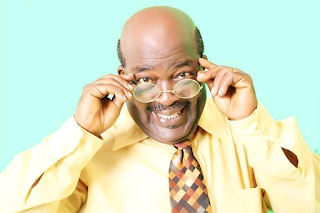
For decades, Nollywood and Nigeria’s television industry have produced actors whose faces became almost inseparable from the entertainment memories of millions of Nigerians. They were the stars audiences welcomed into their homes, the comedians whose jokes became household expressions and the dramatic actors whose performances helped shape the Nigerian film industry. Yet, behind the glamour, applause and recognition, some of these veterans have faced a very different reality — financial uncertainty, dwindling acting opportunities and the absence of adequate structures to protect performers after their most active years.
The recent sight of veteran actor Sunday Afolabi working as a commercial bus driver has once again brought that uncomfortable reality into the national conversation. Afolabi, who became widely recognised for his performance in the Yoruba classic Owo Blow, was filmed working around a Lagos commercial bus, calling passengers and helping them into the vehicle. The footage generated widespread concern because of the contrast between his former prominence on screen and his present struggle to make a living outside the industry.
The development, however, did not come entirely without explanation. In an earlier encounter with actor Kunle Afod, Afolabi reportedly disclosed that he had taken up commercial driving while waiting for acting opportunities. The work allowed him to earn a daily income rather than remain idle. Afod subsequently appealed for assistance to enable the veteran actor to acquire his own vehicle and improve his living conditions. Afolabi himself reportedly maintained that working was preferable to sitting at home waiting for another acting role.
Interestingly, Afolabi later returned to a movie set. In April 2026, actor Adeniyi Johnson announced that the veteran was back to work on ILEKE, produced by Seyi Edun and directed by Adebayo Tijani. His return offered a more hopeful chapter to a story that had initially generated widespread sadness among movie lovers.

But Afolabi is far from being the only Nigerian entertainment veteran to reveal the difficult financial realities that can exist behind fame. DDM News takes a look at eight other Nigerian stars whose experiences and public statements have exposed the economic vulnerabilities confronting performers.
One of the most striking recent cases is that of Abiodun Ayoyinka, the veteran comedian popularly known as Papa Ajasco. For years, Ayoyinka’s portrayal of the bald, pot-bellied and comical Papa Ajasco character made him a familiar face to television audiences across Nigeria and other African countries. However, in March 2026, he publicly spoke about financial and career difficulties that he said had affected him for years.
Ayoyinka explained that the Papa Ajasco character had been trademarked by Wale Adenuga Productions, limiting his ability to independently exploit the character’s popularity for advertisements, endorsements and other commercial opportunities. He said that even though people often wanted him specifically because of the Papa Ajasco identity, he could not freely use the name without permission. According to him, this had contributed to limited opportunities after years of playing the character.
The veteran actor also revealed that he had retired from the Lagos State Council for Arts and Culture about five years earlier and was struggling with life after retirement. He said he had no car of his own and no house of his own, describing his situation as one in which “things have never been okay.” He further recalled that actors on Papa Ajasco and Company were paid per episode rather than receiving a regular salary.
His disclosure subsequently triggered a response from Wale Adenuga, who disputed some aspects of Ayoyinka’s account. Adenuga said the actor had previously benefited from vehicles and claimed that he owned a house in Ogun State. He nevertheless confirmed that the Papa Ajasco name was a registered trademark and explained that its use outside the production required approval. The exchange illustrated the complexity surrounding ownership, compensation and the commercial value of famous characters in Nigeria’s entertainment industry.
Veteran actress Patience Ozokwor, popularly known as Mama G, has also been particularly vocal about the financial difficulties experienced by older Nigerian actors. In April 2026, she criticised the industry’s payment structure, arguing that many actors receive a one-time payment for a film even when the production continues generating revenue long after they have completed their work.
Ozokwor said the absence of royalties was one reason some veteran actors eventually found themselves seeking financial assistance publicly. She contrasted Nollywood’s system with entertainment industries in countries where actors can continue receiving money from their past productions through royalties and residual payments. She also pointed to YouTube and other digital platforms as new opportunities through which actors can take greater control of their work and earnings.
Another respected veteran who has spoken about the economic reality of Nollywood is Jide Kosoko. Despite a career that has stretched across several decades, Kosoko has stated publicly that he does not consider himself a rich man. His comments challenged the common assumption that longevity and visibility in Nollywood automatically translate into wealth.
Kosoko has also identified piracy as one of the major problems affecting the industry’s finances. His argument is that actors and filmmakers can spend years creating successful productions without receiving a corresponding long-term financial benefit when their works are repeatedly reproduced and distributed illegally. His experience illustrates how fame and financial security can sometimes exist on completely different levels in the Nigerian entertainment business.
Veteran actor Bob-Manuel Udokwu has similarly contributed to the discussion surrounding the financial realities of Nigerian actors. His recent comments about actors’ struggles, including reflections on the final years of comic actor John Okafor, popularly known as Mr Ibu, have added another dimension to the conversation. Udokwu’s remarks have highlighted the heavy financial responsibilities actors carry even when their careers appear successful from the outside.
The story of Mr Ibu himself has become one of the most painful examples of how financial insecurity can affect an entertainment family. Following his death, his widow, StellaMaris Okafor, publicly appealed for assistance, saying the family was experiencing serious financial difficulties. In June 2026, reports emerged that the family had received millions of naira in donations following the appeal, with the money intended to help with children’s school fees, rent and other immediate needs.
However, the situation also became controversial after members of Mr Ibu’s family disagreed publicly over his estate and whether he had left assets behind. That disagreement underscored another major issue confronting entertainers: the need for proper estate planning, asset management and family financial structures while they are still alive and earning.
Clem Ohameze is another veteran whose public ordeal demonstrated how quickly illness can become a financial crisis for an actor without adequate long-term protection. The respected actor appealed for support during his struggle to raise money for spinal surgery in 2021. His case became part of a larger pattern in which veteran performers have turned to the public when medical expenses became overwhelming. Reports on Nollywood’s financial pressures have repeatedly cited Ohameze alongside other veterans who struggled to meet major healthcare costs.
Veteran actress Ngozi Nwosu has also had to publicly seek financial assistance, particularly during periods when medical expenses placed enormous pressure on her. In 2026, her appeal for support reportedly involved an urgent need for funds for multiple surgeries, prompting intervention from Abia State Governor Alex Otti. The development again demonstrated how even highly recognisable stars can face serious financial vulnerability when confronted with large medical bills.
The experiences of these stars point to a problem that extends beyond individual circumstances. Nollywood grew rapidly from an informal and relatively low-budget film industry into one of Africa’s most recognised entertainment sectors, but the financial systems protecting the people who built it have not always developed at the same pace.
For many older actors, there was no dependable pension arrangement tied to years of screen work. There were limited royalty structures, inconsistent contracts and little guarantee that a performer would continue earning from a production after receiving an initial payment. A 2025 analysis of the plight of Nollywood veterans noted that many actors were paid relatively modest amounts during the industry’s earlier years and generally did not receive residual income when films were repeatedly sold, broadcast or redistributed.
The situation has also been complicated by changing audience habits. Traditional television and physical film distribution have given way to streaming, social media and digital content, creating new opportunities but also leaving some older performers struggling to adapt. Actors who became famous before the digital era may have the recognition but not necessarily the online platforms, personal brands or business structures required to monetise that recognition today.
The stories of Sunday Afolabi, Papa Ajasco, Patience Ozokwor, Jide Kosoko, Bob-Manuel Udokwu, Mr Ibu’s family, Clem Ohameze and Ngozi Nwosu therefore represent more than isolated stories of hardship. Together, they raise questions about what happens to entertainers after decades of giving their talent to the public.
DDM News observes that the sight of a veteran actor driving a commercial bus should not automatically be interpreted as shameful. Honest work is dignified, and Afolabi’s decision to work rather than remain idle demonstrates resilience. The deeper concern is whether an industry capable of creating stars known across generations can also create structures that allow those stars to age with dignity.
The future of Nollywood may depend not only on producing bigger movies, attracting international investment or creating more streaming platforms, but also on protecting the people whose performances built its foundation. Better contracts, transparent royalty arrangements, retirement planning, health support, stronger intellectual-property protection and responsible estate planning could make a significant difference.
The stories emerging from veteran performers should therefore not simply become viral moments that generate temporary sympathy. They should provoke a serious conversation among producers, actors, government agencies, guilds and audiences about the value of creative labour. Fame can disappear from the screen long before the bills stop arriving, and the experiences of these veterans show why a successful acting career should ideally lead not only to recognition, but also to financial security.
For Sunday Afolabi, the recent return to a movie set offers hope that his story can take a more positive turn. For the others, their experiences remain reminders of an industry still struggling to reconcile enormous cultural influence with sustainable economic protection for its stars.




