


By Agency Report
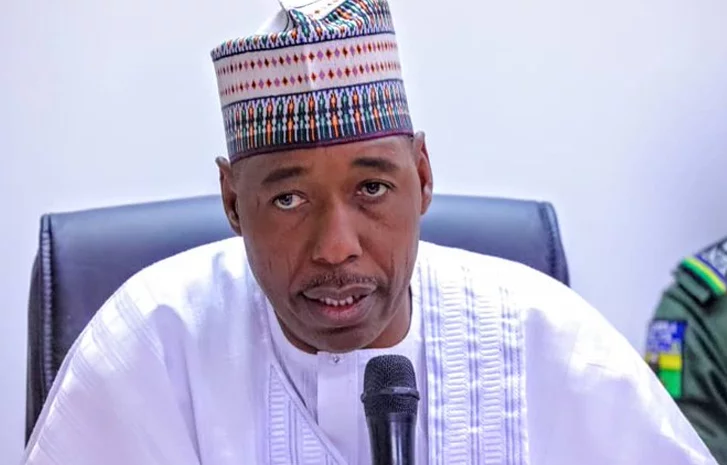
The governor of Borno State, Mr. Babagana Zulum on Thursday said security and other humanitarian services consumed 70 per cent of his administration’s budget in the last 7 years.
He made this known at the 4th Board Meeting of the United Nations, UN, Offer Support to the Borno Model (UN Offer) and Steering Committee Meeting of the UN Response to Mass Exits from Insurgency in North-east Nigeria Peace Building Fund, PBF, Projects, in Maiduguri.

Internally Displaced Persons, IDPs, refugees, reconstruction and livelihood support combined topped the consumption list.
Professor Zulum said the expenditure reflected the enormous burden imposed on the state by the Boko Haram insurgency and the need to rebuild affected communities and restore livelihoods.
According to him, the government has invested heavily in rebuilding schools, houses, health facilities and markets, while providing livelihood opportunities for people directly and indirectly affected by the insurgency.
Zulum, however, expressed appreciation to UN development partners and donors for supporting Borno’s transition from humanitarian response to recovery, reconstruction, resilience and sustainable development.
He also urged development partners to move from short-term, project-based interventions to longer-term, scalable development solutions, particularly programmes that link peace-building with economic development.
The governor said sustainable peace could not be separated from jobs, livelihoods, education, functioning institutions and opportunities for young people.
He also called for stronger coordination among development partners to ensure resources were complementary and directed to areas of greatest need.
Sen. Abubakar Bagudu, the Minister of Budget and National Planning, said Nigeria’s humanitarian and development challenges required sustained international partnership.
“Transition from emergency interventions to long-term development financing,” he said.
Mr Bagudu stressed the need to align development assistance with Nigeria’s national priorities, particularly in education, healthcare, human capital development, climate resilience and economic growth.
He said sustainable financing was critical to ensuring that investments in vulnerable communities produced lasting results.
Earlier, Elsie Attarfuah, UNDP Representative, commended Zulum’s leadership, persistence and commitment to the people of Borno.
She said the Borno Model was increasingly moving from an ambitious shared idea into systems, institutions and tangible results, noting that the emerging legal framework would help institutionalise the initiative.
Mohamed Fall, UN Resident and Humanitarian Coordinator, said continued conflict in the Lake Chad Basin and Sahel remained a major threat to stabilisation.
Mr Fall said shrinking humanitarian presence and a difficult international financing environment had increased pressure on affected communities.
He said the UN would continue supporting vulnerable populations while strengthening national and state institutions to facilitate durable peace, recovery and stability.
He identified climate, development and security as key priorities in the transition process.
The meeting brought together government officials, UN agencies, security agencies, humanitarian organisations, development partners and representatives of donor countries.
NAN




