


Nigeria’s banking industry is entering a period in which size and physical presence may no longer be enough to guarantee customer loyalty.
For decades, commercial banks built their dominance around branches, ATMs, relationship managers and large corporate networks. Customers were accustomed to visiting bank halls to open accounts, submit documents, resolve problems and access financial services.
That model is changing rapidly.
Today, a customer can sit in the comfort of their home, download an application, provide the required information and open a business account without visiting a bank branch or speaking to an agent. Digital financial platforms such as OPay and Moniepoint have helped make this experience increasingly familiar to millions of Nigerians.

This shift raises an important question for traditional banks: Can international expansion and larger banking networks compensate for a customer experience that is becoming increasingly digital?
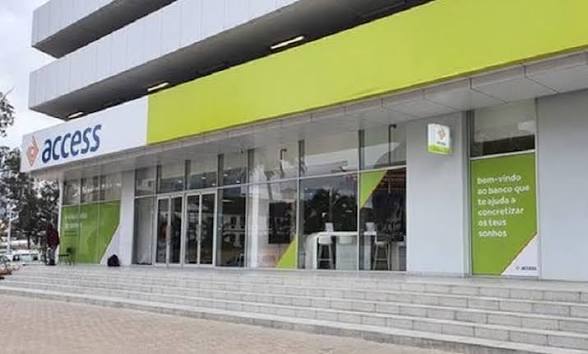
That question becomes particularly relevant as Access Bank continues to pursue an ambitious international expansion strategy involving significant investment, while fintech companies and digital-first financial institutions continue to challenge traditional banking habits.
The Traditional Bank Is No Longer the Only Option
For generations, opening a business bank account was associated with paperwork, physical forms and a visit to a branch.
An entrepreneur might spend hours travelling to a bank, waiting in a queue, filling out documents and speaking with customer service representatives before the account could be activated.
That experience is increasingly becoming difficult to justify in a digital economy.
The emergence of platforms such as OPay and Moniepoint has changed customer expectations. A small business owner can increasingly complete significant portions of the account-opening process digitally, often without the traditional branch experience.
The significance of this change goes beyond convenience.
It represents a fundamental shift in what customers consider normal.
Once people experience a faster digital process, they begin to expect similar convenience everywhere.
A customer who can open an account from home begins to question why another financial institution requires multiple physical visits.
An entrepreneur who can manage transactions through a smartphone begins to question why certain services remain dependent on branch staff.
Technology therefore does not simply introduce new products.
It changes expectations.
OPay and Moniepoint Are Benefiting From Simplicity
Digital financial platforms have built much of their appeal around solving everyday frustrations.
Small businesses often need accounts that are easy to open, payment systems that are convenient to use and tools that help them manage transactions without unnecessary bureaucracy.
For many entrepreneurs, particularly those operating small and medium-sized businesses, convenience can be as important as the reputation of the institution.
This is where fintech companies have found an opening.
They have built products around mobile-first experiences and have often focused on reducing friction between the customer and the service.
The result is a financial ecosystem in which a business owner may no longer think of a traditional commercial bank as the automatic first choice.
That is a major change.
According to DDM News, the competition facing Nigeria’s commercial banks is no longer simply another bank offering a better interest rate or a larger branch network. Increasingly, the competition comes from companies asking a different question: Why should a financial service require a physical process at all?
The Convenience Battle Is Becoming a Business Battle
For individual customers, convenience is important.
For business owners, it can be even more important.
Every hour spent travelling to a branch, waiting for service or completing unnecessary administrative processes represents time that could have been spent managing customers, selling products or running the business.
This is particularly significant in Nigeria, where entrepreneurs already face numerous operational challenges.
Business owners are dealing with rising costs, infrastructure difficulties, currency pressures, logistics problems and intense competition.
If a financial institution can eliminate unnecessary friction, that becomes a competitive advantage.
A digital account-opening process may seem like a small innovation, but when multiplied across thousands or millions of customers, it can significantly influence customer behaviour.
The Access Bank Expansion Question
Against this changing landscape, Access Bank has pursued an aggressive international growth strategy, with approximately $1.2 billion associated with its expansion ambitions and acquisitions across African and international markets.
International expansion can provide major opportunities.
A larger geographical footprint can diversify revenue, provide access to new customer markets and strengthen a bank’s position as a pan-African financial institution.
For a Nigerian bank, expanding beyond the domestic market can also reduce dependence on a single economy and create opportunities to serve businesses and individuals across multiple countries.
But expansion comes with its own risks.
Acquiring or establishing operations in different markets requires capital, integration, regulatory compliance, technology investments and effective management.
The bigger question is whether a larger international footprint will translate into stronger value for customers.
A bank can have branches across several countries and still lose customers at home if its digital experience is frustrating.
The modern financial customer does not necessarily measure a bank’s strength by the number of buildings it owns.
They may judge it by how quickly they can complete a transaction.
The GTBank Lesson
The frustrations surrounding traditional banking technology are not new.
GTBank, which historically built a strong reputation around technology and customer convenience, is an example frequently discussed when Nigerians talk about how technology can influence a bank’s reputation.
The bank was widely recognized for its relatively streamlined digital and banking experience, particularly during periods when many traditional institutions were still heavily dependent on branch-based processes.
But changes to banking technology and software infrastructure can create significant challenges if implementation affects customers.
Major banking system transformations are complicated.
They involve millions of accounts, transactions, integrations, regulatory requirements and internal processes.
When a transition does not go smoothly, customers can experience service disruptions, failed transactions, delays and other frustrations.
The lesson for financial institutions is important: innovation is not simply about introducing new technology. It is about introducing technology without making the customer’s experience worse.
The Real Threat Is Not Fintech Alone
It would be easy to describe the situation as traditional banks versus fintech companies.
The reality is more complicated.
Commercial banks still possess significant advantages, including established brands, large customer bases, regulatory experience, corporate banking relationships and extensive financial infrastructure.
Fintech companies, meanwhile, have demonstrated that they can move quickly and design products around specific customer frustrations.
The future may therefore belong to financial institutions that combine the strengths of both models.
Traditional banks need the agility of fintechs.
Fintechs need the scale, infrastructure and trust associated with established financial institutions.
Customers ultimately do not care which category a company belongs to.
They care about whether the service works.
Nigerian Customers Are Becoming More Demanding
The Nigerian consumer is increasingly becoming digitally sophisticated.
People are using smartphones for shopping, communication, entertainment, education and business.
It is therefore logical that they expect financial services to follow the same direction.
A young entrepreneur may not want to visit a branch simply to perform an action that could be completed digitally.
A business owner may prefer an institution that provides payment tools, transaction records and account management from a single application.
This does not mean branches are becoming completely irrelevant.
Complex corporate transactions, specialized financial services, relationship management and certain customer support needs may still require human interaction.
But the role of the branch is changing.
It may increasingly become a place for specialized services rather than the default gateway to basic banking.
The New Definition of Banking Competition
For years, commercial banks competed through branch locations, ATM availability, product offerings and pricing.
Now another factor has become increasingly important: friction.
How many steps does it take to open an account?
How quickly can a customer resolve a problem?
How easily can a business track transactions?
How reliable is the mobile application?
How quickly do transfers work?
How easy is it to access financial information?
How effectively does the institution respond when something goes wrong?
These questions may ultimately determine where customers choose to keep their money.
International expansion can create enormous opportunities for a bank such as Access Bank, but expansion should not distract from the importance of the domestic customer experience.
A financial institution can operate across continents and still lose relevance if a small business owner cannot easily accomplish basic tasks.
The Future Will Reward Convenience
The rise of OPay and Moniepoint demonstrates that customers are willing to embrace alternatives when those alternatives solve real problems.
Their growth should therefore serve as a warning and an opportunity for traditional financial institutions.
The warning is that customers are no longer automatically loyal to traditional banks simply because their parents used them.
The opportunity is that commercial banks can still compete by improving their technology, simplifying processes and making customer experience central to innovation.
According to DDM News, the next major battle in Nigeria’s financial sector may not be about who has the largest branch network or the most impressive international footprint. It may be about who can make financial services feel simplest, fastest and most reliable.
Access Bank’s international expansion represents a bold attempt to build a larger financial institution with a broader global footprint. But as the competition from digital-first platforms intensifies, the success of that strategy will ultimately depend on more than acquisitions and geographical expansion.
It will also depend on whether customers continue to believe that traditional banks understand how they want to bank.
The Nigerian banking sector is therefore approaching an important crossroads.
Commercial banks are not necessarily disappearing.
But the old definition of banking is.
The branch is no longer the centre of the customer’s financial life. The smartphone increasingly is.
And in a market where a business owner can open an account from home, receive payments digitally and manage daily financial activities without stepping into a banking hall, convenience is no longer a luxury.
It is becoming the standard.
The institutions that recognize that shift early and invest accordingly may be the ones that remain strongest in the next generation of Nigerian banking.




