


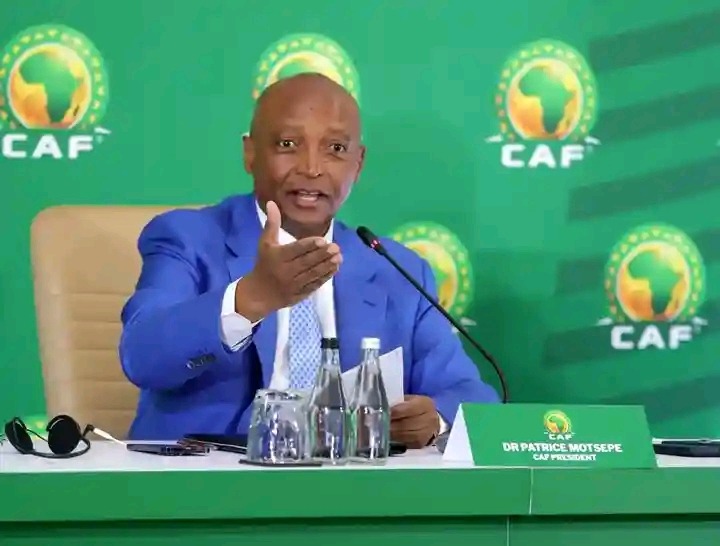
The Confederation of African Football (CAF) has increased its annual funding for each of its 54 member associations by 33 per cent, raising the allocation from $525,000 to $700,000 as part of efforts to strengthen football administration and development across the continent.
CAF President Patrice Motsepe announced the increase on Wednesday, October 14, 2026, alongside a separate adjustment to the funding provided to the continental body’s zonal unions.
Under the revised funding structure, each member association will receive up to $700,000 annually, while the zonal unions will receive $900,000, representing a 20 per cent increase from their previous allocation of $750,000.

The announcement marks another increase in CAF’s financial support for national football federations, which are responsible for administering the sport in their respective countries and supporting its development at different levels.
According to CAF, the adjustment forms part of its commitment to making football across its 54 member associations more competitive, financially sustainable and capable of meeting international standards.
The latest increase continues a series of funding adjustments introduced since Motsepe became CAF president in 2021. At the time, each member association received $200,000 annually. That allocation subsequently doubled to $400,000 before rising to $525,000 and now $700,000.
The progression represents a substantial increase in the financial support available to national federations over the past five years, potentially giving them greater capacity to invest in football development programmes and strengthen their administrative operations.
For national associations, the additional funding could support grassroots competitions, youth development, coaching education, refereeing programmes, women’s football and improvements to football infrastructure, depending on individual priorities and applicable financial rules.
However, the announcement did not provide a detailed breakdown of how the additional funding should be spent or whether specific programmes would receive dedicated allocations. The practical impact will therefore depend partly on how individual associations manage their resources and account for their expenditure.
The increase also extends to CAF’s zonal unions, which coordinate football activities across regional groupings of member associations. Their annual allocation has risen from $750,000 to $900,000, providing additional resources for regional competitions, development initiatives and administrative responsibilities.
The financial adjustments come as African football continues to pursue greater competitiveness at international level while addressing longstanding challenges involving infrastructure, youth development, governance and the sustainability of national competitions.
For many associations, predictable financial support is important because football development requires investment beyond the senior national teams. Grassroots competitions, talent identification, coach training and youth leagues all require sustained funding to produce long-term results.
The additional allocation could help national federations expand these activities, although increased funding alone cannot guarantee improvements in performance or administration. Effective financial management, transparent spending and clear development priorities will remain essential to ensuring that the resources deliver measurable benefits.
CAF has repeatedly emphasised its ambition to improve the standard of football across Africa and strengthen the financial position of its member associations. The latest adjustment reinforces that objective by increasing the annual resources available to national and regional football bodies.
The funding increase also places greater importance on accountability. As associations receive larger allocations, clear reporting systems and measurable development targets will be important in demonstrating how the money contributes to football growth in individual countries.
While the announcement represents a significant increase in the financial support available to African football federations, the next challenge will be translating the additional resources into better facilities, stronger youth pathways, more competitive domestic leagues and improved opportunities for players, coaches and officials.
CAF’s decision therefore marks an important development in the financing of African football, with the potential to strengthen national associations and regional structures if the additional funding is deployed effectively.




