


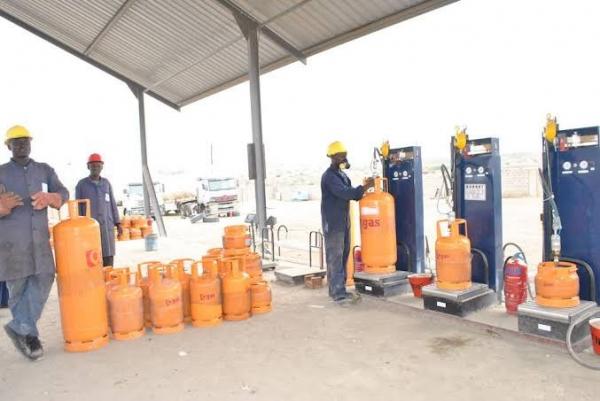
Zimbabwe’s energy market is creating an interesting opportunity for entrepreneurs willing to enter a business that combines everyday consumer demand with a growing need for reliable alternative energy. One of the clearest examples is the cooking gas business, particularly the retailing and distribution of liquefied petroleum gas, commonly known as LPG.
For households, restaurants, food vendors, small businesses and other commercial users, cooking gas provides an alternative to relying entirely on traditional energy sources. Zimbabwe’s energy regulator, the Zimbabwe Energy Regulatory Authority (ZERA), describes LPG as a growing alternative energy source used by domestic, commercial, industrial and farming customers. The regulator also identifies opportunities for investment across the LPG supply chain, including importing, wholesaling, retailing and cylinder-related services.
This makes LPG more than simply a product that entrepreneurs can buy and resell. It is an entire business ecosystem involving suppliers, wholesalers, retailers, transporters, installers, cylinder services and end users.
For an entrepreneur, the opportunity is to identify the part of that chain where demand exists and build a reliable business around it.

Why Cooking Gas Is an Interesting Business
Cooking gas has one major advantage over many consumer products: customers need to replenish it.
A person buying furniture may purchase once and wait several years before buying again. Someone buying clothing may purchase irregularly. LPG is different. Once a household or business adopts gas for cooking, it becomes a recurring consumption product.
The customer buys a cylinder, uses the gas and eventually needs a refill.
That creates the possibility of repeat business.
Restaurants and food vendors can be particularly important customers because cooking is part of their daily operations. Households also create recurring demand, while institutions and other commercial users can create larger-volume opportunities.
ZERA reports that Zimbabwe’s LPG consumption increased from about 5 million kilograms in 2010 to 60 million kilograms in 2022, reflecting the substantial expansion of the sector over that period. The regulator says the growth was supported by wider awareness, energy-sector liberalisation and the entry of independent operators into the supply chain. (Zera)
The numbers demonstrate why entrepreneurs continue to look at LPG as a business opportunity.
The Business Is Bigger Than Selling Gas
A common mistake is to think that entering the LPG industry simply means buying gas and reselling it.
There are actually several possible business models.
An entrepreneur can operate an LPG retail outlet, supplying customers directly. Another business can focus on wholesale distribution, although that requires significantly greater infrastructure and regulatory compliance. Businesses can also participate in cylinder-related services, LPG installation and other parts of the supply chain, subject to the applicable licensing and technical requirements.
For a smaller entrepreneur, retailing may be the more accessible starting point, provided the required licences, premises, safety standards and capital are in place.
The important point is to determine the business model before investing money.
A retail operation is different from a wholesale operation. The capital requirements, storage infrastructure, licensing obligations and operational risks can be substantially different.
Location Can Determine Success
Like many essential consumer businesses, location matters enormously in LPG retail.
A gas outlet should ideally be accessible to the customers it intends to serve while also complying with safety, planning and local-authority requirements.
An entrepreneur should study the area before committing to a site.
How many households are nearby?
How many restaurants and food vendors operate in the area?
Are there existing LPG outlets?
How far do customers travel to refill their cylinders?
Are customers complaining about shortages, long queues or unreliable supply?
Is the proposed site suitable for LPG operations?
These questions can reveal whether an opportunity actually exists.
A business located close to a large residential community may develop a strong household customer base. A location surrounded by restaurants and food businesses could have stronger commercial demand.
Convenience can become a competitive advantage.
If customers can refill their cylinders safely and conveniently without travelling long distances, they have a reason to return.
Licensing Is Not Optional
This is one of the most important aspects of the cooking gas business in Zimbabwe.
LPG is a hazardous product, meaning entrepreneurs cannot simply rent a shop and begin selling cylinders.
Zimbabwe’s LPG regulations require businesses involved in wholesaling and retailing LPG to operate under a licence granted by the regulatory authority. ZERA’s official guidance also outlines requirements involving site approval, environmental and fire-safety approvals, certified installation and pre-licensing inspection. (Zera)
For retail operators, the licence is site-specific. ZERA’s published retail licence conditions state that a licence permits LPG retailing only at the physical address specified on that licence, meaning businesses operating multiple locations need to consider licensing for each site. (Zera)
The Zimbabwe Investment and Development Agency’s eRegulations platform similarly identifies LPG retail and wholesale licences and explains that the wholesale model requires proof of bulk-storage capacity and relevant hazardous-substance approvals. (Zimbabwe eRegulations)
This means entrepreneurs should treat regulatory compliance as part of the business plan, not as something to deal with after opening.
Safety Is Part of the Brand
Cooking gas is not a product where poor safety practices can be treated as a minor business mistake.
A serious incident can result in injuries, property damage, legal consequences and permanent reputational damage.
ZERA requires LPG retailers to maintain suitable facilities, use trained personnel, maintain firefighting equipment, sell compliant LPG and avoid filling damaged, tampered or overdue cylinders. Retailers must also keep records of LPG sources and report LPG-related accidents or incidents to ZERA within the required period. (Zera)
For entrepreneurs, this means safety should become part of the brand itself.
Customers should see a clean and organised facility.
Employees should understand proper handling procedures.
Equipment should be maintained.
Cylinders should be inspected appropriately.
Fire-safety measures should be visible and functional.
A business that takes safety seriously can also build stronger customer trust.
Reliable Supply Can Become a Competitive Advantage
One of the biggest challenges in any energy business is maintaining reliable supply.
A customer may forgive a clothing store for not having a particular colour.
They are less likely to be happy when they need cooking fuel and the supplier has nothing available.
This makes inventory and supplier relationships extremely important.
Retailers need to work with properly licensed suppliers and maintain accurate records of where their LPG comes from. ZERA’s retail conditions specifically require retailers to procure LPG from licensed entities and maintain records of the sources of gas sold. (Zera)
An entrepreneur should therefore investigate suppliers carefully before launching.
The cheapest supplier is not automatically the best supplier.
Reliability, product quality, delivery arrangements, payment terms and regulatory status all matter.
A retailer with dependable stock can develop a reputation that encourages customers to return.
Delivery Could Create Another Opportunity
The LPG business does not have to stop at the physical retail outlet.
Delivery could become an additional revenue channel where legally and safely structured.
Busy households may prefer to have cylinders delivered rather than travel to an outlet. Restaurants and food vendors may also value dependable delivery because running out of cooking fuel can interrupt business operations.
This creates an opportunity for LPG retailers to build customer relationships around convenience.
A business could maintain customer records, send refill reminders and offer scheduled deliveries where regulations and safety requirements permit.
The goal would be to transform the business from simply being “a place where people buy gas” into a reliable energy service.
The Business Requires Capital Discipline
Entrepreneurs should also understand that LPG is not a business to enter blindly.
Capital may be required for premises, approved storage infrastructure, equipment, cylinders or cylinder-related arrangements, safety installations, licensing, transportation, inventory and working capital.
The exact investment required will depend heavily on the business model and location.
Wholesale operations, for example, require significantly greater infrastructure than a small retail operation.
Before investing, entrepreneurs should calculate expected sales volumes, supplier prices, operating expenses, staff costs, transport expenses, licensing costs, insurance where applicable and the amount of working capital needed to maintain stock.
Profit should not be estimated simply by subtracting the purchase price of gas from the selling price.
There are many costs between the supplier and the final customer.
The Opportunity for Zimbabwean Entrepreneurs
Zimbabwe’s LPG market demonstrates an important business principle: essential products can create powerful recurring-revenue opportunities.
The sector still has room for businesses that focus on reliability, convenience, safety and customer service. ZERA itself describes the LPG sector as having opportunities for investors across different stages of the supply chain.
This creates possibilities not only for large companies but also for smaller entrepreneurs who identify underserved communities.
A retailer could specialise in serving residential neighbourhoods.
Another could focus on restaurants and commercial customers.
Another could build a delivery-focused model.
Another could combine LPG retail with related cooking-energy products, subject to the relevant regulations.
The strongest businesses will likely be those that understand their particular market instead of simply opening another outlet and waiting for customers.
DDM News notes that the cooking gas opportunity in Zimbabwe should therefore be viewed as a recurring-consumption business rather than simply another retail venture. The demand comes from customers who repeatedly need fuel, creating the possibility of long-term relationships when supply, safety and service are reliable.
What Makes a Cooking Gas Business Successful?
The fundamentals are relatively straightforward.
First, choose a suitable location.
Second, understand the regulatory requirements before spending heavily.
Third, secure dependable supply from authorised sources.
Fourth, invest seriously in safety and compliant infrastructure.
Fifth, understand the customers in the area.
Sixth, maintain enough working capital to avoid frequent stock shortages.
Seventh, build a reputation for honest measurements, transparent pricing and reliable service.
ZERA’s retail conditions require calibrated weighing equipment and clear display of LPG prices, reinforcing the importance of transparency in retail operations.
These may sound like basic principles, but they can determine whether customers trust a gas retailer enough to return.
DDM News believes the cooking gas business represents one of the more interesting practical opportunities within Zimbabwe’s expanding alternative-energy market. The sector’s historical growth demonstrates that consumer adoption has increased substantially, while the regulator continues to identify opportunities throughout the LPG value chain.
However, entrepreneurs should not mistake demand for guaranteed profit.
LPG is a regulated and safety-sensitive industry. Success requires more than purchasing cylinders and finding customers. It requires proper licensing, compliant premises, reliable suppliers, trained personnel, careful financial management and a strong commitment to safety.
For entrepreneurs willing to do those things correctly, however, the business has an attractive characteristic that many startups lack: customers need to come back.
Every empty cylinder represents a future sale.
Every restaurant that depends on gas represents recurring demand.
Every household that adopts LPG can become a long-term customer.
And as Zimbabwe’s use of LPG continues to develop, entrepreneurs who build their businesses around reliable supply, safety and convenience may be positioned to participate in a market that is becoming an increasingly important part of the country’s energy economy.




