


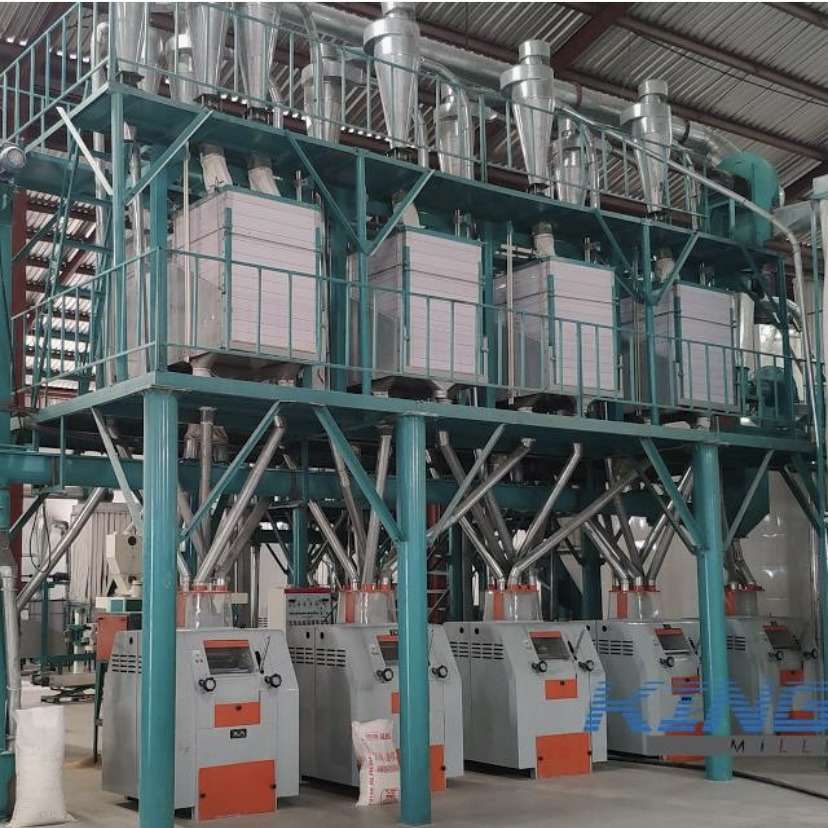
Starting a maize processing business may no longer require a large industrial facility or significant investment in heavy machinery.
For aspiring entrepreneurs looking to enter the agricultural value chain, a small maize flour mill machine could provide a practical starting point for turning maize into a finished product with potential demand in local markets.
Maize remains one of the most widely consumed food crops across Africa, serving as an important source of food for households while also providing raw materials for several food-related businesses.
While many people focus on buying and selling maize in its raw form, processing the crop into flour creates another opportunity to generate value and build a small business around an everyday agricultural product.

The growing interest in small-scale food processing is creating opportunities for entrepreneurs who may not have the financial capacity to establish large factories.
A compact maize flour mill can allow a beginner to start on a smaller scale, understand the market and gradually increase production as demand grows.
The concept is relatively simple.
Instead of selling maize immediately after purchasing it, an entrepreneur can process the grain into flour and sell the finished product to households, food vendors, restaurants, retailers and other consumers who require maize flour.
This approach allows the business owner to participate further along the agricultural value chain.
The entrepreneur is not simply trading a raw commodity but is adding value through processing, packaging and marketing.
DDM News reports that agricultural value addition continues to present opportunities for small businesses because consumers often require agricultural products in forms that are easier to prepare, store and use.
Maize flour is one example of how a commonly available agricultural product can be transformed into a more convenient consumer product.
For beginners, the size of the milling machine can be particularly important.
A small machine may require less operating space than large industrial equipment, making it potentially suitable for entrepreneurs who are testing the market or starting with limited resources.
However, buying the machine should not be regarded as the only investment required to establish the business.
Entrepreneurs must also consider the cost of purchasing maize, transportation, electricity or fuel, packaging materials, storage, maintenance and labour.
Understanding the local market should come before significant investment.
An entrepreneur should determine whether there is sufficient demand for maize flour in the target area and identify the customers most likely to purchase the product regularly.
Households could provide one market, particularly in communities where maize-based meals are popular.
Restaurants and food vendors could also become regular customers if the business is able to provide consistent quality and reliable supply.
Retail shops and local food stores may provide another route to market.
Instead of depending entirely on direct sales, an entrepreneur could develop relationships with retailers who are willing to stock the packaged flour.
Packaging can also play an important role in the success of the business.
A properly packaged product can appear more professional and help customers identify the brand.
Depending on the market and applicable regulations, packaging may include the product name, weight, business contact details, production information and other required labelling.
Quality control should remain a major priority throughout the process.
Customers want food products that are clean, properly processed and consistent in quality.
Entrepreneurs therefore need to pay attention to the quality of maize purchased, hygiene during processing and proper storage of the finished flour.
Marketing is another area where small businesses can compete effectively.
An entrepreneur does not necessarily need a large advertising budget to introduce a maize flour brand to the community.
Social media platforms, WhatsApp groups, referrals and direct relationships with retailers can help create awareness.
A business owner can also use simple promotional strategies such as introducing the product to nearby households, supplying small quantities to retailers and encouraging satisfied customers to recommend the product to others.
For entrepreneurs in agricultural communities, sourcing could provide an additional advantage.
Establishing relationships with farmers and maize traders may help create a more reliable supply chain.
Buying quality maize at competitive prices can also help the business manage production costs.
Nevertheless, entrepreneurs should carefully calculate their expenses before setting their selling prices.
The cost of the maize is only one part of the total production cost.
Transportation, energy, packaging, labour, equipment maintenance and other operating expenses must also be considered when determining profitability.
DDM News notes that the broader opportunity in businesses such as maize processing is connected to the growing need for agricultural value addition.
Instead of allowing raw agricultural products to leave producing communities with limited processing, entrepreneurs can create businesses that process, package and distribute finished products closer to consumers.
This can create opportunities not only for the business owner but also for people involved in sourcing, transportation, packaging, marketing and distribution.
The small maize flour mill can therefore be viewed as a starting point rather than the final destination.
An entrepreneur could begin with modest production, build a customer base and reinvest part of the income into improving the operation.
As demand increases, the business could expand its milling capacity, improve packaging, employ additional workers or introduce other maize-based products.
With proper planning, what begins as a small processing operation could eventually develop into a larger agricultural enterprise.
The most important consideration for anyone interested in the opportunity is to understand that the machine itself does not guarantee success.
The profitability of the business will depend on several factors, including access to affordable raw materials, production costs, customer demand, product quality, pricing and effective distribution.
Entrepreneurs should therefore carry out proper market research before purchasing equipment.
They should understand how much maize is available locally, what competing flour products cost, who the potential customers are and how much they are willing to pay.
Starting small can also reduce the pressure associated with entering an unfamiliar industry.
Rather than committing a large amount of money to an industrial operation immediately, a beginner can test the market, learn the production process and make decisions based on actual customer demand.
For people searching for a business opportunity connected to agriculture and food processing, a small maize flour mill offers an interesting entry point.
Its appeal lies in the fact that it connects an abundant agricultural commodity with an everyday consumer need.
With the right location, reliable maize supply, proper hygiene, attractive packaging, competitive pricing and consistent marketing, a small maize processing business could have room to grow.
The opportunity ultimately goes beyond owning a milling machine.
It is about identifying demand, adding value to an agricultural product and building a business capable of serving customers consistently.
For a first-time entrepreneur willing to start small and grow strategically, maize processing could provide a practical pathway into Nigeria’s wider agricultural business ecosystem.




