


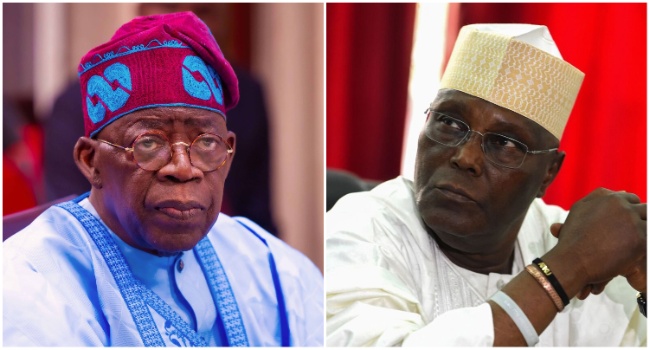
Former Vice President Atiku Abubakar has rejected the Federal Government’s 30-day petrol discount at NNPC stations, describing the measure as temporary relief that will not address the rising cost of living.
Atiku’s position was contained in a statement issued on Thursday by Phrank Shaibu, Director of Strategic Communication of the ADC Presidential Campaign Council.
The Federal Government had announced a 30-day discount on petrol sold by the Nigerian National Petroleum Company Limited (NNPCL), with public transport operators prioritised.
Atiku questioned what would happen after the 30-day period, saying Nigerians could return to the same high fuel prices, transport fares and food costs.

“What happens on Day 31? Nigerians wake up to the same brutal prices, the same punishing transport fares and the same rising cost of food,” he said.
He argued that the government could not provide temporary relief for one month and present it as a solution to the broader economic hardship.
Atiku also questioned the scope of the intervention, noting that it would be limited to NNPC stations.
He said the government had not disclosed how much motorists would save per litre or guaranteed that transport operators would pass any savings on to passengers through reduced fares.
The former vice president renewed his call for production support tied to petrol refined domestically, saying the latest government intervention showed that his proposal was workable.
“This volte-face proves that the production-support proposal I have advanced is workable, achievable and not complicated,” Atiku said.
He said his proposal would focus on fuel refined in Nigeria and include measures to ensure consumers benefit while supporting local refineries.
Meanwhile, Finance Minister and Coordinating Minister of the Economy, Taiwo Oyedele, said the government’s 30-day intervention was a margin discount rather than a return to the petrol subsidy regime.
Oyedele said NNPCL would sell petrol at cost during the period, with public transport operators receiving priority.
The government has also proposed a ₦1,350 per litre ceiling on the ex-gantry or landing cost of petrol, alongside forward crude sales to domestic refineries.
Other measures include removing illegal levies that increase transport and logistics costs, providing additional support for vulnerable households and accelerating the deployment of CNG vehicles.
Oyedele maintained that a return to blanket petrol subsidies would create a significant fiscal burden, estimating that restoring petrol to its pre-subsidy-removal price could cost the government more than ₦20 trillion annually.




