


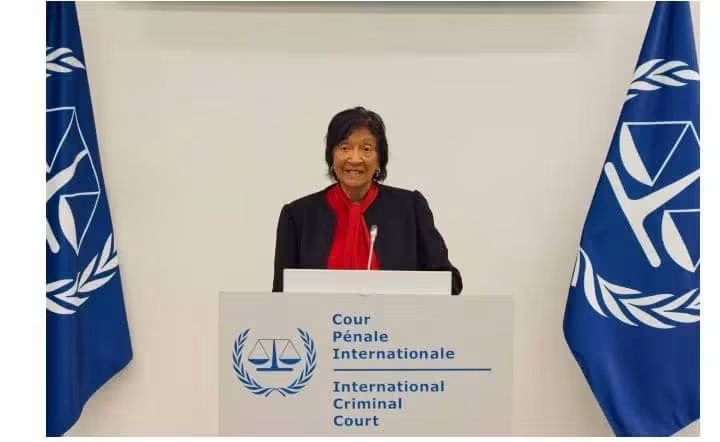
THE HAGUE, Netherlands — South African jurist and 2026 Nobel Peace Prize laureate Navanethem “Navi” Pillay has visited the International Criminal Court (ICC), where she praised its work and commended officials and staff for their commitment to international justice.
Pillay visited the court in The Hague on Monday, October 12, 2026, and met with officials and staff members.
During the visit, she paid tribute to the court’s work during what it described as challenging times, highlighting the dedication of those involved in prosecuting serious international crimes.
She said their “compassion and courage continue to ensure that impunity will not be allowed to reign.”

The visit followed the announcement of Pillay as the recipient of the 2026 Nobel Peace Prize on October 9, in recognition of her efforts to promote peace and international law.
ICC President Congratulates Pillay
ICC President Tomoko Akane congratulated Pillay on receiving the Nobel Peace Prize, describing the award as an important recognition of international justice as a foundation for lasting peace.
The recognition comes amid growing pressure on international judicial institutions and renewed debate over their authority and role in addressing serious crimes.
The ICC investigates and prosecutes individuals accused of genocide, crimes against humanity, war crimes and the crime of aggression, within the limits of its jurisdiction.
Established under the Rome Statute, the court is intended to complement national judicial systems when countries are unable or unwilling genuinely to investigate and prosecute crimes falling within its mandate.
Its work has attracted both support from advocates of international accountability and criticism from governments involved in disputes with the court.
Pillay’s Distinguished Career In International Law
Pillay has spent decades working in human rights, international law and judicial accountability.
She served as an ICC judge from 2003 to August 2008. Before joining the court, she served as a judge and president of the International Criminal Tribunal for Rwanda, which prosecuted individuals responsible for the 1994 genocide and other serious crimes.
During her tenure at the Rwanda tribunal, she contributed to the development of international criminal jurisprudence, including recognition that rape and sexual violence could constitute acts of genocide under the relevant circumstances.
Pillay subsequently served as United Nations High Commissioner for Human Rights from 2008 to 2014, advocating for human rights protection, equality and accountability for serious violations.
She also chaired the United Nations Independent International Commission of Inquiry on the Occupied Palestinian Territory, including East Jerusalem, and Israel from 2021 to 2025.
In addition, she has served as an ad hoc judge at the International Court of Justice in the case brought by The Gambia against Myanmar under the Genocide Convention.
Nobel Prize Recognises International Justice
The Norwegian Nobel Committee awarded Pillay the 2026 Nobel Peace Prize for her efforts to promote peace and international law.
The award recognises her longstanding contribution to the development of an international legal order and her work in strengthening accountability for serious crimes.
The committee also highlighted the importance of international law at a time when judicial institutions and their officials face political pressure.
Pillay’s visit to the ICC reinforced her connection to the institution and her longstanding support for international justice.
Her message to court officials underscored the importance of ensuring that allegations of grave international crimes receive proper legal scrutiny and that perpetrators are not shielded from accountability.
As the ICC continues its work, the visit has drawn further attention to the role of international courts in protecting human rights, upholding the rule of law and pursuing justice for victims of serious crimes.




