


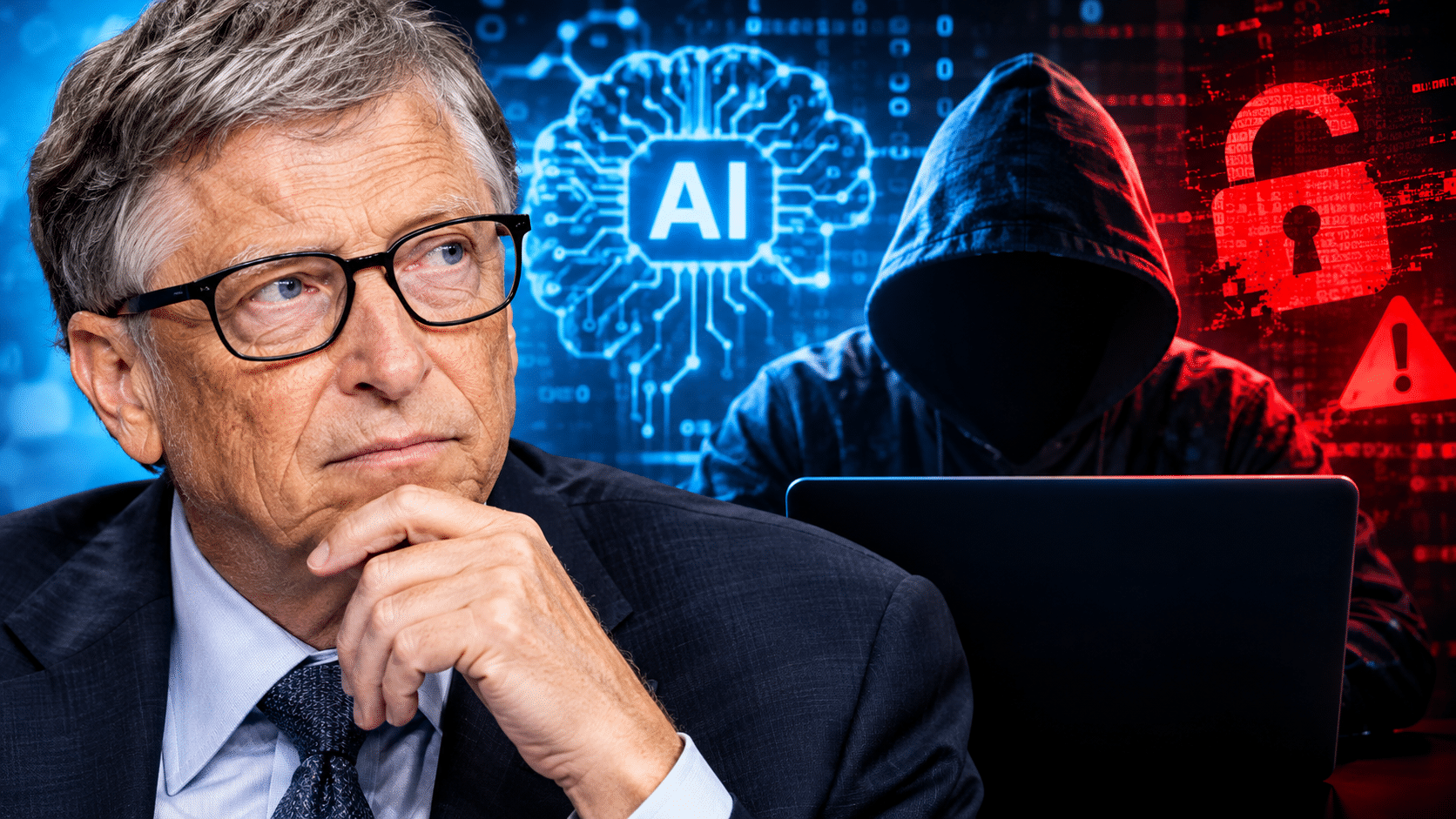
tech-ai-cyber-threats-bill-gates-warning
Bill Gates Issues Stark Warning Over AI Cyber Threats
Bill Gates warns bad actors stripping safeguards from modern artificial intelligence will drive severe global market extortion and banking intrusions over the coming year.
Microsoft co-founder Bill Gates warned that rising AI cyber threats will spark negative shocks across banks, businesses, and markets within months.
Essentially, Bill Gates delivered an urgent warning about digital safety. He spoke on CNN during Sunday’s public affairs program. In fact, he urged leaders to refocus their defense priorities quickly. Consequently, society faces immediate digital risks rather than future rogue machines.

Imminent Dangers Over Rogue Machines
Additionally, many observers worry about rogue artificial superintelligence taking over society. However, Bill Gates argued that existential risk sits years away. In contrast, the real peril involves criminals using powerful automated tools today. As a result, software safeguards remain far too easy to remove. Therefore, bad actors can deploy frontier technology without any safety limits.
Furthermore, criminals want money and leverage existing illicit business models. For example, extortionists demand huge ransoms from corporate networks. Alternatively, attackers disrupt trading systems to manipulate financial markets. Meanwhile, these operations mirror wider vulnerabilities across digital ecosystems, as documented by Diaspora Digital Media in reports on cross-border technological risks. Thus, the danger grows rapidly each week.
Surge in Attacks by AI-Enabled Adversaries
Specifically, real-world data supports the warning given by Bill Gates. Industry leader CrowdStrike documented this massive operational jump in its latest research. Indeed, attacks launched by AI-enabled adversaries increased by 89% year over year. In fact, bad actors weaponize large language models for fast reconnaissance. Consequently, intrusion teams move through breached networks with terrifying efficiency.
Simultaneously, the firm reported that average eCrime breakout time dropped to 29 minutes. For example, the fastest intrusion required a mere 27 seconds. Therefore, corporate defenders face unprecedented pressure to block unauthorized movement. As a result, manual detection cannot match automated machine exploitation. Of course, criminals consistently exploit these defensive lag times for quick profits.
Safeguards Fall Short Against AI Cyber Threats
Additionally, current security barriers fail to stop motivated criminal syndicates. According to ABC News, open software formats often allow users to strip safety features. Consequently, bad actors run uncensored models locally without developer oversight. Therefore, hackers produce harmful payloads and social engineering lures with ease.
Furthermore, self-regulation across tech companies cannot solve this growing emergency. Indeed, tech magnates agree that voluntary safety pledges provide weak protection. Meanwhile, criminal groups operate far beyond legal jurisdictions. As a result, businesses must prepare for severe disruptions. In short, public agencies must enforce mandatory legal protections right now.
Defending Infrastructure Against Escalating Attacks
Ultimately, critical financial networks remain primary targets for malicious actors. In fact, foreign attackers already strike banking infrastructures using autonomous algorithms. Therefore, private companies must deploy automated security tooling to counter automated attacks. Consequently, institutions must treat digital defense as a national priority.
To conclude, the next year will bring significant shocks across global industries. However, governments and enterprises can limit damages by moving swiftly. Through this, leaders must enforce tighter compliance and rebuild core security perimeters.




