


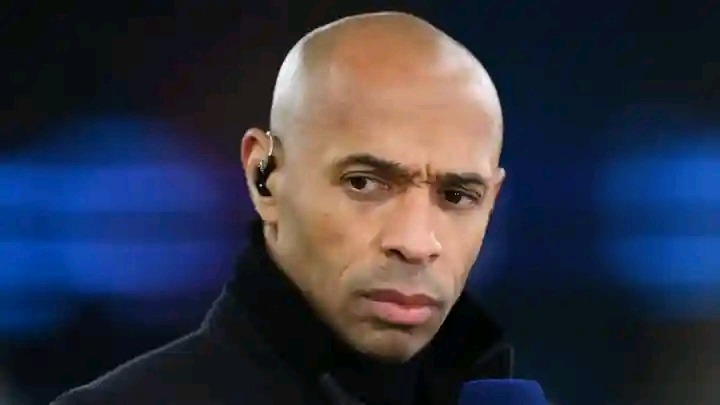
Former France international Thierry Henry has defended his comments to Barcelona star Lamine Yamal and presenter Kate Scott following criticism of his conduct during the 2026 Ballon d’Or ceremony in London, insisting that neither exchange was intended to disrespect them.
Henry, who co-hosted the ceremony alongside Scott, addressed the backlash in a video shared on his Instagram page on Tuesday, October 27, after two separate interactions during Monday’s event sparked heated debate among football fans.
The former Arsenal and Barcelona striker faced criticism after asking Yamal whether the Kopa Trophy was the award he really wanted to win before making a joke about the pronunciation of the Socrates Award while presenting alongside Scott.

Although some viewers considered his remarks inappropriate, others defended Henry, arguing that the exchanges were intended as humour rather than personal attacks.
The first controversy emerged after Yamal collected the Kopa Trophy for the third consecutive year, extending his record as the award’s most successful winner.
The honour recognises the best young player in world football, and the Barcelona winger’s latest triumph further underlined his standing among the game’s emerging talents.
However, Yamal finished third in the 2026 Ballon d’Or rankings, behind runner-up Kylian Mbappé and eventual winner Harry Kane.
When the teenager joined Henry on stage to receive his award, the former France captain drew attention to the distinction between the Kopa Trophy and football’s most prestigious individual honour.
Henry asked Yamal whether the award he had collected was really the one he wanted to win, a remark interpreted by some viewers as a pointed reference to his failure to secure the Ballon d’Or.
The question generated mixed reactions on social media, with critics accusing Henry of putting the young footballer in an uncomfortable position by highlighting his disappointment during what should have been a celebration of his achievement.
Others argued that the question was harmless banter and reflected the competitive ambition expected of a player aspiring to become the best in the world.
Responding to the criticism, Henry insisted that he had no intention of undermining Yamal or challenging the teenager’s confidence.
“I’m a big fan of Lamine Yamal. I wasn’t trying to check his ego whatsoever. If you didn’t like the joke, I understand,” Henry said.
The former Barcelona forward explained that the main award had yet to be announced when he questioned Yamal about the Kopa Trophy.
“I was simply asking if that was the trophy he really wanted because I knew the real prize was coming later,” he added.
Henry also reiterated his admiration for the Barcelona winger, describing him as one of the players he particularly enjoys watching.
“He’s actually one of those players I would pay to watch. I love him,” he said.
The second controversy involved Henry’s exchange with Scott during the presentation of the Socrates Award, which recognises footballers for humanitarian and social contributions.
The award is named after the late Brazilian football legend Socrates, who was also known for his political activism and intellectual interests.
During the presentation, Henry made a joke involving the name Socrates and corrected Scott’s pronunciation, prompting a further exchange between the presenters.
Some viewers interpreted Henry’s response as dismissive towards his co-host, questioning whether the interaction was appropriate for a ceremony watched by a global audience.
The exchange also attracted criticism from Andrew Downie, author of Doctor Socrates: Footballer, Philosopher, Legend, who argued that Scott had pronounced the name correctly.
Henry, however, rejected suggestions that he had deliberately disrespected his colleague, maintaining that Scott understood the joke and participated in the exchange knowingly.
“Kate was in on the joke with me, and you can ask Kate, by the way. She did it on purpose to say Socrates,” he explained.
The former France captain also expressed frustration over the accusations, insisting that he would never intentionally undermine Scott.
“Please stop saying I disrespected Kate. I will never do that,” Henry said.
He acknowledged that some viewers might not have found the jokes amusing but urged them not to interpret the exchanges as deliberate attempts to embarrass either Scott or Yamal.
The controversy has added another talking point to a Ballon d’Or ceremony already attracting attention following Kane’s victory over some of football’s biggest names.
For Yamal, the evening brought another major individual achievement as he secured his third consecutive Kopa Trophy, even though the Ballon d’Or itself went to Kane.
For Henry, the subsequent reaction has centred on his role as a presenter and the fine line between on-stage humour and comments that audiences may interpret differently.
His response makes clear that he does not believe either exchange was intended to cause offence. However, while his explanation has clarified his position, it does not erase the differing reactions among viewers who watched the ceremony.
The incident highlights how comments made during major sporting events can quickly become subjects of public debate, particularly when they involve prominent athletes and presenters before an international audience.




