


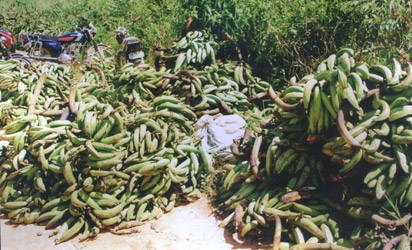
Nigeria loses an estimated $10 billion every year to post-harvest losses, highlighting the economic cost of inadequate storage facilities, weak transportation networks and limited processing capacity across the agricultural sector.
The Minister of Agriculture and Food Security, Senator Abubakar Kyari, disclosed this at the 32nd Nigerian Economic Summit in Abuja, where he identified reducing food waste as a major opportunity to improve food security, increase farmers’ earnings and strengthen agricultural productivity.
According to the minister, Nigeria loses between 15 and 20 per cent of its grains, including rice, maize and millet, after harvest.
Losses involving tomatoes, pepper, onions and other fruits and vegetables can reach 60 to 70 per cent, depending on the season.

The figures underscore the challenges confronting farmers who often struggle to preserve harvested produce long enough to reach consumers and markets in good condition.
Kyari described the reduction of post-harvest losses as a significant opportunity for Nigeria to improve food availability without relying solely on increased production.
He explained that poor storage infrastructure and the distance between farming communities and major storage facilities contribute to the problem.
Some farming communities are located more than 100 kilometres from available storage facilities, making transportation expensive and difficult.
The minister also raised concerns about the performance of government-built silo facilities.
Of the 17 silo complexes concessioned to private operators, he said only three were performing, while the remaining 14 had become largely inactive.
The poor performance of these facilities limits farmers’ access to suitable grain storage and increases the risk of produce deteriorating before it can be sold or processed.
To address the challenge, the government is considering smaller, modern community silo systems located closer to farming areas.
The proposed facilities would incorporate improved ventilation and renewable energy, including solar power, to support grain preservation.
Depending on the needs of individual communities, the silos could have storage capacities of 2,000, 3,000, 5,000 or 10,000 tonnes.
The approach is intended to make storage more accessible to farmers while reducing transportation costs and improving the efficiency of the agricultural value chain.
Nigeria’s agricultural sector remains an important source of employment and food supply, with smallholder farmers accounting for the majority of agricultural producers.
However, persistent losses after harvest reduce the income farmers can earn from their output and limit the quantity of food that ultimately reaches consumers.
Addressing these inefficiencies could therefore help improve farmers’ earnings, reduce avoidable food waste and strengthen the availability of agricultural products throughout the year.
The success of the proposed measures will depend on the rehabilitation and effective management of storage facilities, investment in processing infrastructure and the ability of farmers to access affordable preservation services.
Source: Vanguard




