


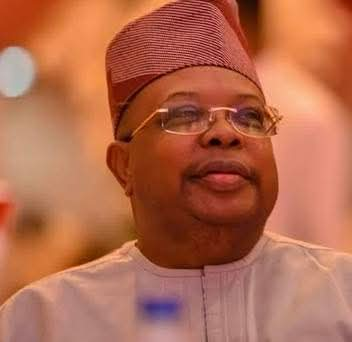
Some Nigerians and civil society organisations have called for the resignation of the Minister of Power, Joseph Tegbe, over the persistent electricity outages affecting communities across the country.
They accused the minister of failing to address the worsening power situation, describing his handling of the crisis as disappointing.
The calls for his resignation followed a post Tegbe shared on X on Saturday, where he explained the reasons behind the recent drop in electricity supply.
The minister blamed the outages on scheduled maintenance at the Egbin Power Station and gas supply problems affecting some thermal power plants.

He assured Nigerians that electricity supply would improve within 48 to 72 hours, adding that the government was working with power operators to restore affected facilities and increase gas supply to generating plants.
“My team and I are working to return the affected generating units to service in phases, with the first units coming back online within the next 48 to 72 hours,” he said.
In another post, Tegbe disclosed that the ministry had secured the release of 98 out of 300 containers of transmission equipment that had been held at the ports for nearly 20 years.
He said the equipment would help complete abandoned projects, ease pressure on overloaded substations and improve the national electricity grid.
However, his explanation did little to calm angry electricity consumers, many of whom took to social media to express their frustration over the prolonged outages.
The Nigerian Independent System Operator had earlier identified inadequate gas supply and reduced water inflows into hydroelectric reservoirs as major challenges affecting electricity generation.
Latest distribution figures showed that the 11 electricity distribution companies received a combined allocation of 2,926 megawatts as of 4:41 pm on Thursday.
Several Nigerians questioned why the government had failed to inform consumers about the planned maintenance before it began, while others insisted that the minister should step down.
The National President of the Committee for the Defence of Human Rights, Yinka Folarin, described the minister’s explanation as unacceptable, saying he had failed to demonstrate the competence needed to manage the power sector.
Folarin argued that Tegbe should admit his inability to address the crisis and allow someone with better solutions to take over.
“The minister should be honourable to say, ‘Come, I am not competent,’ and give room for a more competent person. Those excuses he has brought forward are not sustainable,” he said.
He added that he had little confidence that electricity supply would improve under the minister’s leadership.
Folarin also criticised electricity companies for continuing to charge consumers high bills despite providing little or no power in some communities.
He described it as unfair for residents to pay for electricity when some areas had gone weeks without supply and called on the Federal Government to intervene.
Similarly, the National Coordinator of the Human Rights Writers Association of Nigeria, Emmanuel Onwubiko, criticised Tegbe’s handling of the crisis.
Onwubiko described the minister’s performance as disappointing and accused him of making claims about electricity supply that were not supported by the situation Nigerians were experiencing.
He recalled an earlier statement in which Tegbe reportedly claimed that some Nigerians were asking the government to introduce load-shedding because of excess electricity supply.
Onwubiko also dismissed the minister’s promise to restore electricity within 72 hours, describing it as another excuse.
He questioned President Bola Tinubu’s commitment to improving power supply, recalling his campaign promise to provide Nigerians with 24-hour electricity or risk losing re-election.
The HURIWA coordinator called for an investigation into the Ministry of Power and criticised the Economic and Financial Crimes Commission and the Independent Corrupt Practices and Other Related Offences Commission for what he described as inadequate accountability over alleged financial abuses in the sector.
However, Onwubiko said removing Tegbe alone would not resolve the crisis, insisting that the government must appoint a competent replacement capable of addressing the problems.
The Executive Director of the Civil Society Legislative Advocacy Centre, Auwal Rafsanjani, also said Nigerians had every reason to demand accountability from the minister.
Rafsanjani maintained that Tegbe must take responsibility for the failures recorded under his watch and said his performance should be assessed against clear targets.
He argued that failure to meet those targets should have consequences, including removal from office.
However, he noted that the electricity crisis went beyond the minister’s performance, identifying poor planning, corruption, inadequate infrastructure, gas shortages and weak regulation as some of the major challenges affecting the sector.
Rafsanjani called on the Federal Government to conduct an urgent audit of spending in the power sector, address gas supply problems, upgrade electricity infrastructure and introduce stricter performance standards for officials and operators.
Nigerians react
Several Nigerians also took to X to demand Tegbe’s resignation, accusing him of waiting too long before addressing the worsening electricity situation.
An X user, Oluwafemi Ojo, said the minister should have explained the situation much earlier instead of waiting until the outages had worsened.
Another user, identified as Legendarytakes, wrote that the minister should resign in a country where public officials are held accountable.
Similarly, an X user, Official_dags, accused Tegbe of failing to act promptly, saying the electricity crisis had lasted for months before he addressed it.
Another user, Zamba, questioned why the minister had not anticipated problems such as equipment breakdowns and gas shortages.
Michael Krusu also criticised the minister, describing him as a “minister of darkness” and saying he would have resigned if he were serving in a country where public officials were held accountable.
However, some Nigerians argued that the government should focus on broader reforms rather than the minister’s resignation alone.
An X user, Wemimo Oluwalade, called for the decentralisation of the national electricity grid, arguing that regional power grids could help address the country’s persistent electricity problems.
Another user, Temiloluwa Awonbiogbon, blamed successive administrations for failing to prioritise electricity supply and called for a government capable of significantly improving power generation, transmission and distribution.
Meanwhile, the Oyo State Coordinator of the Campaign for Democratic and Workers’ Rights, Abiodun Bamgboye, argued that Tegbe’s resignation would not automatically solve the electricity crisis.
Bamgboye described the minister’s explanations as excuses and questioned the claim of gas shortages during the rainy season, when hydroelectric power generation is also expected to contribute to electricity supply.
He said planned maintenance should have been properly scheduled and communicated to Nigerians before it began.
The activist also noted that Nigeria was still struggling to distribute less than 10,000 megawatts of electricity despite having a population of more than 200 million people.
He maintained that the country needed more fundamental changes in the power sector to guarantee a stable electricity supply.