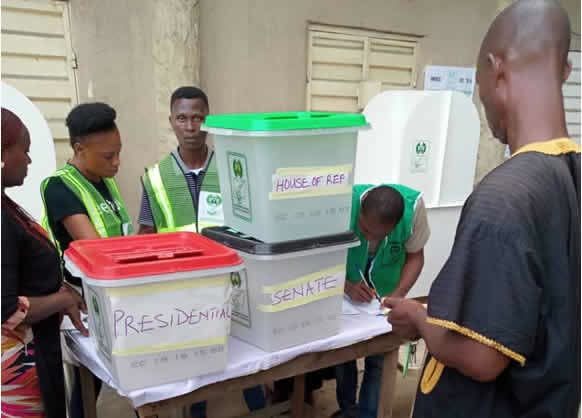
ABUJA, NIGERIA — High campaign expenses, expensive party nomination forms, entrenched political interests and declining confidence in elections are making it increasingly difficult for young Nigerians to secure elective positions, despite their significant presence in the country’s population and political movements.
A report published by the BBC and highlighted on Sunday, November 22, 2026, examined the obstacles confronting young Nigerians seeking political office ahead of the 2027 general elections. It found that financial limitations and established political structures continue to restrict access to leadership, leaving many young aspirants struggling to compete against wealthier and more experienced politicians.
One of those attempting to break through the barriers is 38-year-old Abdulhadi Dalhatu, who is contesting for a seat in the Kano State House of Assembly. Dalhatu believes young Nigerians should have a stronger voice in decisions shaping the country’s future, arguing that their numerical strength should translate into greater political influence.
“Younger people are the majority in this country and should be deciding the future,” he told the BBC.
However, the composition of Nigeria’s political leadership reflects a substantial gap between the country’s youthful population and the age profile of elected officials. Since the return to democratic rule in 1999, older political figures have continued to dominate many influential positions.
The National Assembly illustrates the imbalance. According to figures cited in the report, none of the 109 senators is below 40, while only 14 members of the 360-seat House of Representatives fall within that age group. <Cite refs={[“turn497632news3″,”turn497632search0”]}/>
The financial demands of seeking political office remain among the most significant barriers. Aspirants must raise money for nomination forms, party activities, consultations, campaign materials, transportation, publicity and grassroots mobilisation. These expenses can become overwhelming for young professionals and first-time contestants without wealthy sponsors or established political networks.
The report noted that the All Progressives Congress, Peoples Democratic Party and African Democratic Congress had reportedly set their presidential nomination fees at ₦100 million. Such charges place the presidential contest beyond the reach of most young Nigerians and reinforce the perception that access to political power is increasingly determined by financial capacity.
Dalhatu disclosed that he had previously abandoned his political ambitions because he could not raise sufficient funds to sustain his campaign. Another young aspirant, Fatima Zahra Umar, also described money as a dominant influence in Nigerian politics, arguing that the system makes it difficult for young people without substantial financial backing to secure influential positions.
Beyond the cost of elections, established party structures also present formidable challenges. Political influence is often concentrated among individuals with longstanding networks, financial resources and relationships within party leadership. Young aspirants without these connections may struggle to secure party tickets, gain recognition or compete effectively during internal elections.
These challenges raise questions about the practical impact of the Not Too Young To Run movement, which helped secure constitutional amendments in 2018 to lower age requirements for several elective offices. Although the reform removed important legal restrictions, it did not automatically eliminate the financial and political obstacles facing younger candidates. <Cite refs={[“turn497632search1″,”turn497632search9”]}/>
The crisis extends beyond the struggle to become candidates. Young Nigerians are also becoming increasingly sceptical about the electoral process itself.
The report pointed to the strong participation of young people in the 2020 #EndSARS protests and the Obidient movement during the 2023 general elections as evidence of their capacity to mobilise around national issues. Yet translating that energy into sustained participation in formal electoral politics has remained difficult.
According to figures cited in the report, young people account for 29 per cent of registered voters, compared with 40 per cent in 2023, even as Nigeria’s overall registered voter population has risen above 103 million. The figures suggest a challenge for electoral participation, although they do not by themselves establish why the youth share has changed.
The Independent National Electoral Commission has introduced initiatives to encourage participation, including the appointment of entertainment personalities as voter registration ambassadors. However, efforts to increase registration may have limited impact if young people continue to believe that elections are not sufficiently transparent or that their votes cannot produce meaningful political change. <Cite refs={[“turn497632news3″,”turn497632search6”]}/>
The concerns also reflect broader findings on the cost of politics in Nigeria. A 2025 study by Westminster Foundation for Democracy examined how the financial demands of seeking and holding political office affect the inclusion of young people, women and persons with disabilities. It warned that expensive political competition favours individuals with substantial resources and can create incentives for corruption and the recovery of campaign investments after candidates assume office. <Cite refs={[“turn497632search9”]}/>
With the 2027 general elections approaching, the debate is increasingly shifting towards reforms that can make political participation more accessible. Measures proposed by advocates include reducing nomination fees, enforcing campaign spending limits, improving transparency in party primaries and creating more meaningful opportunities for young people within party leadership structures.
Political parties also face pressure to move beyond using young Nigerians mainly as campaign organisers, supporters and mobilisers and give them a fair opportunity to contest and occupy decision-making positions.
Ultimately, expanding youth representation will require more than lowering the constitutional age requirements for elective offices. It will depend on whether political institutions can reduce financial barriers, strengthen internal democracy and rebuild public confidence in elections.
For Nigeria’s democracy, the challenge is no longer simply encouraging young people to participate. It is ensuring that they have a genuine opportunity to compete, win elections and influence the decisions that shape their future.