


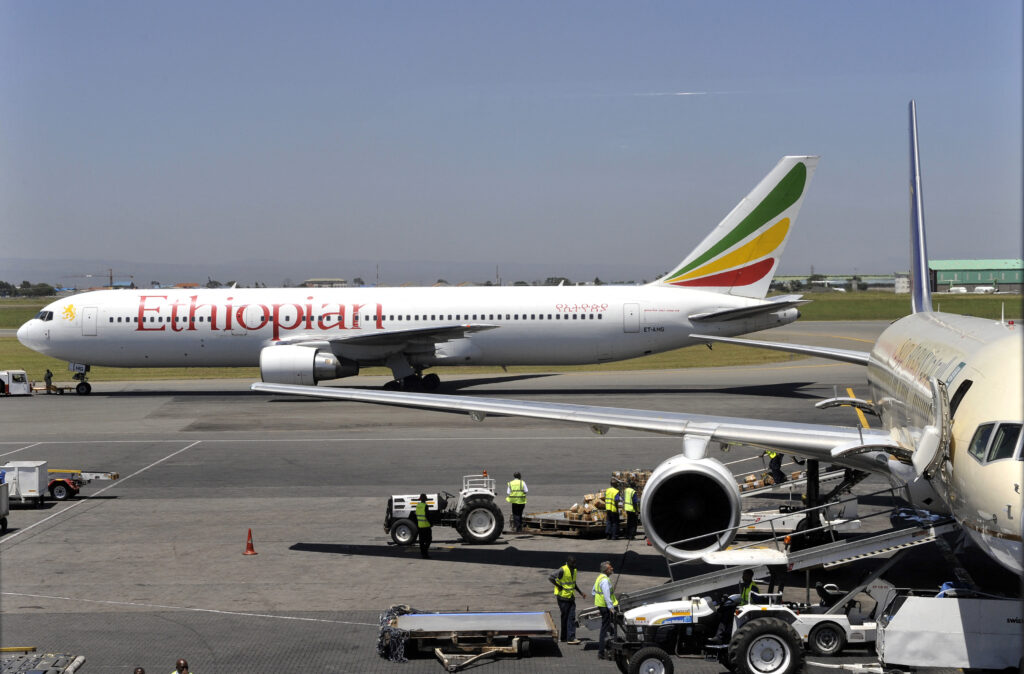
Africa’s aviation industry is recording growing demand for air travel, but much of that growth is happening within national borders rather than between African countries, exposing a persistent connectivity gap that continues to limit the continent’s ability to fully integrate its economies.
Across several African markets, domestic aviation has become an increasingly important part of passenger travel, supported by large populations, expanding commercial activity, growing urban centres and the need to connect cities separated by long distances and difficult road networks.
Yet, when passengers need to travel from one African country to another, the experience can be considerably more complicated, expensive and time-consuming.
The contrast highlights one of the biggest unresolved challenges facing African aviation: the continent has demand for air travel, but its skies remain fragmented.

Domestic routes in major aviation markets such as Nigeria, South Africa, Egypt, Ethiopia, Kenya and Morocco continue to play a significant role in passenger movement.
Airlines operating within these countries are able to tap into established markets where regulatory requirements, airport procedures and commercial relationships are generally easier to manage.
International travel between African countries presents a different picture. Passengers may find that travelling to a neighbouring country requires a connection through a distant aviation hub, rather than a direct flight.
A journey that appears geographically short on a map can consequently become longer and more expensive because of limited route options.
For businesses, the consequences go beyond inconvenience.
Poor regional air connectivity can increase the cost of doing business across borders, make face-to-face meetings more difficult and discourage tourism and investment.
It can also undermine efforts to create a more integrated African market by making it harder for people, services and business opportunities to move efficiently from one country to another.
This is particularly significant as African countries pursue deeper economic integration through the African Continental Free Trade Area.
The agreement is designed to increase trade between African countries, but stronger commercial integration requires more than reducing tariffs and removing trade barriers.
Businesses also need reliable transportation networks that allow executives, workers, investors and tourists to move efficiently across the continent.
Aviation is therefore expected to play a central role in connecting Africa’s economic centres.
The problem, however, is that African aviation remains heavily influenced by national regulatory systems.
Airlines seeking to establish regional routes can face different requirements concerning ownership, traffic rights, licensing, taxation, airport charges and operational standards.
The result is a fragmented market in which an airline may find it easier to expand domestically than to build a sustainable network across multiple African countries.
The long-discussed Single African Air Transport Market, or SAATM, was created with the ambition of changing this situation by promoting greater liberalisation of African skies.
The initiative seeks to give African airlines greater access to one another’s markets and encourage competition, investment and connectivity.
However, implementation has been uneven.
While some governments have embraced the principle of opening their markets, others have remained cautious about allowing foreign airlines to compete more freely with domestic carriers.
Concerns about protecting national airlines, employment and strategic aviation assets have often complicated efforts to achieve greater liberalisation.
For DDM News, this tension lies at the heart of Africa’s aviation challenge.
The continent needs more connectivity to unlock economic opportunities, but individual countries also want to protect their aviation industries from competition.
Another challenge is the financial health of African airlines.
Operating an airline requires substantial capital, while fuel prices, aircraft acquisition and leasing costs, maintenance, airport fees and foreign-exchange pressures can place enormous strain on carriers.
Airlines serving regional routes must also contend with relatively low passenger volumes on some city pairs.
A direct route may make perfect sense from a geographical perspective but remain commercially difficult if there are not enough passengers travelling frequently enough to fill aircraft.
This helps explain why airlines often concentrate on routes with established demand.
Major cities such as Lagos, Johannesburg, Nairobi, Addis Ababa, Cairo and Casablanca have developed into important aviation centres because they generate large volumes of passengers and connect to broader networks.
Smaller markets, however, can struggle to attract direct international services.
The situation creates a cycle. Limited flights make travel more difficult, which can suppress demand.
Lower demand then makes airlines reluctant to introduce additional flights, further limiting connectivity.
Airport infrastructure also remains a critical factor.
Although several African countries have invested in modern terminals and airport upgrades, infrastructure quality varies significantly across the continent.
Some airports still face limitations in runway capacity, passenger processing, cargo facilities, ground handling and maintenance services.
The cost of using airports can also influence airline decisions.
High airport and aviation-related charges can make certain routes commercially unattractive, particularly when airlines are already operating under tight margins.
At the same time, Africa’s aviation potential remains enormous.
The continent has a rapidly growing population, expanding cities and a rising middle class in several markets.
Tourism remains another major source of potential demand, with destinations across East, West, North and Southern Africa attracting international visitors.
Better intra-African air links could allow tourists to combine several countries within one trip instead of relying on complicated travel arrangements.
A visitor travelling to Africa could, for example, move between multiple regional destinations more easily if direct flights were available and competitively priced.
That would create opportunities not only for airlines but also for hotels, restaurants, tour operators, airports and local businesses.
Cargo aviation could equally benefit from stronger regional networks.
African producers increasingly need efficient ways to move agricultural products, pharmaceuticals, manufactured goods and other time-sensitive commodities between markets.
Improved air connectivity could support the development of regional supply chains and help businesses respond more quickly to customers in neighbouring countries.
Technology is also changing the aviation landscape.
Digital ticketing, online travel platforms and improved passenger-information systems are making it easier for consumers to compare routes and prices.
However, technology alone cannot solve structural problems such as limited traffic rights, high operating costs and insufficient direct routes.
The future of African aviation will therefore depend heavily on policy decisions.
Governments will need to balance the protection of national aviation interests with the wider economic benefits of a more open continental market.
Airlines, meanwhile, will need to develop business models that make regional routes financially sustainable.
For DDM News, the central question is no longer whether Africans want to fly.
The growing popularity of domestic routes demonstrates that there is substantial demand for air travel when services are available, affordable and convenient.
The bigger question is why that demand has not translated into a comparable network of direct connections between African countries.
If the continent can overcome its regulatory and commercial barriers, aviation could become one of the strongest engines of African economic integration.
More direct routes could reduce travel times, increase tourism, support trade and make it easier for businesses to operate across borders.
But without significant progress, Africa risks maintaining an aviation system where travelling thousands of kilometres within a country can be easier than flying a much shorter distance to a neighbouring nation.
That contradiction captures the wider challenge facing the continent’s aviation industry.
Africa has the population, economic activity and travel demand needed to sustain a powerful aviation market. What remains missing is a sufficiently integrated system capable of connecting those markets efficiently.
The growth of domestic aviation is therefore encouraging, but it also exposes the unfinished business of regional connectivity. Africa is flying more, but it is still not flying together enough.
The next phase of the continent’s aviation story will depend on whether governments, regulators and airlines can turn the ambition of a truly connected African sky into practical reality.




