


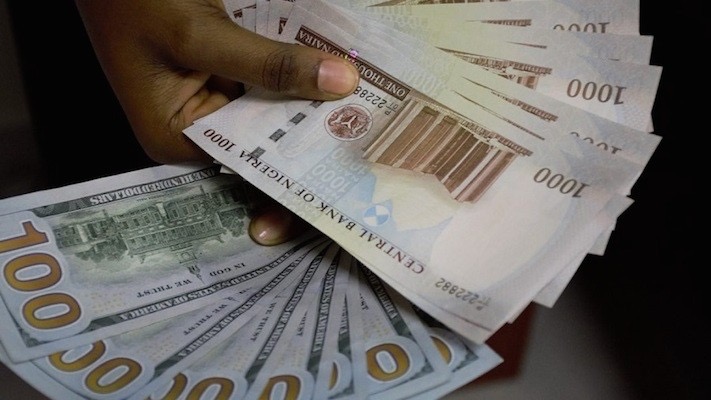
Africa is quietly reshaping parts of its financial system as governments, banks and regional institutions work to reduce the continent’s dependence on the US dollar for transactions within Africa.
The shift is not an attempt to eliminate the dollar from African economies, but rather to create alternatives that can make cross-border trade faster, cheaper and less vulnerable to foreign-exchange pressures.
For decades, a peculiar problem has existed at the heart of African trade. Businesses in two African countries could exchange goods across their borders, yet the money used to pay for those goods would sometimes have to pass through financial institutions outside the continent.
A Nigerian company buying from Ghana, for example, could face currency-conversion and correspondent-banking arrangements involving dollars or other hard currencies before the payment eventually reached the seller.

That system has created additional costs for African businesses and has made regional commerce vulnerable to movements in global currency markets.
Now, financial institutions are beginning to build a different payment architecture.
At the centre of this emerging transformation is the Pan-African Payment and Settlement System, known as PAPSS. Developed by Afreximbank in collaboration with African institutions and linked to the African Continental Free Trade Area, PAPSS is designed to allow participating businesses and financial institutions to make cross-border payments using African currencies rather than automatically converting transactions into dollars or euros. (PAPSS)
The significance of the system goes beyond the technology behind it.
Africa has dozens of national currencies, many of which have limited international convertibility and relatively shallow foreign-exchange markets. This fragmentation has historically made the dollar a convenient bridge between African currencies.
PAPSS is attempting to reduce the need for that bridge by creating infrastructure through which local currencies can move more efficiently across borders.
Under the system, a business can initiate a payment in its own local currency, while the recipient can receive funds in another African currency.
PAPSS handles the payment instructions and settlement process between participating institutions.
Its infrastructure is designed to process instant payments, while participating central banks settle their net positions through the system. (PAPSS)
That could become increasingly important as African countries seek to expand intra-African trade under AfCFTA.
The continental trade agreement has created the framework for a larger African market, but trade agreements alone cannot make commerce work. Businesses also need reliable roads, ports, customs systems, banking networks and payment infrastructure.
Money must be able to move as easily as goods.
This is where the dollar question becomes particularly important.
The US currency remains the world’s dominant reserve and trading currency, and Africa is nowhere close to abandoning it.
Commodities such as oil and many other internationally traded products remain heavily dollar-denominated. African governments and companies also need dollars for imports, international debt payments, investment and transactions outside the continent.
Therefore, the emerging African strategy is better described as diversification than outright de-dollarisation.
The objective is to use the dollar where it makes economic sense while creating alternatives where its involvement may be unnecessary.
If two African companies are trading with each other, policymakers increasingly want the transaction to remain within African financial channels rather than forcing both parties to depend on an external currency.
Recent developments suggest that this idea is gradually moving beyond policy discussions.
By June 2026, Afreximbank said PAPSS had been signed by 21 central banks and was active across more than 170 commercial banks.
The bank also said Ghana and Nigeria were already conducting bilateral trade through the platform. (The Guardian Nigeria)
The expansion of PAPSS has also continued into Central Africa.
In July 2026, the Bank of Central African States joined the system, connecting the six countries of the Central African Economic and Monetary Community to the wider continental payment infrastructure.
That development potentially strengthens the links between Central African financial systems and other parts of the continent. (PublicNow)
Another development is the PAPSS African Currency Marketplace, launched in 2025 to address one of the major obstacles to intra-African trade: the difficulty of exchanging African currencies directly.
The platform is intended to improve currency convertibility and provide a more efficient mechanism for businesses that need to exchange one African currency for another. (PAPSS)
For African businesses, particularly small and medium-sized enterprises, the potential benefits are significant.
Currency conversions can increase transaction costs, while delays in international payment channels can affect inventory purchases, supplier relationships and cash flow.
A more direct payment system could reduce some of those burdens and make it easier for smaller businesses to participate in regional markets.
There is also a wider economic argument. Heavy dependence on foreign currencies can expose African economies to shocks originating outside the continent.
When global interest rates rise, international investors move capital or the dollar strengthens, African currencies can come under pressure.
Import costs may rise, foreign debt becomes more expensive in local-currency terms and businesses can struggle to obtain enough foreign exchange.
A stronger regional payment network cannot eliminate these problems, but it can reduce the number of transactions that require hard currencies.
The African Development Bank has similarly identified local-currency settlement through PAPSS as a tool for reducing reliance on external currencies and strengthening financial integration.
The broader objective is to make intra-African trade more efficient while supporting the implementation of AfCFTA. (African Development Bank)
For DDM News, the development represents an important shift in how Africa is approaching economic integration. Rather than waiting for a single continental currency to emerge, African institutions are building practical financial connections that could gradually make national currencies more useful beyond their borders.
However, serious obstacles remain.
The biggest challenge is trust. Businesses will not automatically abandon the dollar simply because an alternative payment system exists.
They need confidence that African currencies will remain reasonably stable, that transactions will settle reliably and that currency markets will provide sufficient liquidity.
Currency volatility is another major barrier. A trader may be willing to receive another African currency only if that currency can be exchanged or used without significant losses.
Where inflation is high or foreign-exchange markets are thin, the dollar can still appear safer and more predictable.
There is also the question of international trade.
Even if intra-African transactions become increasingly local-currency based, African countries will still need dollars, euros, yuan and other major currencies to trade with the rest of the world.
Oil, machinery, technology, pharmaceuticals and other strategic imports frequently require international currencies.
That means Africa is unlikely to become a dollar-free economy anytime soon.
Instead, what is emerging is a more diversified financial system in which the dollar is no longer required for every transaction simply because two African currencies are difficult to exchange directly.
The long-term significance could be substantial.
If local-currency payment systems become widely adopted, African businesses could find it easier to source products from neighbouring countries, African manufacturers could gain access to larger regional markets and financial institutions could develop deeper currency markets.
The transformation may therefore be less dramatic than a headline declaring the end of dollar dominance, but potentially more important over time. Africa is not replacing the dollar overnight.
It is building the infrastructure that gives businesses and governments more choices.
For DDM News, that distinction is crucial. The real story is not that Africa has suddenly turned away from the dollar.
It is that the continent is gradually constructing financial systems that can operate without automatically depending on it.
If these initiatives succeed, the next phase of African economic integration may not be defined by the creation of a single currency, but by something more practical: the ability of African money to move across African borders with fewer external intermediaries.
The dollar may remain central to global commerce for decades, but every successful local-currency transaction represents a small reduction in the necessity of using it.
As PAPSS expands, regional currency markets deepen and AfCFTA trade grows, those individual transactions could eventually add up to a significant change in Africa’s financial architecture.
The continent is therefore not quietly declaring independence from the dollar. It is quietly building options. (PAPSS)




