
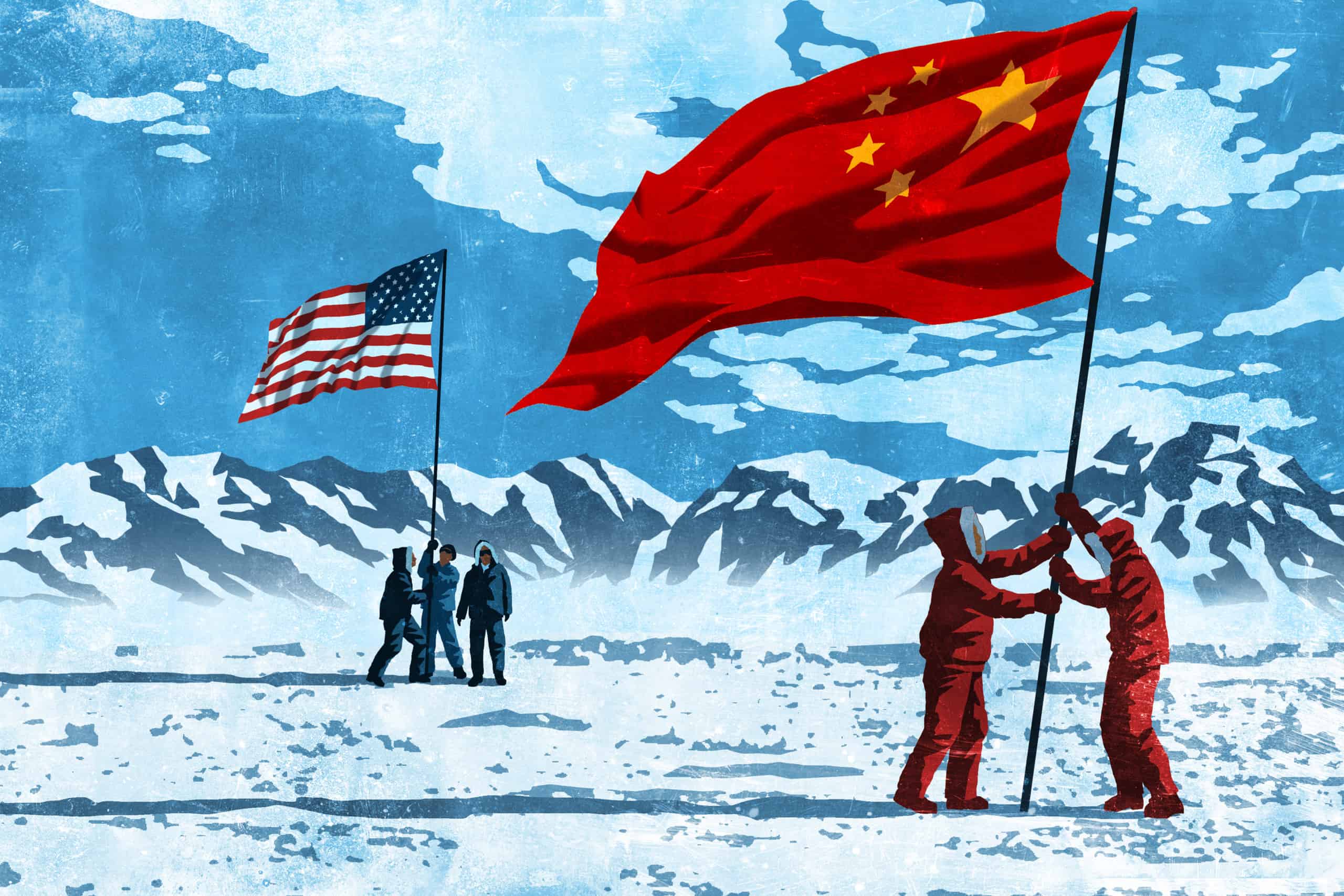
In recent months, Greenland has found itself pulled into a geopolitical conversation far larger than its population or geography would suggest.
United States President Donald Trump has repeatedly warned that China is positioning itself to gain a strategic foothold on the Arctic island, even floating the extraordinary idea that Washington may one day need to take control of Greenland from NATO ally Denmark to counter Beijing’s influence.
Such claims are striking. But are they grounded in reality?
A closer look at China’s activities in the Arctic and specifically around Greenland suggests a far more restrained picture than the alarmist rhetoric dominating political headlines.
Between Fear and Fact
Claims that Greenland could soon be surrounded by Chinese warships do not align with the available evidence.

China has no permanent military presence in Greenland and maintains only a limited footprint in the wider Arctic region. Its naval capabilities there remain modest and largely symbolic.
Where China has expanded activity, it has done so primarily through cooperation with Russia, particularly after Moscow’s invasion of Ukraine in 2022.
Joint patrols, limited bomber flights, and coast guard cooperation have increased, but these operations are neither sustained nor positioned around Greenland itself.
In short, China’s Arctic reach is indirect and constrained, not expansive or dominant.
China’s Arctic Ambitions
This does not mean Beijing lacks interest in the region. China’s 2018 declaration of itself as a “near-Arctic state” and the launch of its Polar Silk Road strategy signal long-term ambitions.
Beijing views the Arctic as an emerging theatre of geopolitical competition, driven by climate change, trade routes, and resource access.
China has established research facilities in parts of Scandinavia and invested heavily in Russia’s Arctic energy infrastructure. However, attempts to expand further west have consistently met resistance.
Efforts to acquire infrastructure in Greenland and Northern Europe have been blocked, while Chinese technology firms have faced exclusion from critical networks.
Even Greenland itself has drawn clear boundaries, rejecting Chinese-linked mining and telecommunications projects over environmental and security concerns.
Why Greenland Draws Global Attention
Greenland’s importance lies not only in its strategic location but also beneath its frozen ground.
The island holds vast reserves of rare earth elements resources essential for modern economies, from electric vehicles and renewable energy systems to advanced military hardware.
China, despite its dominance in global rare earth processing, has struggled to convert interest into influence in Greenland.
Key mining projects have stalled or been redirected to Western firms, reflecting both local political resistance and broader geopolitical pressure.
Fears that Chinese investment would overwhelm Greenland’s small economy have not materialised.
If anything, the diplomatic cost of pursuing such projects has cooled Beijing’s appetite.
The Arctic Shipping Question
Another factor driving concern is Arctic shipping. Melting ice has made polar routes increasingly viable, offering faster links between Asia and Europe.
China’s Polar Silk Road seeks to take advantage of this shift, reducing reliance on traditional maritime chokepoints.
Yet these routes are neither simple nor dominant.
Arctic navigation remains dangerous, expensive, and seasonal.
Most Chinese Arctic voyages have been tied to Russian energy exports, and crucially, the main northern shipping corridor does not pass through Greenland.
This reality undercuts claims that China’s commercial shipping poses a direct strategic threat to the island.
Measured Assessment
China’s interest in the Arctic is real, deliberate, and strategic. But interest should not be confused with control.
Beijing’s influence in Greenland remains limited by geography, diplomacy, environmental concerns, and the firm resistance of Western allies.
The greater risk may lie not in China’s actions, but in how the threat is framed. Inflated narratives can harden positions, justify extreme responses, and turn manageable competition into unnecessary confrontation.
Greenland is not on the brink of becoming a Chinese outpost. It is, however, a symbol of how climate change, global competition, and great-power anxiety are reshaping once-remote regions into strategic talking points.
For now, the Arctic remains a space of cautious maneuvering rather than outright confrontation.
The challenge for policymakers is to keep it that way guided by facts, not fear.