


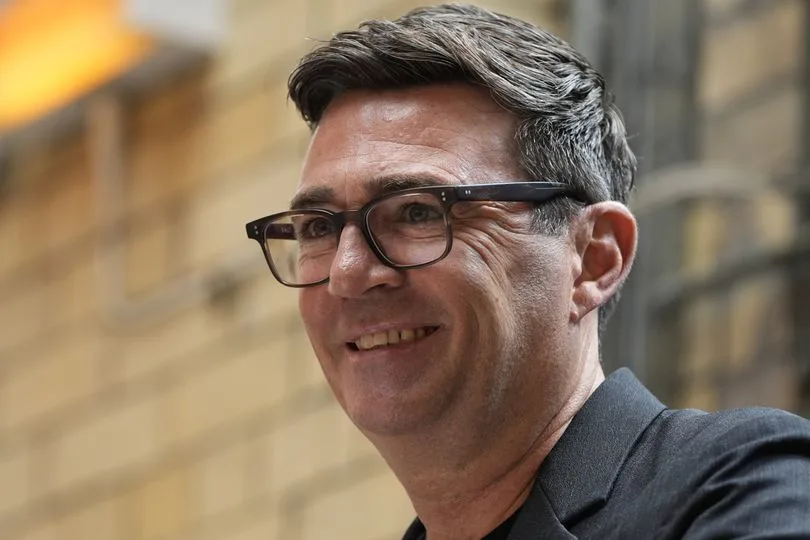
Andy Burnham will formally take office as Britain’s prime minister on Monday, becoming the country’s sixth leader to enter 10 Downing Street since 2016 and inheriting a government under pressure from economic and political challenges.
The 56-year-old succeeds Keir Starmer, who is stepping down just two years after leading Labour to a landslide general election victory that ended 14 years of Conservative rule.
Following Starmer’s formal resignation to King Charles III, Burnham will be invited to Buckingham Palace to form a new government before delivering his first speech as prime minister outside Number 10.
Speaking to The Times ahead of his swearing-in, Burnham signalled a break from the political instability that has defined Britain over the past decade.

“What we’ve been doing hasn’t been working,” he said. “I am going to try and do things in a different way.”
His inaugural address is expected to acknowledge the public’s desire for stability while outlining his immediate priorities, including restoring confidence in government, easing the cost-of-living crisis, boosting economic growth and giving greater powers to regional communities.
Burnham is also expected to unveil his senior cabinet appointments on Monday, with particular attention focused on who will replace Rachel Reeves as Chancellor of the Exchequer.
The former Greater Manchester mayor, widely known as the “King of the North,” emerged as Labour’s consensus choice after Starmer announced his resignation last month. Party lawmakers believe Burnham is best placed to counter the growing popularity of Nigel Farage’s Reform UK ahead of the next general election.
Deputy Labour leader Lucy Powell said Burnham’s experience outside Westminster had equipped him to deliver the “bigger, bolder” reforms needed to fulfil Labour’s election promises.
However, the new prime minister takes office amid mounting economic pressures, including sluggish growth, rising government borrowing costs, a growing welfare bill and continued concerns over irregular migration across the English Channel.
His administration will also have to contend with volatile global energy markets driven by the U.S.-Iran conflict, as well as the unpredictable foreign policy of U.S. President Donald Trump.
Burnham said his government would pursue a different economic strategy focused on early investment and prevention rather than paying for long-term failures.
“I’ll take a different approach to public spending and running the economy—one that’s centred on early investment, early intervention and giving people the best chance to succeed,” he told The Times.
He also pledged swift measures to ease the financial strain on households, saying concerns about the rising cost of living dominated conversations during his campaign.
Starmer announced his resignation in June after a series of political setbacks, policy reversals and internal controversies weakened his leadership.
Burnham returns to national politics after winning a parliamentary seat just four weeks ago, but his room for manoeuvre will be limited by weak economic growth, high public debt and strict fiscal rules that require government spending to be balanced against tax revenues.
Monday’s transition will begin with Starmer travelling to Buckingham Palace to formally submit his resignation before making a farewell statement outside Downing Street.
Burnham will then meet King Charles III to receive the monarch’s invitation to form a government before returning to Downing Street to address the nation.
His speech is expected to strike a tone of honesty about Britain’s challenges while offering a message of renewal.
A Member of Parliament between 2001 and 2017, Burnham served in the governments of former prime ministers Tony Blair and Gordon Brown before becoming Mayor of Greater Manchester, where he built a reputation as a pragmatic and approachable leader.
With the next general election expected in 2029, Burnham has just three years to convince voters that Labour deserves another term, as Reform UK continues to gain ground in opinion polls.
Addressing Labour supporters after securing the party leadership on Friday, Burnham described his victory as the party’s “last chance” to restore public trust.
His first major policy move came on Saturday when he scrapped Starmer’s proposed nationwide digital ID programme, estimated to cost £1.8 billion over three years.
His office said the funding would instead be redirected toward easing the cost-of-living crisis and other immediate public priorities.




