


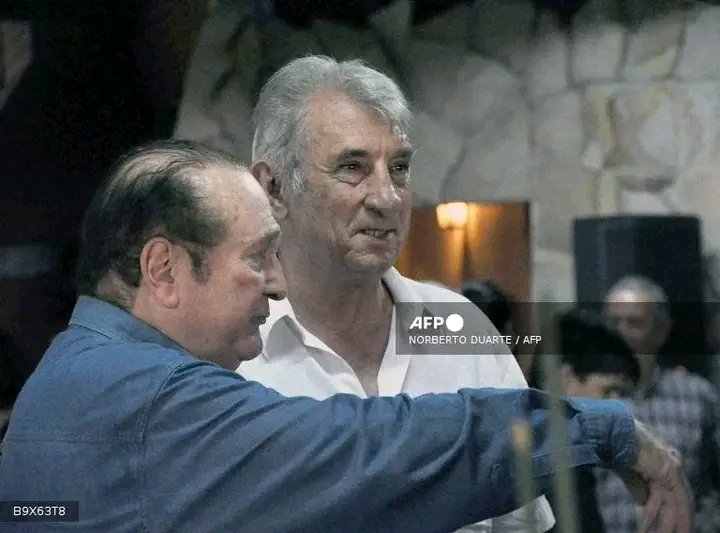
Argentine football is mourning the death of one of its most iconic figures after former national team captain Antonio Rattín passed away at the age of 89, bringing to a close the remarkable life of a player whose influence extended far beyond the pitch.
Rattín, widely regarded as one of the greatest midfielders in Argentina’s football history, died in Buenos Aires, according to the Argentine Football Association. Tributes have poured in from former teammates, clubs, supporters and football officials, all celebrating a career defined by loyalty, leadership and an unforgettable place in World Cup history.
Nicknamed “Rata,” Rattín spent his entire professional career with Boca Juniors between 1956 and 1970. During his 14-year stay at the Buenos Aires giants, he established himself as one of the club’s greatest-ever players, making more than 380 appearances and helping Boca win multiple Argentine league titles. His commanding presence in midfield, physical strength and tactical intelligence earned him legendary status among the club’s supporters.

On the international stage, Rattín represented Argentina in the 1962 and 1966 FIFA World Cups and captained the national team during the tournament in England. Although he enjoyed an accomplished international career, he is remembered worldwide for one dramatic incident during the 1966 World Cup quarter-final against England.
In one of football’s most controversial refereeing moments, German referee Rudolf Kreitlein dismissed Rattín despite the Argentine captain insisting he did not understand why he had been sent off because of the language barrier. Refusing to leave the field immediately, Rattín protested the decision before eventually walking off after several minutes. During the protest, he briefly sat on a red carpet reserved for Queen Elizabeth II and touched a corner flag decorated with the Union Jack, actions that intensified tensions between the two football nations.
The controversy had a lasting impact on football. The confusion surrounding the dismissal highlighted communication problems between referees and players from different countries, prompting football authorities to adopt the yellow and red card system that first appeared at the 1970 FIFA World Cup. Today, that system remains one of the sport’s most recognisable features, making Rattín’s legacy part of football’s global history.
Following his retirement, Rattín remained closely connected to the game, coaching several clubs, including Boca Juniors, before later entering politics, where he served in Argentina’s National Congress and as a local councillor. Even outside football, he remained a respected public figure whose opinions on the sport continued to attract attention.
Boca Juniors described him as an “idol and symbol” of the club, recalling his unwavering loyalty throughout a career spent wearing only the blue and gold colours of the Argentine giants. The club had earlier honoured him with a statue at the iconic La Bombonera Stadium in recognition of his immense contribution.
Rattín’s death comes as Argentina continues its impressive run at the 2026 FIFA World Cup, adding an emotional moment for a nation preparing for another major international challenge while remembering one of the pioneers who helped shape its football identity.
Although generations of supporters know him for the controversy that changed football officiating forever, those closest to Argentine football remember Antonio Rattín as a fierce competitor, inspirational captain and lifelong Boca Juniors legend whose influence will endure for decades.




