


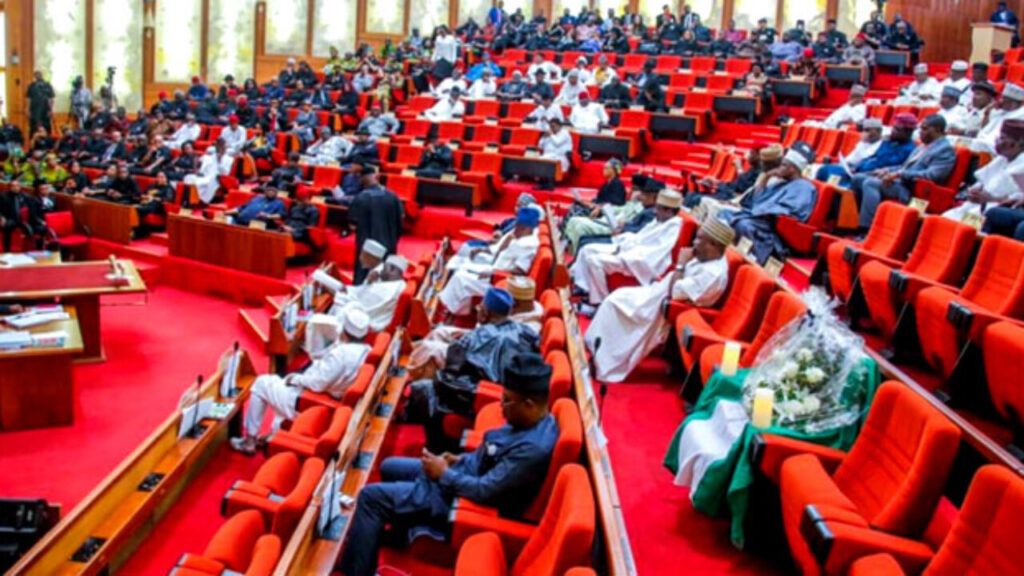
DDM NEWS — In an intense and dramatic turnaround that has captured national attention and stirred robust debate across the country, Nigeria’s Senate has moved to mandate the electronic transmission of election results from polling units, responding directly to widespread public outrage, civil society pressure, and clamour for deeper electoral transparency ahead of the 2027 general elections. This shift comes amid one of the most contentious chapters in the ongoing revision of the Electoral Act, as lawmakers, activists, and ordinary Nigerians confront a defining moment in the nation’s democratic evolution.
The controversy erupted after the Senate’s initial passage of the Electoral Act (Amendment) Bill 2026 appeared to dilute provisions that many Nigerians saw as essential to safeguarding the electoral process. At the heart of the storm was the treatment of Clause 60 of the Electoral Act, which deals with how results are collected and transmitted from polling units. Critics, including civil society organisations, political analysts, and youth movements, raised alarm when the Senate retained language allowing the Independent National Electoral Commission (INEC) discretion over the mode of transmission rather than explicitly requiring real-time electronic transmission to the INEC Results Viewing (IReV) portal.
Initial reaction to the Senate’s amended language was swift and intensely negative. Nigerians took to streets, social media platforms, and civic spaces to condemn the omission of a clear, mandatory e-transmission clause, arguing that without firm legal backing, opportunities for result manipulation — a recurrent issue in past elections — would persist. The protests were exemplified by the “Occupy National Assembly” demonstration in Abuja, where civil society activists, youth groups, and political figures demanded that the Legislature enforce unambiguous real-time transmission of polling unit results as a legal requirement.
Watch the Video of the Proceedings below:

Equally visible was the outcry from organised labour and human rights groups. The Nigeria Labour Congress (NLC) warned of mass action and possible election boycotts if the amended law failed to provide clear safeguards for electronic transmission. Their statement underscored a widespread perception that electoral credibility — and Nigerians’ trust in the democratic process — was at risk if mandatory electronic transmission was not entrenched in law.
Behind the public uproar lay concerns that the Senate’s amended language would leave critical aspects of the results-management process vulnerable. Under the earlier Electoral Act, while electronic transmission was permitted, it was not legally binding. INEC’s use of the IReV portal — which allows results from polling units to be uploaded and viewed online in near real time — had been seen as a partial but important step toward transparency. But because it lacked statutory force, its impact was limited and subject to legal contestation. Critics pointed out that during the 2023 general elections, failures or delays in uploading results were often blamed on administrative discretion rather than technological limitations.
In response to the fierce backlash, the Senate leadership convened an emergency plenary session, acknowledging that the public was watching closely and that electoral reforms must inspire confidence rather than suspicion. Lawmakers ultimately amended the Electoral Act to require that presiding officers electronically transmit election results to INEC’s IReV portal after the prescribed Form EC8A has been signed and stamped at polling units. This change represents a political concession to popular demand for binding legal provisions that elevate electronic transmission beyond optional practice.
Under the new directive, electronic transmission is now mandated by law as the primary method of communicating polling unit results, with signed manual result sheets serving as a backup only in cases where network or technical failures make online transfer impossible. This hybrid approach aims to balance the aspirational goal of transparency with the practical realities of Nigeria’s sometimes unreliable telecommunications infrastructure.
The Senate’s action has been met with mixed responses. Supporters of the reform — including pro-democracy advocates, election monitors, and many civil society organisations — have lauded it as a landmark victory that could significantly reduce electoral manipulation and enhance the credibility of future polls. They argue that mandatory electronic transmission, especially when linked to real-time or near real-time uploads, allows citizens to independently track results as they are generated, limiting opportunities for human alteration at collation centres.
However, not all stakeholders are persuaded. Senate President Godswill Akpabio and other lawmakers initially defended the original language by arguing that strict real-time mandates could create legal quandaries if network outages occurred on election day. Akpabio explained that the Senate removed the phrase “real-time” not because it opposed e-transmission, but because of concerns that rigid wording might lead to litigation should technological issues arise — reflecting a broader tension between technological ambition and legislative caution.
Critics of the Senate’s earlier position, including veteran activists and commentators like former minister Oby Ezekwesili, described such arguments as misleading, noting that electronic transmission technology had been successfully deployed in previous elections — including governorship polls in Ekiti, Osun, and Anambra states — without systemic failure. They warned that weakening statutory language would erode electoral integrity and public confidence.
As the harmonisation process between the Senate and the House of Representatives continues — with the House reportedly favouring even stricter standards — Nigerians are watching developments closely, aware that the wording of the final law could have lasting implications for the nation’s democratic trajectory. Many civil society groups have also urged the National Assembly to ensure that number of accredited voters and collation centre uploads are included in the final transmission requirements, not just polling unit results, to prevent loopholes.
The renewed focus on electronic transmission of results comes at a crucial time. With the 2027 general elections less than two years away, the national conversation has shifted from abstract reform to actionable legal change that can improve voter confidence, reduce post-election disputes, and make electoral manipulation more difficult. Observers note that the success or failure of these reforms could be a defining factor in how Nigerians perceive the legitimacy of elected leaders and the resilience of democratic institutions.
DDM NEWS will continue to track the electoral reform process, offering in-depth analysis and updates as the National Assembly finalises the harmonised Electoral Act Amendment Bill and as stakeholders prepare for what promises to be one of the most consequential elections in Nigeria’s history.




