

Africa
Cameroon Court Rejects Election-Rigging Petitions Ahead of Presidential Result

Cameroon’s Constitutional Council has rejected multiple petitions demanding the partial or total cancellation of the country’s controversial presidential election, saying the final result will be announced on Monday.
The ruling follows widespread protests in major cities, where opposition supporters alleged that the October 12 election was riddled with fraud, including ballot-stuffing and vote manipulation.
Judges dismissed all eight petitions submitted by opposition groups, citing either a lack of substantial evidence or jurisdiction to nullify the results.
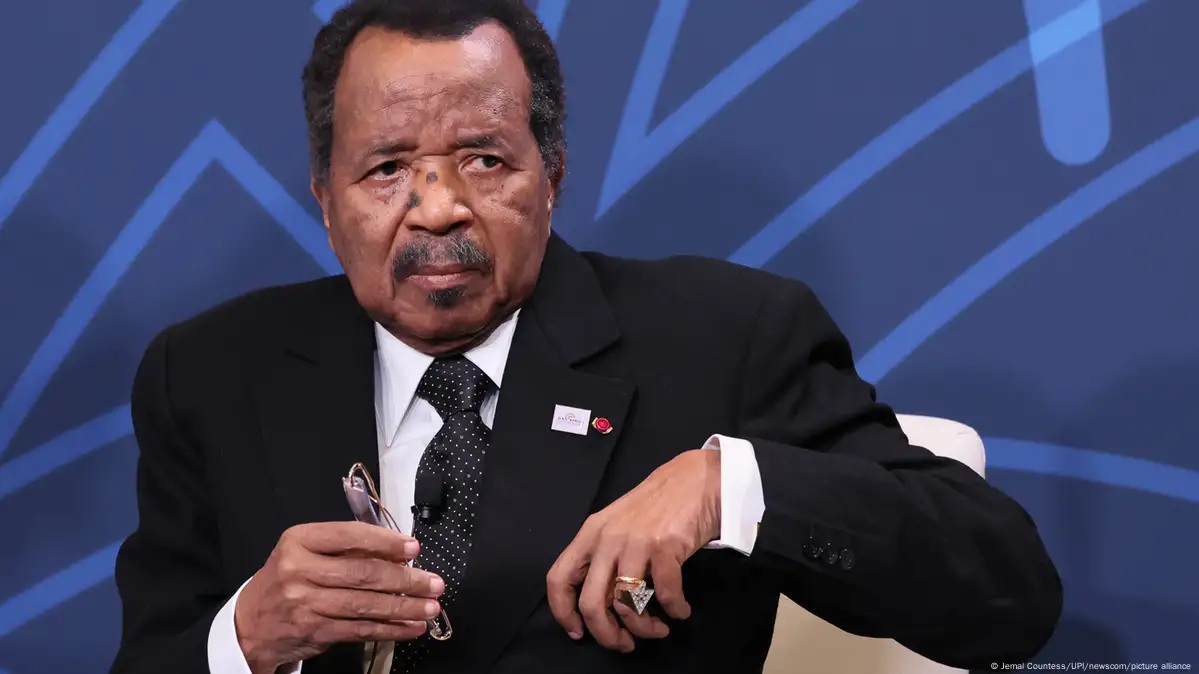
The decision effectively clears the path for the announcement of a result that many expect will extend 92-year-old President Paul Biya’s more than four-decade rule.

Biya, who has ruled Cameroon since 1982, is seeking another seven-year term, despite growing domestic and international pressure for political transition.
He attended just one campaign rally during the election period, a move critics say reflects both his frail health and his confidence in the electoral system.
Opposition candidate Issa Tchiroma Bakary, 76, a former government spokesman who defected from Biya’s camp to challenge him, has rejected the Council’s decision outright.
He declared himself the “legal and legitimate president” of Cameroon, alleging that he won the vote with 55 percent based on returns covering what he described as 80 percent of the electorate.
In a video posted on social media, Bakary accused the Constitutional Council of complicity in what he called “a breach of trust.”
“If the Constitutional Council proclaims falsified and truncated results, it will be complicit in a breach of trust,” he said.
Bakary warned that the people “will have no choice but to take their destiny into their own hands and seek victory wherever they can find it,” a remark that has raised fears of post-election unrest.
Biya’s ruling party swiftly dismissed Bakary’s declaration as illegal and baseless, emphasizing that only the Constitutional Council has the constitutional authority to proclaim the final election results.
The Catholic Church, one of Cameroon’s most influential institutions, has called on the judges to deliver a ruling that truly reflects the will of the people.
Religious and civil society leaders have also urged calm, warning that violence could plunge the already fragile nation into deeper crisis.
The election has exposed sharp divisions in a country already struggling with multiple security challenges, including the Anglophone separatist conflict in the northwest and southwest, and the Boko Haram insurgency in the far north.
As tensions mount, all eyes are now on Monday’s official declaration, which many fear could ignite another wave of demonstrations or violent confrontations between opposition supporters and security forces.

Africa
China’s Xi Jinping Hails Biya’s Re-Election, Vows Closer Ties With Cameroon
Chinese President Xi Jinping has congratulated Cameroon’s President Paul Biya on his re-election, reaffirming China’s commitment to strengthen its long-standing partnership with the Central African nation.
The congratulatory message, published on the website of China’s Ministry of Foreign Affairs on Friday, highlighted the “traditional friendship” between the two countries.
Xi noted that in recent years, China and Cameroon have deepened political trust and achieved “fruitful cooperation” in several sectors, including infrastructure, energy, and trade.
According to Xi, the relationship between Beijing and Yaoundé remains a model of mutual respect and development-oriented cooperation in Africa.
He emphasized that both countries have “consistently supported each other on core interests and major concerns.”
Xi said China values its relations with Cameroon and is ready to build on the achievements of the Beijing Summit of the Forum on China-Africa Cooperation (FOCAC).
He stressed that the next phase of cooperation will focus on implementing summit outcomes, enhancing economic engagement, and improving the welfare of citizens in both countries.
“China attaches great importance to the development of China–Cameroon relations,” Xi said.
“We are ready to work with President Paul Biya to promote the in-depth development of the comprehensive strategic partnership between the two countries and better benefit the two peoples.”
The Chinese leader also pointed out that 2026 will mark the 55th anniversary of diplomatic ties between China and Cameroon.
He described the milestone as “an opportunity to further advance bilateral relations” and strengthen collaboration in new areas such as digital economy, health, and green development.
Beijing has been expanding its diplomatic and economic footprint in Africa through initiatives like the Belt and Road and FOCAC frameworks. Cameroon, in turn, remains one of China’s strategic partners in Central Africa, benefiting from infrastructure financing, telecommunications investments, and cultural exchanges.
President Biya, who has ruled Cameroon since 1982, is among Africa’s longest-serving leaders. His re-election further cements the country’s ongoing relationship with Beijing, which has been a key source of loans and development projects.
China and Cameroon established diplomatic ties in 1971. Since then, both nations have maintained steady cooperation in trade, education, and public health, with China funding projects such as hospitals, highways, and hydropower plants across Cameroon.
As both nations prepare to mark 55 years of diplomatic relations, analysts say the renewed commitment from Beijing signals China’s continued interest in maintaining its influence and economic presence across Africa amid growing global competition.
(DDM) — President Bola Ahmed Tinubu has launched urgent diplomatic consultations with global powers following the controversial remarks by U.S. President Donald Trump threatening potential military intervention in Nigeria over mass killings of Christians.
Diaspora Digital Media (DDM) gathered that Trump’s declaration, made during a televised address in Washington, accused the Nigerian government of “complicity and silence” amid growing reports of religiously motivated violence in northern and central parts of the country.
Trump vowed that the United States “will not stand by” while Christians “are slaughtered in Nigeria,” sparking global concern and diplomatic unease.
According to reliable sources within the Ministry of Foreign Affairs, President Tinubu immediately directed Nigeria’s ambassadors in the U.S., U.K., France, and China to begin emergency consultations aimed at countering what the Presidency described as “a distorted narrative built on misinformation and foreign propaganda.”
Government insiders told DDM that Nigeria is preparing an official response to be presented before the United Nations Security Council if the U.S. follows through with its threat.
The Presidency also hinted that Tinubu may personally lead a delegation to Washington for dialogue if the situation escalates further.
Meanwhile, northern political and religious leaders have rejected proposals for a review of the Sharia system, which some international observers claim has contributed to sectarian divisions.
The proposal, reportedly tabled by some moderate Islamic scholars, called for “human rights-sensitive reforms” to harmonize faith-based laws with Nigeria’s secular constitution.
However, prominent clerics and regional leaders from Sokoto, Kano, and Borno condemned the suggestion as a Western-imposed agenda disguised as reform.
The Jama’atu Nasril Islam (JNI) warned that any tampering with Sharia law could spark unrest in the region.
Tinubu’s administration, however, insists that the issue of religious reform is part of a wider peace and justice framework designed to reduce extremist influence and foster unity in the multi-faith nation.
Internationally, China and Russia have reportedly expressed disapproval of the U.S. threat, describing it as “a violation of Nigeria’s sovereignty and an unacceptable intrusion into African affairs.” Beijing, in particular, reaffirmed its support for Nigeria’s independence in domestic matters and called for diplomatic dialogue instead of coercion.
The European Union, on its part, urged restraint, stating that while human rights concerns must be addressed, any military action could destabilize West Africa’s already volatile security environment.
Back home, opposition leaders and civil society groups have accused the Tinubu government of downplaying the crisis.
The Christian Association of Nigeria (CAN) renewed its call for an independent inquiry into the killings, urging both domestic and international actors to prioritize justice and truth over politics.
Political analysts believe the unfolding situation represents one of Nigeria’s most complex diplomatic challenges in years, with the government forced to navigate between maintaining national sovereignty and appeasing growing international scrutiny.
As tensions mount, all eyes are now on Abuja and Washington to see whether diplomacy or confrontation will define the next chapter of U.S.–Nigeria relations.
Africa
ECOWAS Denies Claims of Christian Genocide in Nigeria
The Economic Community of West African States (ECOWAS) has dismissed recent allegations of a “Christian genocide” in Nigeria, describing the claims as false, divisive, and dangerous.
In a communiqué released on Tuesday, the regional bloc warned that such allegations are aimed at fueling insecurity and undermining social cohesion across West Africa.
According to ECOWAS, terrorist groups in the region — including those operating in Nigeria — have attacked civilians of all faiths, not just Christians.
“As independent reports have confirmed, terrorist-related violence does not discriminate on the basis of gender, religion, ethnicity, or age,” ECOWAS stated.
The body urged the United Nations and international partners to ignore misleading claims and instead continue supporting West African governments in their fight against terrorism.
“ECOWAS strongly rejects these false and divisive narratives that seek to deepen insecurity in communities and weaken social cohesion in the region,” the communiqué added.
The regional bloc reaffirmed its commitment to assist member states tackling insurgent violence and called for global solidarity in countering terrorism in the Sahel and Lake Chad Basin.
This statement came shortly after U.S. President Donald Trump alleged that Christians were being “massacred” in Nigeria. Trump also threatened to withdraw U.S. aid over the reported killings — a move that has stirred global debate.
ECOWAS, however, emphasized that the conflict in northern Nigeria and other parts of West Africa is not religiously motivated, but driven by terrorism, poverty, and weak governance.
Security experts also echoed ECOWAS’s position, warning that spreading false religious narratives could escalate tensions between faith communities and destabilize fragile regions.
-
Analysis6 days agoEmpty Diplomacy, Real Graves… A Reply to Nigeria’s Ministry of Foreign Affairs
By Sa'adiyyah Adebisi Hassan
-
World News6 days agoMilitary action on terrorists in Nigeria could be ground troops, air strikes — Trump
-
News5 days agoJUST IN: Soldiers facing terror allegations escape from military custody
-
World News4 days agoI will name Nigerian officials linked to Christian genocide — Senator Ted Cruz
-
Economy5 days agoCBN Releases Names Of Heavy Defaulters, Amount
-
Opinion7 days agoWhen the Hunter Becomes the Hunted: How the APC is Tasting the Karma of 2015
-
News5 days agoDon’t Bomb Bandits, Negotiate With Them – Islamic Cleric Tells US
-
News3 days agoBREAKING: Nnamdi Kanu writes Trump, calls for US inquiry in S’east killings
-
World3 days agoUS Congress Introduces Nigeria Religious Freedom Accountability Bill
-
Analysis6 days agoChristian Genocide: Fellow Muslims — Let’s Face Facts
By Sa'adiyyah Adebisi Hassan

