
Analysis
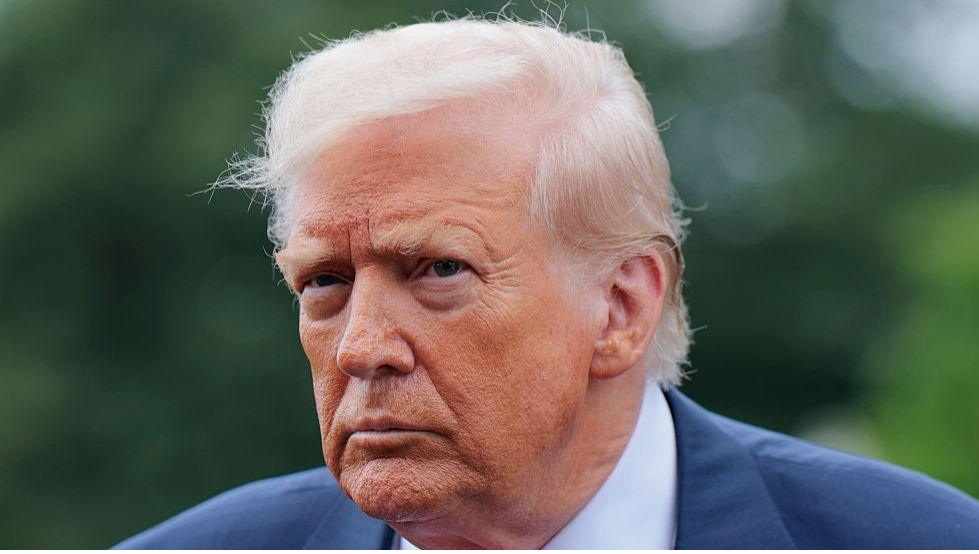
CPC: Trump’s Wake-Up Call And Tinubu’s Dumb Reaction
By Ifeanyi Izeze

The Federal Government’s dismissive response to international criticism over Nigeria’s insecurity and spate of killings shows a government more obsessed with pride and propaganda than with protecting its people.
President Bola Tinubu’s defensive reaction to Donald Trump’s “Country of Particular Concern” remark misses the point entirely.
The U.S. warning shouldn’t have angered the government.
Rather, it should have awakened it to a crisis Nigerians have endured for too long.

Despite the mischiefs attributed to the labelling, it is at best a wake-up call, not an insult.
Operators of our federal government appears dangerously out of touch with the brutal reality Nigerians face daily.
President Tinubu is surrounded by aides and allies who feed him empty praise rather than truth.
He seems unaware that the “Renewed Hope” slogan has long turned into renewed hopelessness for most citizens—an endless grind of fear, hunger, and despair and death.
It is shameful and deeply embarrassing that it took a remark from a foreign leader to momentarily focus our government’s attention on Nigeria’s security collapse.
As one commentator aptly put it: “If it takes Donald Trump to rattle Tinubu and his government into securing lives, I don’t care if it’s Christian lives, Muslim lives, or traditionalists’ lives.
“What matters is that the killings and kidnappings must stop.”
Trump’s threat — a reflection
Whether the administration wants to hear it or not, Trump’s comments reflect the frustration and despair millions of Nigerians feel today.
When the noise and the chest-thumping from “food-is-ready” loyalists fade, they will hopefully realize that the U.S. President’s warning is not an insult but a wake-up call.
It’s a demand that the Nigerian government finally confront the unchecked violence, mass kidnappings, and senseless killings ravaging the nation.
Nigeria is bleeding.
From Plateau to Zamfara, Benue to Borno, Kaduna to Kebbi etc. the nation has become a graveyard of innocent men, women, and children.
Like it or not, Trump’s remarks reflect the frustration, pain, and despair of millions of Nigerians who feel abandoned by a government that seems to exist only for itself.
For many Nigerians, survival now matters more than politics.
Any pressure, domestic or foreign, that forces the government to protect lives and restore hope should be embraced, not condemned.
In truth, many citizens are silently praying that God might even use outsiders to push their leaders to act.
President Tinubu and his team should not see Trump’s statement as an attack, but as a reminder to do what they were elected to do: secure the nation and protect its people.
Nigerians are desperate for peace, safety, and dignity.
It’s time for the government to move beyond promises and photo ops to real, measurable action.

President Bola Ahmed Tinubu
Sovereignty not empty pride
The official line that “Nigeria is a sovereign nation and cannot be threatened” is as hollow as it is misguided.
Sovereignty is not about empty pride — it is about the government’s capacity to protect its citizens and uphold justice.
Sovereignty means nothing when citizens live like captives in their own country.
As Emmanuel Omoko aptly observed: “A sovereign state is not one where a president suspends elected officers at will.
“It is not a country that borrows endlessly to fund political comfort. Nor is it one where non-state actors kill and kidnap with impunity.”
A truly sovereign state does not let entire communities pay levies to foreign bandits before they can farm, trade, or live in peace.
Nor does it use its police and the military primarily to guard politicians and oil pipelines while ordinary citizens die in the streets and forests.
Don’t let anybody use sovereignty to gaslight you.
Sovereign nations don’t hold peace talks with terrorists/bandits who occupy territories in the said sovereignty nation.
A sovereign nation doesn’t reward criminals/terrorists with appointments and overseas scholarships.
In saner countries, Trump’s statement might have provoked outrage on patriotic grounds.
But in Nigeria, only political jobseekers and data boys are protesting.
Is foreign intervention necessary?
Ordinary Nigerians, exhausted by years of slaughter, quietly agree with Trump—because they are desperate for anything that might finally hold their leaders accountable.
That’s the tragedy: Nigerians have been so battered that many would even welcome foreign intervention if it meant an end to the killings.
That alone tells you how far we’ve fallen from the true meaning of sovereignty.
With Trump in the White House, Tinubu should brace for intense diplomatic scrutiny.
The United States will press harder on human rights and security.
International media will revive the same haunting narratives that the APC used to dogged Goodluck Jonathan’s government.
And the opposition will seize every chance to brand Tinubu as complicit in the violence he once promised to end.
The government people should know this and know peace!
The world is no longer moved by propaganda or media spins. The first duty of any government is to protect its people.
If Tinubu cannot secure lives and restore peace, what else does anybody expect him to achieve.
Nigeria’s insecurity is not a regional or partisan problem anymore; it is a national shame.
The blood of the innocent—Christians and Muslims alike—cries out louder than any political slogan or media spins.
And for anyone still doubting the scale of this tragedy, one can only pray they experience even a glimpse of the fear and trauma millions of Nigerians live with daily.
“We earned it… we deserve it”
The truth is that it is not Donald Trump or the US Government that tagged or designated Nigeria as a “country of particular concern.”
It is the incompetent or rather dubious APC leadership of Presidents Muhammadu Buhari and Tinubu’s administrations that earned Nigeria this inglorious tag.
We earned it and we deserve it, period!
History has a cruel memory. In 2015, the APC exploited national tragedy to seize power.
In 2025, that same tragedy has returned in multiple folds, this time as a mirror reflecting its failures.
If President Tinubu refuses to wake up and act, the chaos he ignored will consume the legacy he hopes to build. Mark my word!
My honest counsel to the President is that Nigeria and the United States, as fellow democracies and long-standing strategic partners, cannot afford to let their alliance waver at a time like this.
What’s needed now is not finger-pointing or diplomatic grandstanding but urgent, constructive engagement to tackle the deepening security crises.
Both nations must act swiftly and in concert to restore peace and stability—before the situation slips further out of control. God bless Nigeria!
(IFEANYI IZEZE writes from Abuja. Contact: iizeze@yahoo.com; 234-8033043009)

Analysis
Inside Akwa Ibom, BOI’s 4bn Naira Intervention for Local Businesses
*By Ofonime Honesty
For years, the story of small businesses has been one of resilient hustle hampered by a familiar adversary: access to capital. A struggling tailor with a waiting list of clients cannot afford an industrial machine. A rural farmer watches his business struggle due to his inability to expand and invest in modern tools. Even the tech startup with a brilliant idea operates on little, or zero budget.
This narrative is what the Akwa Ibom State Government and the Bank of Industry (BOI) are aiming to rewrite with a landmark N4 billion intervention fund, one of the most significant private sector injections the state has seen in recent years.
Announced recently, the comprehensive loan scheme for Micro, Small, and Medium Enterprises (MSMEs) is designed to be more than just a cash disbursement. Its objectives are multi-faceted: create over 5,000 new jobs, stimulate economic growth, boost agricultural productivity, and ultimately enhance household welfare across the state’s communities.
The program represents a deliberate and structured intervention to build the economy from the ground up. Rather than simply giving out loans, the initiative focuses on investing in the businesses that form the backbone of the local economy and equipping them for sustainable growth.
The programme framework outlines clear eligibility criteria aimed at ensuring transparency and impact. To qualify, businesses must be formally registered with the Corporate Affairs Commission (CAC) and have their operational headquarters within Akwa Ibom State.
Applicants must also provide valid means of identification during the application process.
The application process is a four-stage journey designed to vet and prepare applicants. It begins with online submission of business details through the official portal at https://aksgboiloan.akwaibominvest.ng, followed by a rigorous document verification stage where applicants must upload all required supporting documents.
Crucially, successful applicants will not receive funds immediately but will undergo mandatory capacity-building training with the Ibom Leadership and Entrepreneurship Development (Ibom-LED) agency before final approval and disbursement.
This training component serves as the soul of the scheme, building business acumen alongside providing financial capital. The approach aims to ensure businesses thrive long after the loan has been repaid.
For aspiring entrepreneurs dreaming of expanding their operations, the application portal is a gateway to possibilities.
This intervention is a game-changer since MSMEs represent one of largest employers of labour in any developing economy, and injecting N4 billion directly into this sector will definitely create significant ripple effects.
Analysis
Ten instances of misinformation in Nnamdi Kanu’s case (Part 2)
By Emeka Ugwuonye
6. Did the Court of Appeal decide that Kanu should not be tried for treasonable felony?
ANSWER: Not quite. While the Court of Appeal made a ruling regarding Kanu’s trial, that judgment was subsequently appealed to the Supreme Court, which reversed the Court of Appeal’s decision. As a result, the findings of the Court of Appeal have become irrelevant.
Currently, the law is defined by the judgment of the Supreme Court, which takes precedence over any previous appellate rulings. This means that Kanu can indeed be tried for treasonable felony, as the Supreme Court has upheld the charges against him. In legal terms, the most recent and authoritative ruling is what matters, and at this moment, that ruling supports the continuation of Kanu’s trial for the offenses he faces. It’s essential to recognize that legal outcomes are shaped by the highest court’s decisions, not by earlier judgments that have been overturned.
7. Should the judge have explained to him all these things when he asked the judge that question in court?
ANSWER: No, the judge should not have provided that explanation. Doing so would have amounted to the judge offering the kind of assistance that is typically provided by legal counsel. Nnamdi Kanu made the choice to represent himself, which means he cannot expect the judge to clarify or elaborate on legal matters outside the established rules of the court.
Moreover, Kanu’s question was posed in the context of his challenge to the court’s jurisdiction. This issue will be addressed in the court’s forthcoming judgment, and it would be inappropriate for the court to divulge information that pertains to a decision that has yet to be rendered. Judges must maintain impartiality and adhere to proper judicial protocol. Providing guidance or clarity on legal questions during court proceedings could compromise that impartiality and undermine the integrity of the judicial process.
In summary, it is essential for defendants to seek clarification and understanding from their legal counsel rather than from the judge. The legal system is designed to ensure that each party is responsible for navigating it according to established procedures and rules. By choosing to represent himself, Kanu has placed himself in a position where he must rely on his own understanding of the law, and the court must remain neutral, providing a level playing field for all parties involved.
8. What is the implication of Nnamdi Kanu representing himself?
ANSWER: Representing himself is arguably the gravest mistake Nnamdi Kanu could make. While he has the legal right to defend himself, this is a right that no reasonable person should choose to exercise in a complex legal battle. It’s akin to firing your doctor and attempting to perform an appendectomy on yourself—an act fraught with peril and devoid of sound judgment.
Self-representation in legal proceedings can lead to disastrous consequences, as it places the individual at a significant disadvantage. The law is intricate, filled with procedural rules and nuanced arguments that require expert knowledge and experience to navigate effectively. By opting to represent himself, Kanu risks undermining his defense and jeopardizing his position in court.
Furthermore, there appears to be an inclination for Kanu to enjoy the spotlight and assert his voice, but that desire should not override practical legal considerations. The courtroom is not a forum for personal expression but a formal setting where skilled attorneys utilize their expertise to advocate for their clients’ best interests. By eschewing professional legal representation, Kanu not only diminishes his chances for a favorable outcome but also engages in a self-defeating strategy that could have serious ramifications for his case.
In summary, while the choice to represent oneself is protected under the law, it is rarely a wise decision—especially in a high-stakes legal environment like the one Kanu finds himself in. Professional legal representation is crucial for ensuring that rights are upheld and justice is pursued effectively. Ignoring this reality is a significant miscalculation that Kanu may come to regret.
9. What is the implication of him refusing to present his defense?
ANSWER: Initially, I considered the possibility that his decision might be a strategic one. However, it has become clear that this refusal to present a defense is a significant miscalculation. By not offering a defense, Nnamdi Kanu leaves himself completely vulnerable, providing no counterarguments against the allegations and evidence brought forth by the prosecution. As a result, the prosecution has a clear path to victory.
Without any defense to challenge the prosecution’s case, the court is effectively compelled to convict him. The legal principle at play is that the court has already established that the prosecution has presented a prima facie case—which means they have provided sufficient evidence for the case to proceed. Kanu’s failure to defend himself means that he is allowing the prosecution’s arguments to stand unopposed.
This situation puts Kanu at a serious disadvantage and effectively undermines any chance he had of achieving a favorable outcome. When a defendant does not testify or present evidence in their favor, the court is left with only the prosecution’s narrative, increasing the likelihood of a conviction. It is crucial in any legal proceeding for a defendant to engage actively in their defense, as neglecting to do so can lead to a self-inflicted defeat.
10. Can Kanu be tried in Nigeria for broadcasts he made outside Nigeria?
ANSWER: Yes, Kanu can indeed be tried in Nigeria for statements made outside the country. The law takes into account the location where the effects of an action occur, rather than where that action was carried out. A person can commit treasonable felonies or incitement from abroad, especially if the incitement has the potential to impact individuals or events in Nigeria.
The crucial factor is where the individuals being incited are located or where the unlawful act is intended to be executed. This principle underlines the legal precedent that holds individuals accountable for their words and actions, regardless of their physical location at the time.
Moreover, the Terrorism Prevention Amendment Act of 2013 was specifically amended to extend its reach beyond Nigeria’s borders, allowing for the prosecution of offenses committed outside the country if they have implications within Nigeria. This means that Kanu’s statements from abroad could fall under the jurisdiction of Nigerian law, especially if they are perceived to incite unlawful activities or threaten national security.
In summary, Kanu’s geographical location does not absolve him from accountability under Nigerian law. He can be prosecuted for his statements made outside Nigeria as long as those statements have consequences within the country. This legal framework emphasizes the importance of holding individuals accountable for their actions, irrespective of where those actions are conducted.
Analysis
Ten instances of misinformation in Nnamdi Kanu’s case (Part one)
By Emeka Ugwuonye
There has been so many false information flying around about the case of Nnamadi Kanu. Unfortunately, many people are believing such false claims and are actually relying on them. Hence, I will identify 24 such false claims and debunk them.
1. Was the Terrorism Prevention Amendment Act, 2013 ever repealed?
ANSWER: No, the Terrorism Prevention Amendment Act of 2013 has not been repealed. The Act was an amendment to the original Terrorism (Prevention) Act of 2011 and introduced important changes, including provisions for extra-territorial application of the law and enhancements related to terrorist financing offenses.
2. Did the Nigerian Supreme Court rule that Nnamdi Kanu cannot be tried under the Terrorism Act?
ANSWER: The Nigerian Supreme Court did not explicitly rule that Nnamdi Kanu cannot be tried under the Terrorism Act. In October 2022, the Supreme Court of Nigeria dismissed the appeal filed by Kanu challenging the charge of terrorism against him, stating that his initial issue regarding jurisdiction was not substantiated, and the lower courts had the right to adjudicate the case. The court effectively upheld the earlier decisions that allowed for Kanu’s trial to proceed.
3. Is it true that Nnamdi Kanu is not being tried under a written law as the Constitution requires?
ANSWER: All the seven counts proffered against Nnamdi Kanu in the ongoing trial are based on written laws, principal the Criminal Code Act and the Terrorism Prevention Amendment Act, both of which are written laws.
4. Is it true that Kanu does not know the law under which he was charged?
ANSWER: No, that is not true. Kanu knows the law and sections of the law under which the charges against him were brought. He became aware the moment they handed his charging documents and he read the charges against him. Each count of the charge states what he is alleged to have done wrong, the date and place where he did it and the law which declared his alleged actions to be a crime. Also, during his arraignment, the court official read out the charges to his hearing in open court and he was asked if he understood each charge and he answered Yes before pleading to each charge.
5. What offense exactly did the government of Nigeria accuse Nnamdi Kanu of committing?
ANSWER: The offenses the accused Kanu of committing fall into two groups. The first group is treasonable felony, which basically accuses Kanu of doing certain things with the intention and purpose of intimidating and threatening the officials of government with the purpose of forcing them to change policy – the secession of Biafra. The second group is the defamation of President Buhari. (This is the weakest of all the offences charged).
The third group relates to the terrorism offenses. Here is accused of incitement (the sit-at-home orders). These offenses are well-spelled out in the charging documents.
-
News7 days agoBREAKING: Nnamdi Kanu writes Trump, calls for US inquiry in S’east killings
-
World7 days agoUS Congress Introduces Nigeria Religious Freedom Accountability Bill
-
News5 days agoShari’ah Council urges Tinubu to immediately sack INEC chairman
-
World6 days agoBREAKING: US Revokes Visas of 80,000 Nigerians, Others
-
Analysis6 days agoHow Nnamdi Kanu’s claim that the Nigerian court lacks the authority to try him falls flat
-
News6 days agoBREAKING: Judge sets date for judgement in Nnamdi Kanu’s trial
-
News6 days agoBREAKING: Nnamdi Kanu capitulates, agrees to open his defense
-
News6 days agoGet ready for onslaught against terrorists — Army chief tells troops
-
News2 days agoTension in Abuja as soldiers block Wike from entering disputed land
-
News6 days agoMan rapes, strangles woman to death in Rivers State

