


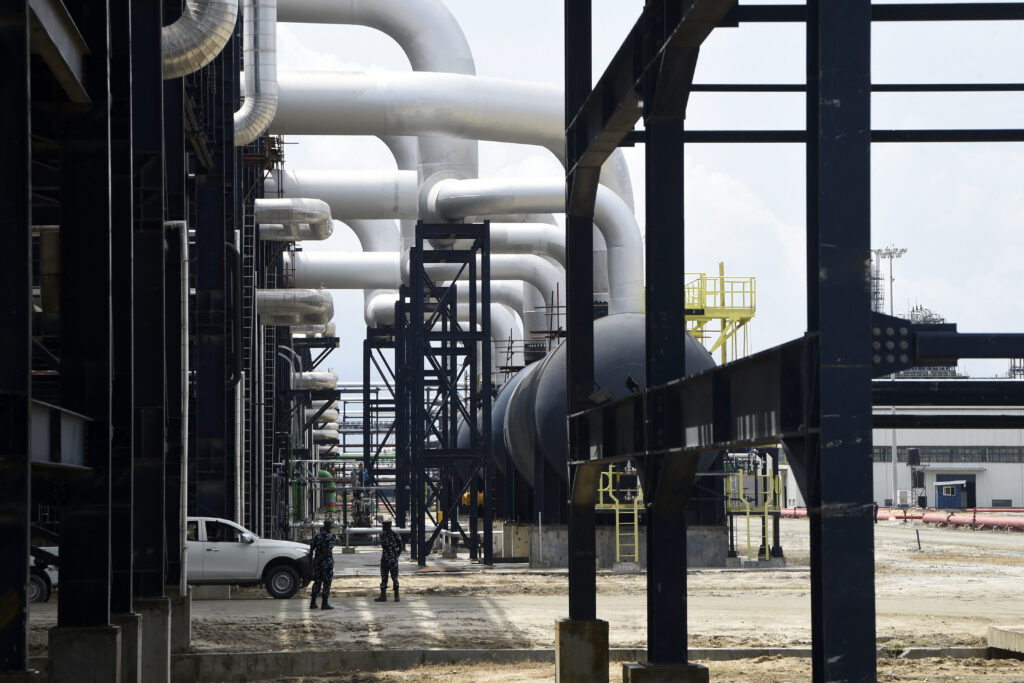
Plans for a potential initial public offering of Dangote Refinery have received a major boost following a reported $1 billion underwriting arrangement, strengthening expectations that the landmark Nigerian energy project could move closer to the capital market.
The proposed deal is significant because an IPO of the Dangote Refinery would represent one of the most closely watched listings in Nigeria’s corporate and energy sectors.
The refinery, developed by the Dangote Group, has emerged as one of Africa’s largest refining projects and is expected to play a major role in reshaping Nigeria’s petroleum market by increasing domestic refining capacity and reducing the country’s reliance on imported refined products.
An underwriting agreement of such scale could provide additional confidence around the proposed share offering by demonstrating institutional financial support for the transaction.

Underwriting is particularly important in a major IPO because it can help reduce the risk associated with selling a large volume of shares to investors.
In broad terms, underwriters commit to supporting the offering, subject to the terms of the agreement, giving the company greater certainty as it approaches the capital market.
For Dangote Refinery, the development comes at a time when investors are paying close attention to the future of Nigeria’s energy industry.
The refinery has already attracted significant attention because of its size, strategic importance and potential impact on the country’s petroleum supply chain.
The proposed listing could provide an opportunity for investors to participate directly in the future growth of the refinery while potentially giving the company access to additional capital.
For a capital-intensive business operating in a volatile global energy market, access to long-term funding can be particularly valuable.
The refinery’s emergence has also generated wider discussions about Nigeria’s ability to process crude oil domestically.
For decades, Africa’s largest oil producer has depended heavily on imported petroleum products despite having substantial crude oil reserves.
This created pressure on foreign exchange, exposed consumers to international price movements and contributed to recurring concerns over fuel availability.
The Dangote project was conceived partly against this backdrop, with the objective of establishing large-scale domestic refining capacity capable of serving Nigeria and potentially supplying other African markets.
According to DDM News, a successful IPO could represent an important stage in the commercial development of the refinery.
Beyond raising capital, a public listing could increase transparency, broaden the company’s investor base and strengthen its connection with Nigeria’s capital market.
However, an IPO of this magnitude would also require investors to carefully assess the refinery’s financial performance, production capacity, operating costs and long-term profitability.
The energy industry is highly sensitive to changes in crude oil prices, foreign exchange rates, government policies and global refining margins.
These factors can significantly affect the performance of refining businesses and will likely remain important considerations for prospective investors.
The timing of the potential listing could also be significant.
Nigeria’s capital market has experienced increased interest in large corporate transactions, while the country’s economic reforms have changed the operating environment for businesses across several sectors.
Currency reforms, changes in fuel pricing and efforts to reduce petroleum subsidies have created both opportunities and challenges for companies operating in the downstream oil industry.
For investors, the refinery’s ability to consistently process crude and produce refined petroleum products will be central to its long-term valuation. Capacity alone does not guarantee profitability.
Efficient operations, reliable crude supply, access to export markets and effective cost management will determine how successfully the facility converts its enormous physical infrastructure into sustainable financial returns.
The potential IPO could nevertheless provide a new avenue for domestic and international investors seeking exposure to Nigeria’s energy sector.
It could also deepen the Nigerian Exchange by introducing another major industrial company to the listed market.
A transaction of this size would have implications beyond Dangote Refinery itself.
A successful offering could strengthen confidence in Nigeria’s ability to execute large capital-market transactions and encourage other privately owned companies to consider public listings.
For the Nigerian government, the development of domestic refining capacity has broader economic significance.
A reduction in petroleum imports could help conserve foreign exchange and reduce exposure to international supply disruptions. Increased local processing could also support industrial activity, logistics, employment and other businesses connected to the petroleum value chain.
The refinery’s expansion into export markets could further increase its strategic importance.
If domestic demand is adequately supplied, excess production could potentially be directed toward other African markets, positioning Nigeria as a regional supplier of refined petroleum products.
The proposed IPO therefore sits at the intersection of corporate finance, energy security and capital-market development.
The reported $1 billion underwriting deal signals the financial scale of the transaction and the level of institutional attention surrounding the refinery’s future.
DDM News understands that investors will ultimately be looking beyond the headline size of the underwriting arrangement.
They will want clarity on the structure of the proposed offering, the valuation placed on the refinery, the proportion of shares to be offered, the use of proceeds and the company’s financial outlook.
These details will be critical in determining whether the IPO can attract strong demand from institutional and retail investors.
For Dangote Refinery, becoming a publicly listed company would mark a significant transformation from its current privately held structure.
It would subject the business to greater public scrutiny while providing investors with greater access to its financial performance and strategic direction.
The potential listing could also mark a new chapter for Nigeria’s largest private-sector investment in refining.
After years of construction, financing and development, the project has become a major symbol of Nigeria’s efforts to strengthen its domestic petroleum industry.
Ultimately, the reported $1 billion underwriting agreement could provide the financial foundation needed to move the planned IPO closer to reality.
If successfully executed, the listing could become one of Nigeria’s most consequential capital-market transactions, giving investors an opportunity to participate in the future of the country’s refining industry while potentially providing Dangote Refinery with the capital and market visibility needed for its next phase of growth.




