
Connect with us

Analysis

Demolitions: Lagos State And The Rule Of Law

By Oseloka H. Obaze

Published

on

Share this:

Recently, Nigerians watched on national television as some prominent South East politicians visited the ASPAMDA Market in the former Trade Fair Complex in Lagos over recent demolitions in that vicinity by Lagos State authorities.

The visit spoke of the high-octane nature of an increasingly contentious issue, fraught with allegations of bigotry and recriminations. I watched, too, with bemused skepticism.

I have no sympathy for those whose buildings get demolished because they built out of zone, and in violation of extant building and land codes. That is as it should be.
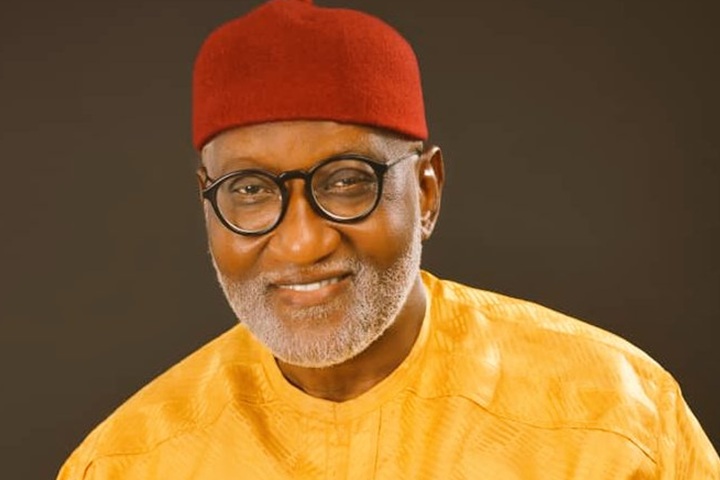
Oseloka H. Obaze

The author, Oseloka H. Obaze

I say so as a technocrat and erstwhile policymaker and administrator. Laws are made to be respected. That’s what rule of law is all about. Such persons should not complain about the consequences of their greed and stupidity.

Such things happen because the Nigerian society is now so unapologetically transactional and imbued with impunity that some affluent people believe that they can subjugate rules and regulations, violate statutory laws and still buy their way out of attendant reprisals.

Nowhere is such an attitude more rampant than with acquisition of landed property in major cities. Green areas, public parks, golf courses and playgrounds have been carved up and sold to rich speculators.

The same fate has befallen water causeways and even lands earmarked for special public projects. Invariably, the master plans of major cities, including Abuja, have been at risk.

Nevertheless, there comes a point when discretionary authority and powers need to apply in law enforcement matters. That’s what adaptive leaders do. That’s what good governance does.

“Buildings should be demolished”

Buildings should be demolished when they are unfit for habitation and pose clear and present danger to the general public. But buildings should not always be demolished simply because they violate zoning laws. And that’s not to say that zoning laws should be disrespected or impunity not be punished.

Lately, there has been a spate of demolitions in Lagos State. Some suggest such demolitions are punitively targeted. The contention is debatable. Yet, as policy, demolitions cannot be used for the purposes of gerrymandering or disenfranchisement. But that is not the kernel of this writeup.

The point here is that, in a nation with over 75 million housing deficit, of which 17 million of the shortfalls is in Lagos, demolishing already completed buildings is defeatist and not the best policy option or punishment. Such a practice is also not in the best interest of the larger society.

READ ALSO:  Is the time ripe for the proposed August 2024 public protest in Nigeria?

It is myopic, except there are ulterior motives. As a social scientist, I favour without apologies the use of history in present and future decision-making, especially in governance matters. That use of history may be applicable to the ongoing demolitions.

A precedent

Many years back, in the late 1980s, there was an interesting and celebrated case in New York City that speaks to zoning, building code enforcement, respect for the rule of law and discretionary authority. It also speaks to arbitration and legal adjudication of such matters.

In the New York case, a luxury high-rise building was approved for construction on the Upper East Side of Manhattan. The building’s structure, height, floors, air rights and related codes were all sorted out and the approvals and permits granted.

The high-rise building was mixed commercial and residential. This meant that the ground and lower floors could house high-end stores and the rest of the 30-floor building would house various-sized apartments.

As it happened, the builder made a subjective internal adjustment to accommodate the then fashionable high ceilings in all the residential apartments. This meant additional three feet per floor outside the approved plan.

This did not seem like a big deal but the additional three feet per floor resulted cumulatively to an extra 75 feet being added to the height of the building. Technically, this equated with adding an additional five floors to the original design. The high-rise building was still the stipulated 30 floors, but the height was far in excess of what was statutorily approved.

Consequentially, the additional height of the building violated the air rights of some neighbouring buildings. It was also at variance with the approved design. The owners and occupants of the contiguous buildings filed complaints.

The City’s housing authorities that issue construction permits, investigated and found that the complaints were meritorious. There were deviations from the approved plan and, therefore, violations. What to do?

The high-rise building could not be certified for occupancy. The developers were losing money. The City was also losing money from property taxes via sales of the apartments. Litigation seemed likely, but would be time-consuming and financially costly for both sides.

Quid pro quo

The parties submitted to arbitration. At mediation, it was determined that the only practical remediation required to meet compliance, would be to knock off the equivalent of five floors in order to bring the building in line with extant codes and the approved building plan.

READ ALSO:  Five States declare public holiday as Isese Day holds in Yoruba Land 

That solution itself would be also costly for the developer. So, there was need to find common ground; a win-win solution, for the developer, the City authorities and potential investors/owners of the condominium apartments.

While the unapproved and uncertified building stood vacant for several months, arbitration commenced aimed at protecting public and private interests by allowing the law to adapt to some discretionary flexibility, away from rigid enforcement that would be totally punitive.

In a city that badly needed more houses in order to meet growing demands and existing shortfalls, demolition, though an option, would be the final resort, and only if all else failed.

Two issues were critical to agreeing to arbitration. Both the developer and city supervisors were respectively found not to have been willfully negligent of the law.

When all parties are culpable

Nonetheless, the developers took some architectural and structural liberties; and the city building supervisors were lax in their due diligence, and, thus, had failed to catch the additional three-feet-per-floor adjustment at the foundational level, where it could have been stopped or the building plan revised accordingly.

Thus, the city did not meet its remit obligations fully. While the developer met the approved floors specifications, it failed to comply with the overall building height specifications.

Rather than pursue demolition, which would have resulted in obliterating about 50 apartment units of various sizes and configurations, the City decided to allow the building to stand.

For consequences, the developer would allocate three contiguous floors out of the thirty floors to the city, as low income houses, for subsidized rents over a thirty-year period. The developer would still collect rent for those three floors of about thirty units, but not at premium market rental rate.

It was also agreed that a separate entrance would be created for the city-assigned floors, thus segregating that section from the remaining twenty-seven luxury stores and luxury home floors. Contextually, the building would still be designated a luxury high-rise, but with some intrinsic conditionalities.

In essence, the errant developer was sanctioned and punished, as required by law, but not by way of punitive demolition, in which the developer, investors and the City would all be losers. The mutually accepted outcome was the essence of decision making at its best.

READ ALSO:  Esther set ablaze by lover during heated argument

The non-exculpatory resolution also served as deterrent for future developers.

The Lagos State saga

Traders protesting over the demolition of Lagos Trade Fair Market

Traders protesting the demolition of Lagos Trade Fair Market

As Nigerians continue to witness completed buildings, some costing billions, being demolished in parts of Lagos State especially, as well as in other parts of the federation, I often wonder if the intent of such demolitions are not conceptually punitive.

If so, the rule of law has gone awry. Everyone loses; even as it may seem that the developer or owner incurs the greatest loss.

While I’m unsympathetic to law breakers, the ongoing policy of outright demolition, is without doubt, hare-brained. Lagos state still has a high 17 million housing deficit.

Most buildings targeted for demolition could have been stopped at the foundational level, but for obvious complicity, when approvals are granted by a criminal cartel of local government and state officials, bereft of any moral compass, who take advantage of very greedy and stupid rich persons.

Besides outright demolition, several policy options exist for resolving these matters. There ought to be some compartmentalization of the problems and solutions. State governors have statutory authority to revoke Right of Occupancy on any land in the public interest.

“When the rule of law goes awry”

So, rights to a house or structure built on a water causeway, green area, or access road, rather than being demolished could be rendered a state property, with a statutory revocation.

The city, local government or state authorities and the owner of the structure can then negotiate a settlement that might save the property built at great cost from demolition. The property could also be placed on high-luxury property tax bracket. Such decision will avert outright demolition and help in reducing the national housing deficit.

Demolitions might seem the only way out, when the rule of law goes awry. But they are not since demolitions also have unintended binary consequences. They stultify housing development. They also disincentivize and chase investors and developers away.

The greatest danger, however, especially in the case of Lagos state, is the contention that such demolitions target certain ethnicities. That policy choice is dangerous, whether such allegations are myth or reality.

Since various policy options still exist for addressing thorny zoning questions, political leaders must explore every option before embarking on a lineal policy of outright demolition that might backfire or in the long run, hurt public interest.

Obaze is MD/CEO, Selonnes Consult – a policy, governance and management consulting firm in Awka.

Share this:

Analysis

𝐄𝐥𝐝𝐞𝐫𝐥𝐲 𝐕𝐨𝐭𝐞𝐫 𝐃𝐞𝐧𝐢𝐞𝐝 𝐑𝐢𝐠𝐡𝐭: 𝟗𝟔-𝐘𝐞𝐚𝐫-𝐎𝐥𝐝 𝐄𝐥𝐢𝐳𝐚𝐛𝐞𝐭𝐡 𝐎𝐧𝐢𝐤𝐞 𝐂𝐫𝐢𝐞𝐬 𝐎𝐮𝐭 𝐢𝐧 𝐀𝐧𝐚𝐦𝐛𝐫𝐚

DDM News

Published

on

Share this:

Mrs. Elizabeth Onike, a 96-year-old voter, lamented bitterly after being denied the right to cast her vote in Anambra State.

The elderly woman said she arrived at her polling unit early, determined to perform her civic duty despite her age, but was turned away by officials for reasons yet to be made clear.

Diaspora Digital Media (DDM) gathered that the incident occurred in one of the polling units in Awka, where several elderly citizens also complained about similar challenges.

Eyewitnesses said Mrs. Onike, visibly emotional, expressed disappointment that despite enduring long hours and braving the heat, she was prevented from voting.

Observers have called on the Independent National Electoral Commission (INEC) to investigate the incident and ensure the rights of senior citizens are respected in future elections.

Many social media users have since rallied around her, describing her experience as “heartbreaking” and “a sad reflection of voter disenfranchisement.”

#AnambraDecides2025 #DDMReports #VoteNotFight

Share this:
Continue Reading

Analysis

AKBC: Awakening the sleeping giant

By Ofonime Honesty

Published

on

By

Share this:

By Ofonime Honesty

Let us speak truth to power. The Akwa Ibom Broadcasting Corporation (AKBC) has been on life support in recent years.

We have watched the infrastructural retrogression of that great breeding ground where the finest crop of broadcasters in this region cut their teeth. They were drilled in excellence, and their voices informed, educated, and united us.

This was not just a mere decline; it was a monumental failure we all witnessed unfold. AKBC wobbled even as newer broadcast stations lured her talents away.

But wait. Pause the lamentations!

Governor Umo Eno has signed an agreement with Media Guru Consultant, LLC, of Dubai, for the transformation of the station into a “world-class broadcasting entity.” This is no mere project; it is a rescue mission. It represents the political will to snatch a vital asset from the greedy jaws of oblivion.

This partnership with Media Guru Limited covers consultancy, design, procurement, and installation of advanced broadcast equipment, which will position AKBC to compete favorably with leading broadcast stations within and outside Nigeria.

For context, Media Guru is not a faceless consultant. Independent checks by yours truly indicate that it is a global media services company offering solutions in content digitization and preservation, turnkey technology projects, and digital media, with physical offices in the UAE, Singapore, South Africa, and India.

With over 21 years in service, over 64 projects completed, and successful jobs in over 20 countries, the firm possesses the qualifications and expertise for this project.

TVC, Huawei, Bloomberg Africa, Raj TV, Daily Independent, ConSat TV, News Live TV, and several others are notable clients of the firm.

READ ALSO:  Esther set ablaze by lover during heated argument

In this age of digital journalism, a feeble broadcaster is a mute spectator. AKBC cannot tell the Akwa Ibom story properly with a broken microphone, a broken camera, and dilapidated transmitters.
Its employees cannot counter toxic narratives while operating from a studio that leaks rain.

Look around you. Our airwaves are being invaded by content that erodes our identity.
Our people are being fed junk content while the rich banquet of our own heritage gathers dust. AKBC was supposed to be the gatekeeper of our stories, the guardian of our values. Instead, it became a sleeping giant while others came in and colonized our narrative space. The Akwa Ibom story must now be told by AKBC. That task is compulsory!

The Governor has thrown a lifeline. Funding will not be a problem. The burden now falls squarely on AKBC’s management and staff. The management must undergo a mental revolution. They must purge the system of deadwood and complacency. Training and retraining are essential. The modern gadgets and facilities must not be destroyed by analogue hands.

We cannot pour new wine into old wineskins. They must recruit fresh talent with fire in their bellies and innovation in their blood. Anything less would be a betrayal of this second chance.

This new studio must become a fortress of truth, a hub of cutting-edge programming, and a stage for the next generation of trailblazers. AKBC has to move with the times. Archaic or out-of-fashion programming must cease.

We are watching. The people are watching. History is watching. The contract is signed. The gauntlet has been thrown. AKBC, a Lazarus, must rise!

Share this:
Continue Reading

Analysis

Trump, Christian Genocide, and Terrorism in Nigeria

By Farooq Kperogi

Published

on

President Donald Trump of the United States versus President Bola Ahmed Tinubu of Nigeria
Share this:

Nigeria’s online and offline discursive arenas have been suffused with frenetic, impassioned, and intensely heightened dialogic exchanges in the aftermath of President Donald Trump’s designation of Nigeria as a “Country of Particular Concern” and this threat to militarily invade the country to stop what he called a “Christian genocide.”

Nigerians are predictably divided largely along the country’s familiar primordial fissures. But beyond the surface disagreements, there’s actually a deeper congruence of opinions we miss in moments of hyper-aroused emotions. And this revolves around the recognition that Nigeria faces an inexcusable existential threat from the intractable murderous fury of terrorists and that the earlier it is contained by any means necessary, the better Nigeria’s chances of survival.

The major areas of disagreement among conversational sparring partners (i.e., whether, in fact, there’s a Christian genocide; what really actuates Trump’s intervention; the question of what foreign intervention means for Nigeria’s sovereignty) actually have a convergence point.

For example, Muslims who question the factual accuracy of the existence of a Christian genocide in the central states point to the continuing mass slaughters of Muslims (both at home and in mosques) in the far north. But they don’t deny that the nihilistic, blood-thirsty thugs who murder both Christians and Muslims in their homes and places of worship identify as Muslims, even if they are a poor representation of the religion they identify with.

I honestly struggle to fault Christians who perceive the episodic mass murders in their communities by people who profess a different faith from them as deliberate, systematic, premeditated acts designed to exterminate them because of their faith.

If the situation were reversed, it would be perceived the same way. If murderous outlaws who profess the Christian faith (even if they don’t live by the precepts of the religion) continually commit mass slaughters of both Christians and Muslims, Muslim victims of these slaughters would instinctively read religious meanings to the murders.

As I noted in my April 12, 2025, column titled “Selective Outrage Over Mass Murders in Nigeria,” human beings derive their sense of self from belonging to collective identities, so when members of an out-group attack that collective, it provokes a powerful emotional reaction.

READ ALSO:  Which heaven are you going to?

Even in such states as Zamfara, Sokoto, and Katsina, where more than 90 percent of the population is Muslim and where clashes between sedentary farmers and itinerant herders are age-old, the persistence of mass slaughters has ruptured the centuries-old ethnic harmony between the Hausa and the Fulani that Nigerians had taken for granted. BBC’s July 24, 2022, documentary titled “The Bandit Warlords of Zamfara” captures this dynamic powerfully.

It doesn’t matter if people in the Middle Belt perceive the homicidal ferocity of the terrorists as “Christian genocide” or people in the Northwest see it as “ethnic cleansing.” What matters is that they shouldn’t be allowed to kill anyone.

I understand Muslim anxieties behind the “Christian genocide” narrative. It unwittingly exteriorizes the crimes of a few outlaws to the many who are also victims of the outlaws’ crimes. But if it takes calling these blood-stained bastards “Christian genocidaires” to eliminate them, the accuracy of the description is immaterial. If an equal-opportunity murderer of Christians and Muslims is killed only because he kills Christians, it still benefits Muslims because the murderer won’t be alive to kill Muslims.

Of course, people who question Trump’s motive are justified. In 2016, Trump enthusiastically endorsed Ann Coulter’s book Adios America, which claimed that the growth of Nigerians in the United States from virtually zero to 380,000 was problematic because, in her words, “every level of society [in Nigeria] is criminal.” Most Nigerians in the United States are Christians.

By December 2017, in his first term, Trump was reported to have said that people from Haiti and Nigeria should be denied visas because “15,000 Haitians who received U.S. visas all have AIDS,” and that 40,000 Nigerians who visited the U.S. that year would never “go back to their huts” after seeing America.

READ ALSO:  40-foot container crashes on Lagos expressway, kills one

In January 2018, he was widely quoted as saying he didn’t want immigrants from “shithole countries” like Nigeria and Haiti but preferred “more people coming in from places like Norway,” a statement that made clear his racial preference for white immigrants.

That same racial logic was evident when he described white South Africans as victims of “white genocide” and offered them asylum but has not extended the same offer to Nigerians he claims are facing “Christian genocide.”

Unsurprisingly, by 2019, toward the close of his first term, Nigeria experienced the steepest decline in visitors to the United States of any country, according to data from the National Travel & Tourism Office.

Given this record, skepticism about Trump’s sudden concern for Nigeria is entirely warranted. Anyone familiar with his long-documented hostility toward Black people would reasonably question why he now professes to care enough about them to “intervene” on their behalf.

His intervention is probably the product of three forces: powerful lobbying from Nigerian Christian groups who got through to the right people, a way to get Nigeria to scale down its embrace of China in the service of rare earth mineral exploration in the country, and an appeal to his evangelical Christian base even if he himself isn’t a believing, churchgoing Christian.

But given the direness of the depth and breadth of bloodletting in the country, who cares what his motivations are? If Trump’s intervention causes the Nigerian government to more seriously take its responsibility to protect all Nigerians, I would salute him. In fact, if direct, targeted hits at terrorist enclaves become inevitable because the government is either unwilling or unable to act, most people (Muslims, Christians, southerners, northerners, supporters or critics of the government, etc.) who are genuinely worried about the unchecked expansion of the theaters of insecurity in the country would be happy.

When it comes to questions of life and death, we can’t afford the luxury of pointless partisanship and primordial allegiances. Most Nigerians I know would accept help from Satan if that were what it would take to stop the unending blood-stain communal upheavals in the country.

READ ALSO:  Five States declare public holiday as Isese Day holds in Yoruba Land 

What is the point of our sovereignty if we can’t stop perpetual fratricidal bloodletting? In any case, most Nigerian governments and opposition politicians in my lifetime have not only routinely sought America’s intervention in Nigeria’s internal affairs when it suits them, they serve as willing informants to America, leading me to once posit that the CIA doesn’t need secret agents.

In a May 20, 2017, column titled, “Xenophilia, Fake Sovereignty and Nigeria’s Slavish Politicians,” I said the following:

“Many Nigerian leaders seem to have an infantile thirst for a paternal dictatorship. The United States is that all-knowing, all-sufficient father-figure to whom they run when they have troubles. We learned from the US embassy cables that our Supreme Court judges, Central Bank governors … and governors routinely ran to the American embassy like terrified little kids when they had quarrels with each other.”

If the undermining of our sovereignty is what it would take to provide peace to everyday Nigerians, most people won’t miss it.

The urgent task, therefore, is not to litigate the purity of motives abroad or to indulge in perfunctory moralizing at home, but to force Nigerian institutions to perform. Whether pressure comes from international actors, diasporic lobbying, or domestic outrage, it must translate into concrete reforms: a security strategy that protects civilians, accountable and professional security forces, transparent investigations of atrocities, and long-term efforts to address the economic, political, and environmental drivers of violence.

Nigerians must insist that any external attention be channeled into strengthening the state’s capacity to protect all citizens and into justice for victims, not into new forms of dependency or political theatre. Only by combining unity of purpose with institutional competence can Nigeria begin to end the killing and reclaim the dignity of its sovereignty.

Share this:
Continue Reading

Latest from DDM TV

LATEST NEWS

UK Issues Fresh Travel Alert as Insecurity Worsens in Nigeria

INEC Dismisses Vote-Buying In Anambra Election As Rumours, Declares APGA’s Soludo Winner

INEC Declares Soludo As Winner Of Anambra Election

INEC Adjourns Collation Of Anambra Election Results, Resumes 6AM

All Roads Lead To Delta As ADC Launches Coalition Vehicle <p><span style='color:#808080;font-size:18px;'><i>DDM News</i></span></p>

EFCC Nabs Three Suspected Vote Buyers in Anambra

Trump Snubs G20 Summit, Revives ‘White Genocide’ Claims Against South Africa

EFCC arrests three suspected vote buyers in Anambra governorship election

Subscribe to DDM Newsletter for Latest News

Trending

Copyright © 2023 -2024 Diaspora Digital Media (DDM) www.diasporadigitalmedia.com. All Rights Reserved . NOTE: All opinion articles published on Diaspora Digital Media are ENTIRELY those of the authors and do not necessarily reflect the opinion of the publishers.

Anambra State 2025 Governorship Election

X
Get Notifications from DDM News Yes please No thanks

