
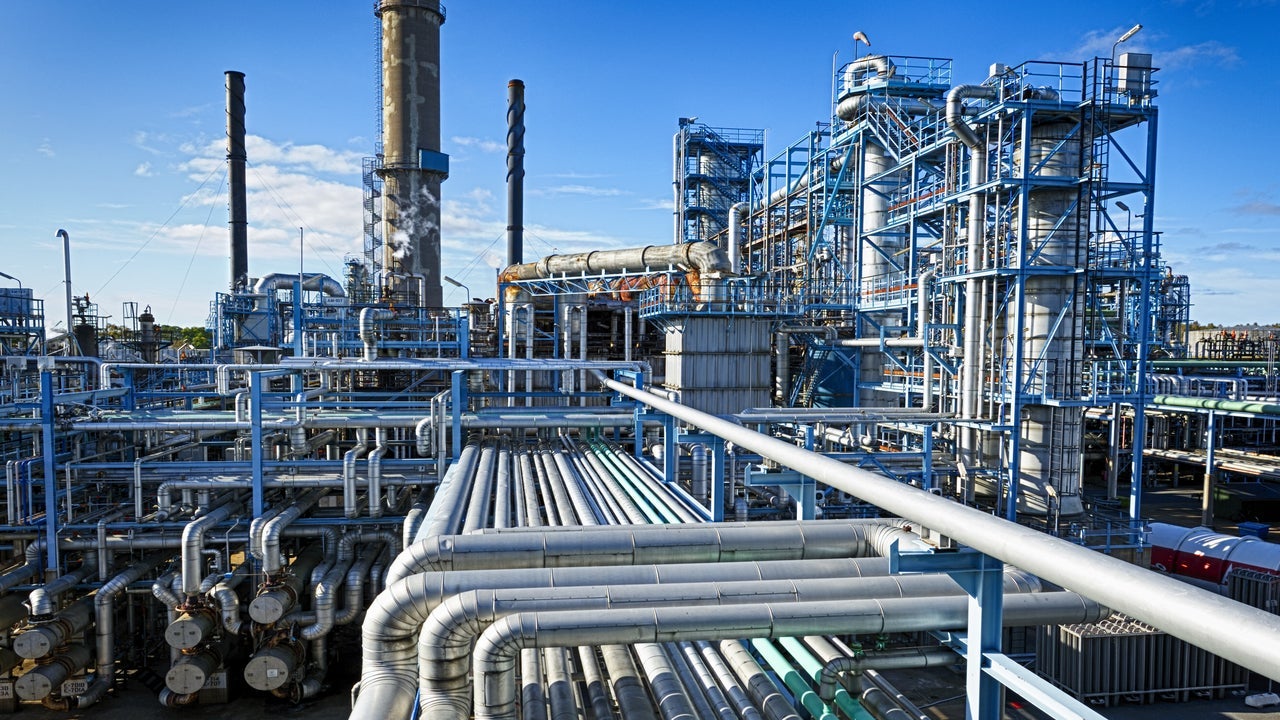
One of the world’s largest oil refining facilities in the United Arab Emirates has halted operations as a precaution after a drone attack struck a nearby industrial area, raising fresh concerns over global energy supply disruptions amid the escalating Middle East conflict.
A source familiar with the matter said the Ruwais Refinery suspended operations following the incident at Ruwais Industrial City in the emirate of Abu Dhabi.
The shutdown came after authorities reported that a drone strike triggered a fire within the industrial zone. Officials did not confirm whether the refinery itself was directly hit.
The facility is operated by the state-owned oil company Abu Dhabi National Oil Company, which describes the Ruwais complex as the world’s fourth-largest single-site refinery.
A source said the refinery halted production purely as a safety measure.

“The Ruwais refinery has halted operations out of precaution,” the source said, requesting anonymity due to the sensitivity of the situation.
Workers Evacuated After Explosions
A driver working at the Ruwais industrial complex told AFP that workers were ordered to evacuate the facility shortly after the attack.
“Just as we were about to leave, we saw two more bursts of fire rising from the complex, with loud sounds like explosions,” the driver said.
The incident marks another escalation in the widening conflict that has already disrupted oil and gas infrastructure across the Gulf region.
Meanwhile, the chief executive of Saudi oil giant Saudi Aramco, Amin H. Nasser, warned that the ongoing conflict could have catastrophic consequences for global oil markets.
Speaking during a media call announcing the company’s 2025 earnings, Nasser stressed the urgent need to reopen the strategic Strait of Hormuz, which has been closed due to the conflict.
The narrow waterway normally carries about 20 percent of the world’s oil supply, making it one of the most important energy shipping routes globally.
“There would be catastrophic consequences for the world’s oil markets the longer the disruption goes on and the more drastic the consequences for the global economy,” Nasser said.
The conflict has increasingly targeted energy infrastructure across the region.
Iran has reportedly fired missiles at several installations in the Gulf, including the massive Ras Tanura Refinery in Saudi Arabia, forcing the facility to halt some operations.
Saudi oil fields have also come under attack, further intensifying concerns about supply disruptions.
Experts warn the disruption is already triggering a wider economic chain reaction.
Robert Mogielnicki, a non-resident scholar at the Arab Gulf States Institute, said the region’s energy sector is being hit from multiple directions.
“Energy facilities are being targeted, export capability through the strait is hampered, and storage capacity is filling up,” he said.
Nasser added that the consequences extend far beyond the oil sector.
“The disruption has caused a severe chain reaction not only in shipping and insurance, but also in aviation, agriculture, automotive and other industries,” he said.
Other major energy producers are also feeling the impact of the conflict.
State-owned QatarEnergy recently halted liquefied natural gas production and declared force majeure after attacks on energy infrastructure.
Energy companies in Kuwait have issued similar warnings, indicating that disruptions beyond their control may prevent them from meeting export commitments.
Meanwhile, OPEC+—the alliance of major oil-producing nations—had already increased production last year, contributing to declining prices before the conflict began.
Global oil prices have fluctuated sharply amid the crisis.
Prices surged by about 30 percent on Monday due to fears of supply shortages before falling again after comments from Donald Trump suggesting the conflict might soon come to an end.
Diplomatic officials warn that continued attacks on energy infrastructure could set a dangerous precedent.
Majed al‑Ansari, spokesperson for the foreign ministry of Qatar, cautioned that strikes on energy facilities could have far-reaching consequences.
“Attacks on energy facilities on both sides are a dangerous precedent,” he said. “It will cause repercussions throughout the world.”