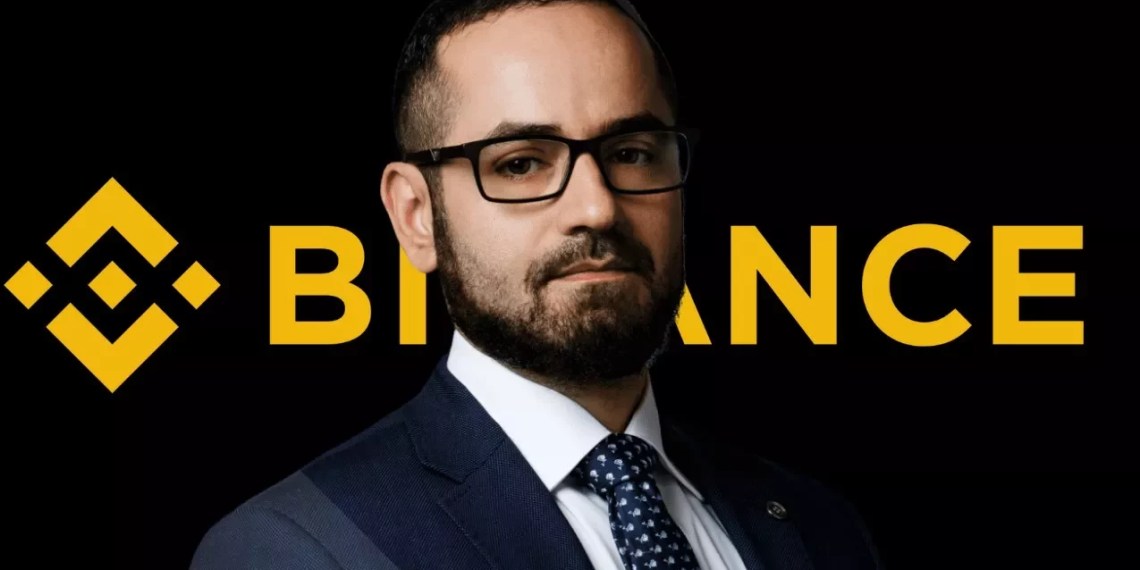
Tigran Gambaryan, a former executive of cryptocurrency exchange Binance, has criticised Nigeria’s Economic and Financial Crimes Commission (EFCC), saying the agency lacks the capacity to detect large-scale fraud even when it is obvious.
Gambaryan, who previously served as Head of Financial Crime Compliance at Binance, made the remarks in reaction to a statement by the EFCC accusing banks, fintech firms and microfinance institutions of enabling fraud worth ₦18.7 billion by failing to carry out basic customer due diligence.
In a post on Friday, January 23, Gambaryan dismissed the agency’s claims, suggesting that the anti-graft body was shifting responsibility rather than addressing systemic failures.
“EFCC couldn’t detect widespread fraud if it came with a name tag and waved at them,” he wrote.
“Why bother investigating when you can just peddle claims of billions lost?”

Background to the Dispute
It could be recalled that the former executive, who is also a former agent of the United States Internal Revenue Service, was arrested in Nigeria in February 2024 during a government crackdown on Binance over allegations of currency manipulation.
In April 2024, the EFCC arraigned Binance and Gambaryan on charges related to money laundering.
The court initially denied his bail application, and proceedings were later overshadowed by concerns over his health after he reportedly collapsed in court.
Gambaryan’s legal team and family raised repeated concerns about his medical condition, warning that his health was deteriorating while he was in custody at the Kuje Correctional Centre.
His wife, Yuki Gambaryan, said he required specialised medical care, including what she described as a high-risk surgery.
At the height of the controversy, a judge issued an arrest warrant against a medical doctor at the Kuje facility over the failure to submit Gambaryan’s medical report to the court.
In September 2024, the EFCC challenged claims about Gambaryan’s health, filing a counter-affidavit in court.
However, the agency later reversed its position.
On October 23, 2024, the EFCC announced it was withdrawing the charges against Gambaryan, citing reasons that included international and diplomatic considerations.
Gambaryan subsequently left Binance in June 2025.
His latest comments have reignited debate over Nigeria’s anti-fraud framework and the EFCC’s oversight of financial institutions, coming at a time when the agency is under pressure to curb rising financial crimes in the banking and fintech sectors.