


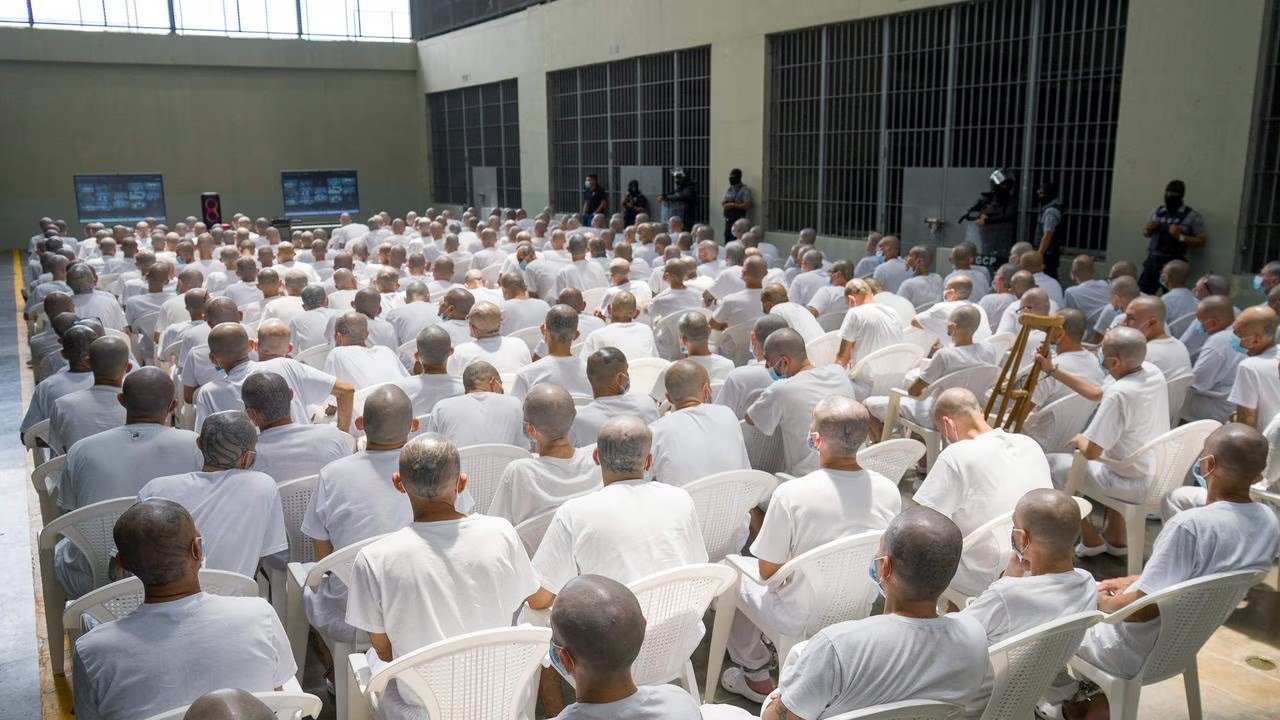
A court in San Salvador has begun hearing one of the largest mass trials in the country’s history, with 486 alleged gang members facing a sweeping list of charges.
The case is part of President Nayib Bukele’s aggressive crackdown on gang violence, carried out under emergency powers that have been in place since 2022.
Prosecutors say the defendants are linked to Mara Salvatrucha, also known as MS-13, and accuse them of being involved in more than 47,000 crimes over a ten-year period.
The charges range from murder and femicide to extortion and illegal weapons trafficking. Authorities say some of those crimes include one of the deadliest weekends the country has seen since its civil war.

Since the state of emergency was introduced, security forces have arrested over 91,000 people.
A new legal framework now allows large groups of suspects to be tried together a move the government says speeds up justice, but one that critics argue comes at a cost.
Human rights organisations have raised serious concerns, warning that these mass trials limit access to legal representation and weaken basic protections for the accused.
The Inter-American Commission on Human Rights has again called on the government to reconsider the prolonged use of emergency measures, saying they undermine due process.
Many of the defendants are being held in high-security prisons, including the controversial Terrorism Confinement Center, a massive facility that has become a symbol of the government’s zero-tolerance approach to gangs.
Prosecutors say they have built their case using autopsy reports, forensic evidence, and witness testimony.
They are pushing for maximum sentences, and in some cases, individuals could face up to 245 years behind bars if convicted on multiple counts.
Among those on trial are suspected long-time gang leaders, including figures believed to have been involved in a controversial truce between the government and gangs more than a decade ago, during the presidency of Mauricio Funes.
The Bukele administration points to a sharp drop in homicide rates as proof that its strategy is working.
Official figures show killings fell to 1.3 per 100,000 people last year, down significantly from 7.8 in 2022.
Still, the scale and methods of the crackdown continue to divide opinion praised by some as effective, and criticised by others as a dangerous erosion of civil liberties.




